
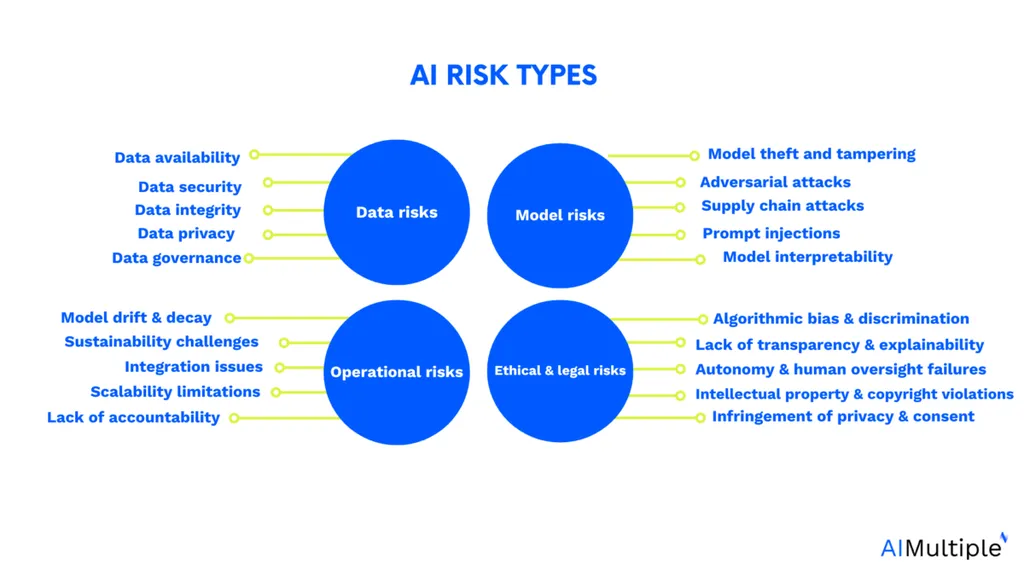
In the rapidly evolving landscape of artificial intelligence, large language models (LLMs) have become indispensable tools, powering everything from chatbots to complex data retrieval systems. However, their increasing integration into interactive and retrieval-augmented systems has exposed a critical vulnerability: task drift. Task drift occurs when an LLM deviates from a user’s intended instruction due to injected secondary prompts, potentially leading to unintended and harmful outcomes. Recent advancements have shown that linear probes trained on activation deltas of LLMs’ hidden layers can effectively detect such drift, offering a safeguard against malicious manipulations.
Researchers Md Jahedur Rahman and Ihsen Alouani have delved into the robustness of these detection mechanisms, uncovering alarming vulnerabilities. In their paper, “Bypassing Prompt Injection Detectors through Evasive Injections,” they explore how adversarially optimised suffixes can evade detection by these linear probes. By generating universal suffixes, the researchers demonstrate that poisoned inputs can bypass detection across multiple probes simultaneously. Their experiments on Phi-3 3.8B and Llama-3 8B models reveal that a single suffix can achieve high attack success rates—up to 93.91% and 99.63%, respectively, when all probes must be fooled. Even under a majority vote setting, the success rate remains impressively high, exceeding 90%.
These findings underscore a significant flaw in the current defence mechanisms against task drift in LLMs. The high susceptibility of activation delta-based detectors to adversarial suffixes highlights the urgent need for more robust defences. Rahman and Alouani propose an innovative defence technique to address this issue. Their approach involves generating multiple suffixes and randomly appending one of them to the prompts during the forward passes of the LLM. By training logistic regression models with these activations, they found this method to be highly effective against adversarial attacks.
The implications of this research are profound for the defence and security sectors, where LLMs are increasingly deployed for sensitive tasks. The ability to detect and mitigate task drift is crucial for maintaining the integrity and security of AI-driven systems. As adversaries become more sophisticated, the need for adaptive and resilient defence mechanisms grows. Rahman and Alouani’s work not only exposes critical vulnerabilities but also offers a promising path forward, providing a framework for developing more secure and reliable AI systems.
In the broader context, this research serves as a wake-up call for the AI community. It underscores the importance of continuous innovation in defence mechanisms to keep pace with evolving threats. As LLMs continue to be integrated into more aspects of our digital infrastructure, ensuring their security and reliability will be paramount. The work of Rahman and Alouani provides valuable insights and tools to achieve this goal, paving the way for a more secure AI future. Read the original research paper here.