
South Korea’s remarkable transformation from a war-torn nation to a global leader in technology, precision manufacturing, and defence industries offers valuable insights for Malaysia as it strives to achieve developed-nation status. The International Journalist Invitation Programme, organised by South Korea’s Ministry of Culture, Sports and Tourism, provided a glimpse into how the country has built national strength through a cohesive ecosystem integrating public policy, security, industry, and human capital development.
Geopolitical Realities and Defence Capabilities
South Korea’s journey is deeply intertwined with its geopolitical realities. A visit to the Demilitarised Zone (DMZ), one of the most heavily guarded borders in the world, underscores the ongoing tension that has shaped the country’s approach to national security. The Korean War concluded with an armistice, not a peace treaty, making defence a fundamental necessity rather than a discretionary policy choice. Seoul’s experience demonstrates that credible defence capabilities are essential for deterring conflict, ensuring stability, and supporting long-term economic development.
The Korea Institute for Defence Analyses (KIDA) highlighted how national defence planning is underpinned by policy research, strategic analysis, and institutional continuity across political administrations. This approach ensures that defence strategies remain aligned with national interests and are not subject to short-term political shifts.
Defence Industrial Base
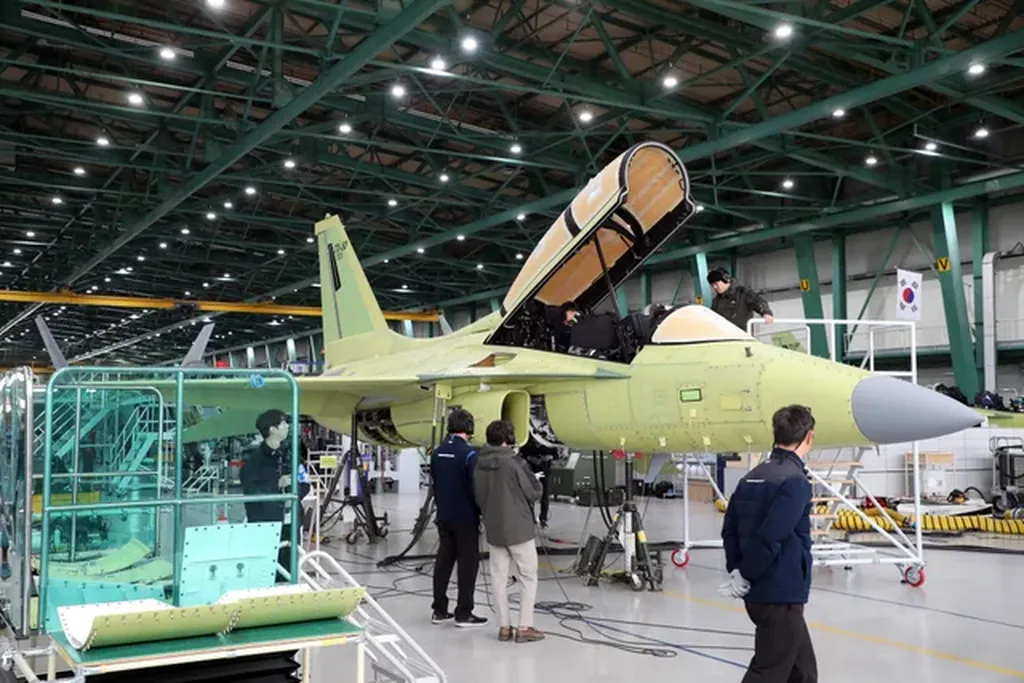
One of the clearest manifestations of South Korea’s success is its robust defence industrial base. A visit to Korea Aerospace Industries (KAI) in Sacheon illustrated how the country transitioned from a technology recipient to a producer and exporter of high-technology defence systems. Inside KAI’s hangar, an FA-50M Light Combat Aircraft (LCA) ordered by Malaysia was undergoing assembly, symbolising bilateral defence cooperation.
South Korea’s defence capabilities were not built overnight. The process began with technology transfer, substantial investment in training local engineers, and strategic partnerships with global players. Over several decades, this approach gave rise to a self-sustaining aerospace ecosystem encompassing design, manufacturing, maintenance, and continuous innovation. Malaysia, which is at an earlier stage of this journey, can view the acquisition of platforms such as the FA-50M not merely as a defence procurement but as a strategic opportunity to strengthen local industry, develop expertise, and create high-value industrial spillovers.
Maritime and Land Systems
In the maritime domain, Hanwha Ocean and HD Hyundai Heavy Industries demonstrated how defence industries can serve as national economic engines. These large-scale shipyards produce warships and submarines, supporting tens of thousands of high-skilled jobs and a robust domestic vendor ecosystem. As a maritime nation, Malaysia possesses significant potential in this sector. The challenge lies in aligning defence requirements, industrial policy, and workforce development under a clear and coherent national framework.
Visits to Hyundai Rotem and Hanwha Aerospace in Changwon further illustrated how South Korea built land systems capabilities from scratch. Despite having no historical background in tank manufacturing, the country has become a major exporter of platforms such as the K2 Black Panther and K9 Thunder, now in service with multiple countries. This achievement was driven by sustained investment in research and development, as well as the willingness to compete in international markets. For Malaysia, the key lesson is the need to shift from short-term approaches to a defence industrial strategy anchored in innovation and export orientation.
Human Dimension and National Narrative
Beyond technological advancement, the human dimension remains central. At the DMZ, stories of families separated by war underscored that national security ultimately exists to protect people and safeguard future generations. In factories and shipyards, engineers and workers view their roles as contributions to national resilience, not merely as employment. Such a culture does not emerge organically; it is shaped by a clear national narrative, recognition of local expertise, and confidence that individual contributions carry strategic value for the country.
Malaysia faces challenges in cultivating this culture, particularly in high-technology sectors. Issues such as talent outflow, dependence on imports, and limited industrial scale require structural solutions rather than isolated initiatives. Nevertheless, South Korea’s experience shows that transformation is possible. The country demonstrates that a post-conflict legacy need not be a permanent burden but can instead become a catalyst for building a resilient, innovative, and globally competitive nation.
In an increasingly uncertain world, defence and technological capabilities are no longer optional strategic choices but national necessities. South Korea has pursued this path with discipline and vision, offering a blueprint for Malaysia and other aspiring nations. As Ahmad Syabil Sultan Noordin noted, “In this regard, Malaysia also faces challenges in cultivating this culture, particularly in high-technology sectors. Issues such as talent outflow, dependence on imports and limited industrial scale require structural solutions rather than isolated initiatives. Nevertheless, South Korea’s experience shows that transformation is possible.”