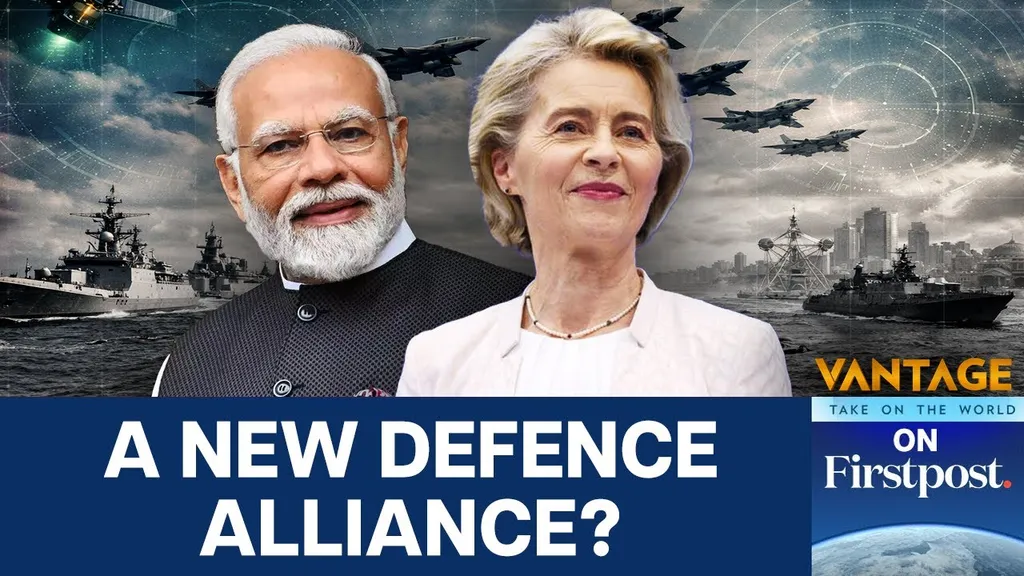
New Delhi: India and the European Union (EU) have solidified their strategic partnership with a landmark technology and defence pact, hailed by Defence Minister Rajnath Singh as a “beacon of trust in turbulent times.” This agreement, announced ahead of the 16th India-EU Summit, underscores shared democratic values and a deepening collaboration across defence, technology, and security domains.
The pact was formally signed on January 27, 2026, coinciding with India’s 77th Republic Day celebrations. Defence Minister Rajnath Singh and EU High Representative and Vice-President Kaja Kallas signed the agreement in New Delhi, marking a significant milestone in bilateral relations. The timing of this pact is particularly noteworthy, as it comes amid intensifying geopolitical tensions and global strategic competition.
Key Details of the India-EU Technology and Defence Pact
The comprehensive agreement fosters multi-domain cooperation, including:
1. **Maritime Security**: A focus on the Indian Ocean Region to protect sea lanes and counter piracy, reflecting shared interests in maritime safety and stability.
2. **Cybersecurity and Counterterrorism**: Joint efforts to enhance readiness against evolving threats, ensuring robust defences in the digital and physical realms.
3. **Integrated Defence Supply Chains and Industrial Collaboration**: Facilitating joint defence production, technology transfers, and future capabilities, treating India as an equal partner and co-developer rather than just a buyer.
4. **Annual High-Level Talks**: Regular dialogue on strategic security issues to ensure mutual alignment and continuous engagement.
Rajnath Singh’s Statement: Trust Amid Global Complexity
Addressing the EU delegation, Rajnath Singh welcomed the pact as a “reflection of this trust in action.” He emphasised that the agreement symbolises shared democratic values—pluralism, federalism, and the rule of law—which lay the foundation for deeper cooperation between the two ancient civilisations. Singh highlighted that the pact comes at a time of “complex global challenges” and expressed optimism that it would enhance cooperation not only in defence but also in economic and people-to-people engagements.
European Perspective: Partnership and Expansion
EU representatives echoed Singh’s enthusiasm. Kaja Kallas called the pact a milestone in EU-India relations, noting its potential to build on strategic cooperation in peacebuilding, crisis management, defence initiatives, and capacity-building. The broader context of this agreement is the EU’s Strategic Compass, a roadmap for security and defence cooperation that encourages tailored partnerships with global partners to address shared challenges.
Implications of the India-EU Technology and Defence Pact
The pact holds practical benefits for both sides:
– **Defence Industries**: Expected to explore joint ventures, particularly around trusted supply chains and high-tech systems.
– **Make in India**: The agreement supports India’s “Make in India” initiative by expanding opportunities for Indian defence firms to participate in European initiatives such as the EU’s ReArm programme.
– **Enhanced Collaboration**: Strengthened cooperation on maritime and cybersecurity adds resilience against common threats, complementing strategic dialogues already underway between India and the EU.
Significance of the India-EU Technology and Defence Pact
With China’s growing assertiveness in the Indo-Pacific and evolving strategic dynamics in Europe, the pact sends a clear message of shared commitment to a stable, rules-based global order. Analysts view this as a hedge against over-dependence on any single partner, boosting collective response capabilities in areas such as counterterrorism, maritime security, and technology development.
India now joins Japan and South Korea as one of the few Asian nations to formalise a full-fledged defence partnership with the EU, marking a new stage in strategic engagement between the two regions. This pact not only strengthens bilateral ties but also positions both India and the EU to navigate the complexities of an increasingly uncertain world with greater resilience and cooperation.