
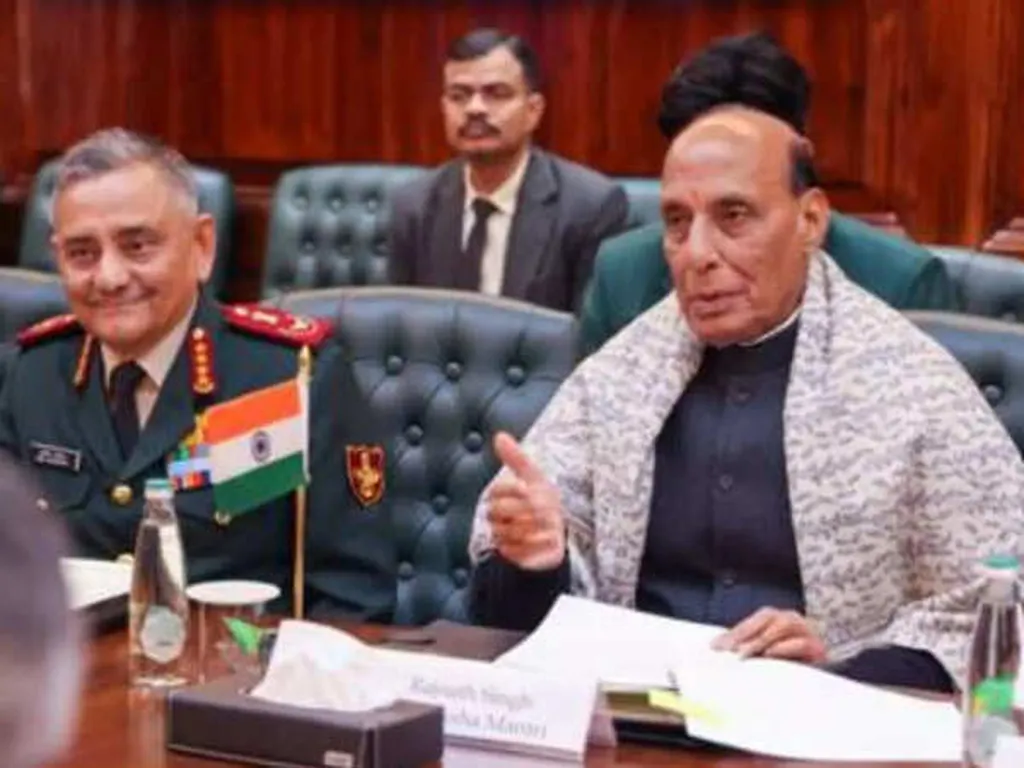
Defence Minister Rajnath Singh has called for a radical overhaul of the Defence Research and Development Organisation (DRDO), urging the agency to accelerate the timeline from research to deployment of military technologies. Speaking at an event honouring DRDO’s top scientists, Singh emphasised the need for speed in defence innovation, stating that the rapid induction of military hardware is the ultimate measure of performance.
“Technology is changing rapidly. Any technology that is new today may become irrelevant in four to five years,” Singh said. “In today’s times, especially on the battlefield, we must move forward keeping in mind the theory of ‘survival of the fastest’ and not just ‘survival of the fittest.’ The country that thinks, decides, and deploys technology quickly stays ahead.”
Singh highlighted the importance of bridging the gap between DRDO’s focus on design and prototyping and the subsequent production phases handled by industries. He advocated for a co-development model, where the private sector is involved from the early stages, aligning with global best practices. This approach, he argued, would foster innovation and efficiency.
“DRDO usually focuses on design and prototyping with production being the role of industries,” Singh noted. “It is necessary to bridge this gap in line with global practices. We need a co-development approach where the industry is involved in activities ranging from design to production from the early stages.”
The minister also urged DRDO to venture into areas where the private sector has already demonstrated capabilities, suggesting the creation of a dedicated wing within the organisation to take risks in high-potential but uncertain sectors. “If success is achieved, it will be historic,” he said.
Singh stressed the importance of collaboration with public sector undertakings, private industries, MSMEs, startups, and academia. He cited the Light Combat Aircraft Tejas as a prime example of successful collaboration between DRDO and Hindustan Aeronautics Limited, underscoring the potential for future achievements through such partnerships.
“The government’s support will only be meaningful when DRDO moves away from a monopolistic research and development model to a collaborative ecosystem,” Singh said. “It is essential that DRDO collaborates with academia and shares knowledge with the public and private sectors.”
Looking ahead, Singh set an ambitious defence export target of ₹50,000 crore by 2029-30. He advised DRDO to consider export markets from the design stage, particularly for drones, radars, electronic warfare systems, and ammunition. “Focusing on exports leads to cost recovery, builds global credibility, and strengthens strategic partnerships,” he said.
Singh praised DRDO’s role in achieving self-reliance in defence, citing Operation Sindoor as an example where indigenous systems bolstered India’s operational readiness. He commended the organisation for its contributions to the rapid transformation of the defence sector under Prime Minister Narendra Modi’s leadership.
As India strives to enhance its defence capabilities and global standing, DRDO’s ability to innovate swiftly and collaboratively will be pivotal. Singh’s directives underscore a strategic shift towards agility, collaboration, and global competitiveness in defence technology.