
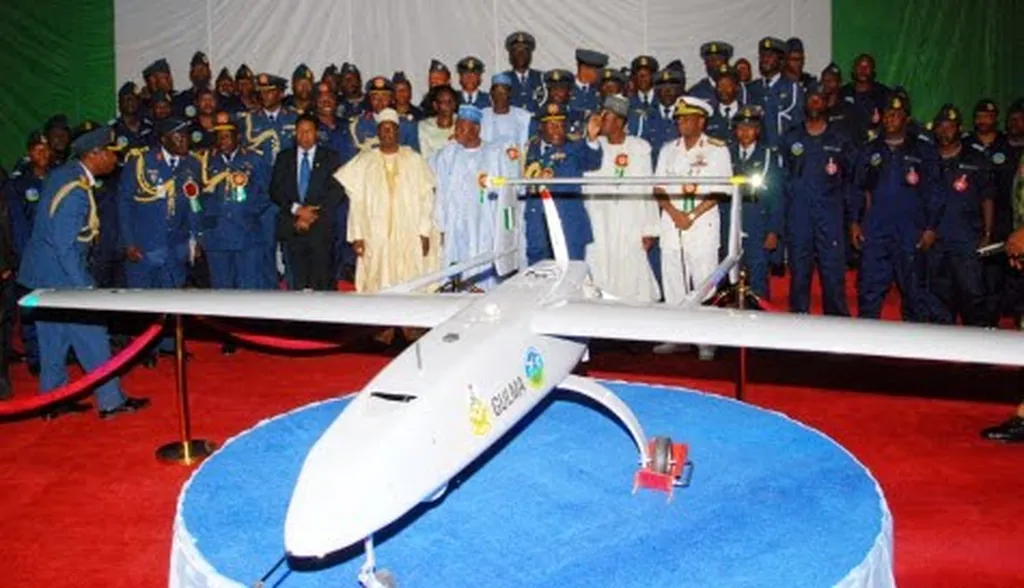
Nigeria’s defence technology ecosystem is undergoing a transformative shift, marked by a surge in indigenous innovation and a strategic pivot away from foreign procurement. Local engineers, academic institutions, and military research units are spearheading the development of cutting-edge solutions in artificial intelligence, robotics, autonomous systems, and advanced manufacturing. Despite challenges such as constrained funding and infrastructure gaps, Nigerian innovators are crafting systems tailored to the country’s unique operational realities—including asymmetric warfare, border security, insurgency, maritime crime, and the protection of critical infrastructure.
Adetokunbo Ogundeyin, Group Managing Director of Proforce Defence, underscores the significance of this local innovation: “We are seeing the emergence of local engineering capability that understands our terrain, our threats, and our operational constraints. That foundation is essential for sustainable national security.” This sentiment is echoed by Olusola Ayoola, Founder and CEO of Robotics and Artificial Intelligence Nigeria (RAIN), who highlights the operational impact of AI: “AI allows us to multiply the effectiveness of manpower. It enhances early warning, situational awareness, and decision-making in environments where time and visibility are critical.”
Notable advancements in Nigeria’s defence-tech landscape include:
– **ArtemisOS & Autonomous Drone Swarms**: Developed by Terra Industries’ founders Nathan Nwachuku and Maxwell Maduka, these systems enable single-operator control of self-organising drone swarms for surveillance and defence.
– **Digitally Enhanced MRAPs**: Proforce Defence, under Adetokunbo Ogundeyin, has integrated C4i systems and drone intelligence into armoured vehicles, transforming them into mobile command centres.
– **Digital Twin Reverse Engineering**: The Nigerian Air Force 431 Engineering Group is restoring grounded aircraft through locally fabricated components.
– **Computer Vision–Enabled Combat Drones**: Briech UAS, led by Bright Echefu, has optimised drones for Sahelian and bush terrain.
– **Offline Biometric Border Booths**: Designed by Kola Balogun, these booths strengthen border security in low-connectivity environments.
– **Physics-Informed Warhead Design**: A collaboration between Oida Energy, led by Emeka Ene, and DICON, this project applies neural networks to precision munitions.
– **Falcon Eye AI Upgrade**: The Nigerian Navy is using behavioural analytics to detect suspicious maritime activity.
– **Generative AI for Aircraft Spares**: Researchers at the Air Force Institute of Technology (AFIT) are pioneering this technology.
– **AI-Stabilised Remote Weapon Stations**: Developed by DICON R&D, these systems enhance accuracy and troop safety.
– **Carbon Emission Tracker (CET) Drone**: Dr Olusola Ayoola’s drone detects concealed human activity via emissions sensing.
– **Cyber-Shield**: Deployed by the Army Cyber Warfare Command, this system uses unsupervised machine learning to block network anomalies.
– **Smart Soldier IoT Ballistic Vests**: EPAIL Tech Labs has developed vests that enable real-time health and location monitoring of troops.
– **Predictive Logistics AI (“Logic-Loom”)**: Aligned with the Army Corps of Supply’s digital transformation agenda.
– **AI Weapon-Detection Surveillance System**: Developed by Sobowale Bukola at the University of Ibadan under Dr Ayoola Saheed.
– **Acoustic Shot Localisation Systems**: Emerging from private-sector innovation for counter-insurgency operations.
– **Autonomous Riverine Navigation Concepts**: Aligned with the Nigerian Navy’s ongoing maritime modernisation.
Terra Industries has recently secured $11.75 million from U.S. investors through its drone technologies. This funding round, the largest recorded in Africa’s emerging defence-technology sector, distinguishes Terra from regional competitors and underscores increasing investor confidence in vertically integrated defence solutions across the continent.
This wave of innovation not only bolsters Nigeria’s defence capabilities but also positions the nation as a burgeoning hub for defence technology in Africa. As these technologies mature, they are poised to redefine the continent’s security landscape, fostering greater self-reliance and strategic autonomy. The collaboration between local innovators, academic institutions, and military units exemplifies a concerted effort to harness technology for national security, setting a precedent for other African nations to follow.