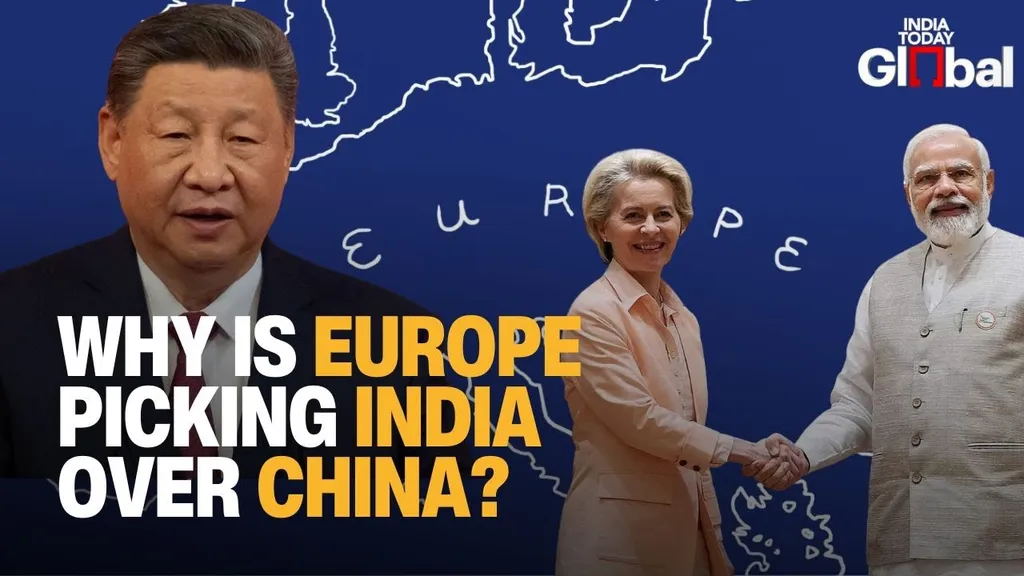
The Indo-EU summit, taking place as Europe’s transatlantic alliance faces strain and India navigates President Trump’s trade policies, marks a pivotal moment in global geopolitics. With the arrival of European Council President Antonio Costa and European Commission President Ursula von der Leyen in New Delhi, the stage is set for a series of significant agreements that could redefine the strategic partnership between India and the European Union.
Von der Leyen underscored the importance of this partnership in a post on X, stating, “India and Europe had made a clear choice—the choice of strategic partnership, dialogue, and openness. Leveraging our complementary strengths and building mutual resilience. We are showing a fractured world that another way is possible.” This sentiment sets the tone for the summit, which aims to foster collaboration and mutual growth amidst global uncertainties.
The summit is expected to yield four major outcomes: the successful conclusion of Free Trade Agreement (FTA) negotiations, the signing of a security and defence partnership, an agreement to promote mobility, and the adoption of a 2026-2030 joint comprehensive strategic agenda. These outcomes reflect a broad spectrum of cooperation, from economic to security and defence, and are poised to strengthen the Indo-EU relationship significantly.
The FTA negotiations, described by senior EU officials as the “mother of all deals,” are nearing conclusion. This agreement is anticipated to address critical issues such as the EU’s carbon border tax (CBAM), automobiles, and steel, with both sides committed to finding workable, mutually beneficial solutions. The successful conclusion of these talks will not only boost trade but also signal a new era of economic collaboration.
The security and defence partnership, which von der Leyen described as a likely game-changer in an interview with the Times of India, is particularly noteworthy. This partnership, which the EU has previously signed with only eight “trusted and like-minded countries,” will facilitate the exchange of classified information through the launch of negotiations for a Security of Information Agreement. This move is expected to diversify military supply chains, improve access to new capabilities, and enhance defence industrial collaboration. However, von der Leyen clarified that the export of high-end defence technology remains a national competence, ensuring that EU member states retain control over sensitive exports.
Under the new strategic agenda, cooperation will be ramped up across four key pillars: prosperity and sustainability, technology and innovation, security and defence, and connectivity and global issues. This comprehensive approach aims to address a wide range of challenges and opportunities, fostering a robust and resilient partnership.
The mobility agreement is another significant outcome of the summit. It aims to attract more highly skilled professionals, researchers, and students to Europe while addressing the issue of illegal migration. This agreement will facilitate the movement of talent, contributing to the economic and social development of both regions.
In total, 8-10 agreements are expected to be signed at the summit. These agreements, along with a joint statement, will reaffirm both sides’ commitment to effective multilateralism and a free and open Indo-Pacific. This collective stance underscores the shared values and strategic interests of India and the EU, paving the way for enhanced collaboration in the years to come.
As the Indo-EU summit progresses, it is clear that both parties are committed to building a partnership that transcends traditional boundaries. By leveraging their complementary strengths and fostering mutual resilience, India and the EU are setting an example for the world, demonstrating that strategic partnerships built on dialogue, openness, and shared values can thrive even in a fractured global landscape.