
A Taiwan security expert has called on Ukraine to apologize for past transfers of military equipment and advanced technologies to China, reigniting a debate over historical arms transfers and their implications for contemporary security challenges. The call comes in response to Ukrainian President Volodymyr Zelenskyy’s recent remarks at the World Economic Forum in Davos, where he criticized the flow of Taiwanese electronic components into Russia’s military industry.
Mei Fu-hsing, director of the Taiwan Strait Security Research Center and a U.S.-based analyst, made the statement on social media, arguing that Kyiv should address its historical role in strengthening China’s military capabilities. His comments followed Zelenskyy’s January 22 speech, in which the Ukrainian president named Taiwan as one of the sources of electronic parts that have ended up in Russia’s defense production chain.
“Taiwan should also ‘strongly demand that Ukraine apologize for nearly unlimited, and even bottomless, supply of military equipment and advanced key military technologies to Beijing over the past 30 years, which helped the Chinese Communist Party become a serious military threat to Indo-Pacific regional security,’” Mei said.
He added that Ukraine should provide assurances and “immediately take concrete corrective measures” to address the consequences of those past transfers.
Zelenskyy’s remarks at Davos drew attention to the complex issue of export controls and the global supply chain, particularly in the electronics industry. Taiwan, a central player in this sector, has tightened its export controls on advanced semiconductors and electronics to prevent sensitive technologies from reaching Russia. Taiwanese President Lai Ching-te responded to Zelenskyy’s comments by stating that Taipei was willing to strengthen controls on goods routed through third countries and disguised end-use channels.
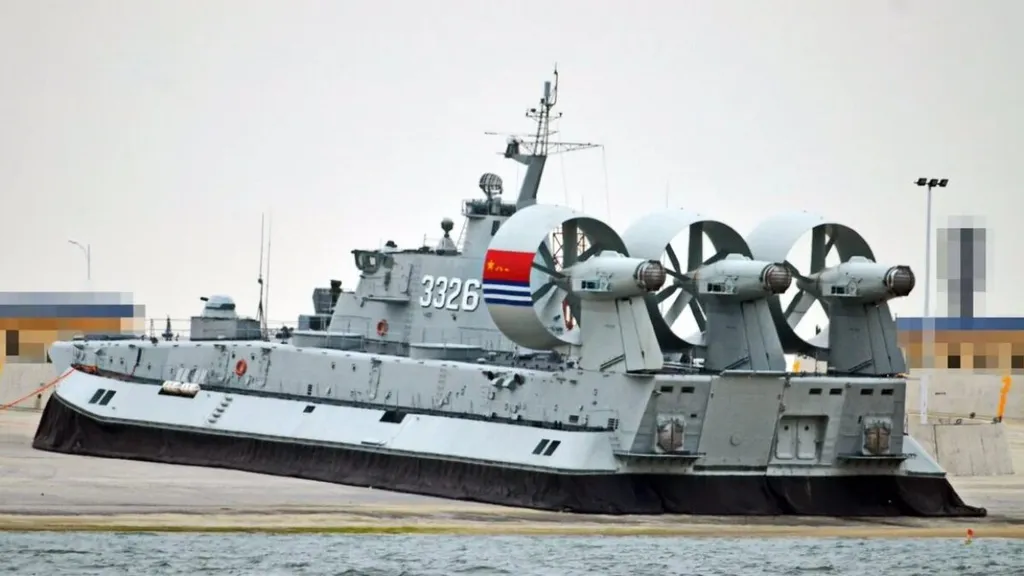
However, Mei argued that Lai’s response was incomplete. He emphasized that Taiwan should also demand an apology from Ukraine for its role in China’s military modernization during the 1990s and early 2000s. During that period, Ukrainian firms transferred a range of military-related technologies to China, including aircraft engines, naval systems, and other dual-use capabilities, as Ukraine sought export revenue following the collapse of the Soviet Union.
Taiwanese officials have not formally echoed Mei’s call for an apology, and the government has not announced any change in its public position toward Ukraine. Taipei has consistently expressed support for Ukraine since Russia’s full-scale invasion in 2022 and has introduced multiple rounds of export controls to prevent sensitive technologies from reaching Russia.
The dispute highlights broader tensions around global supply chain enforcement as the United States and its partners seek to limit Russia’s access to components used in missiles, drones, and other weapons. Taiwan’s export control policies are closely watched by both Washington and its allies, given the island’s central role in the global electronics industry.
Mei’s statement frames the dispute in wider strategic terms, linking Ukraine’s historical arms exports to China with current security concerns in the Indo-Pacific. He argued that China’s present military posture toward Taiwan and regional U.S. allies cannot be separated from earlier technology transfers that supported Beijing’s defense development.
As the world grapples with evolving security challenges, the exchange between Taiwan and Ukraine underscores the intricate web of historical and contemporary military technology transfers. It also highlights the need for stronger international cooperation and more robust export controls to address the complex security landscape of the 21st century.