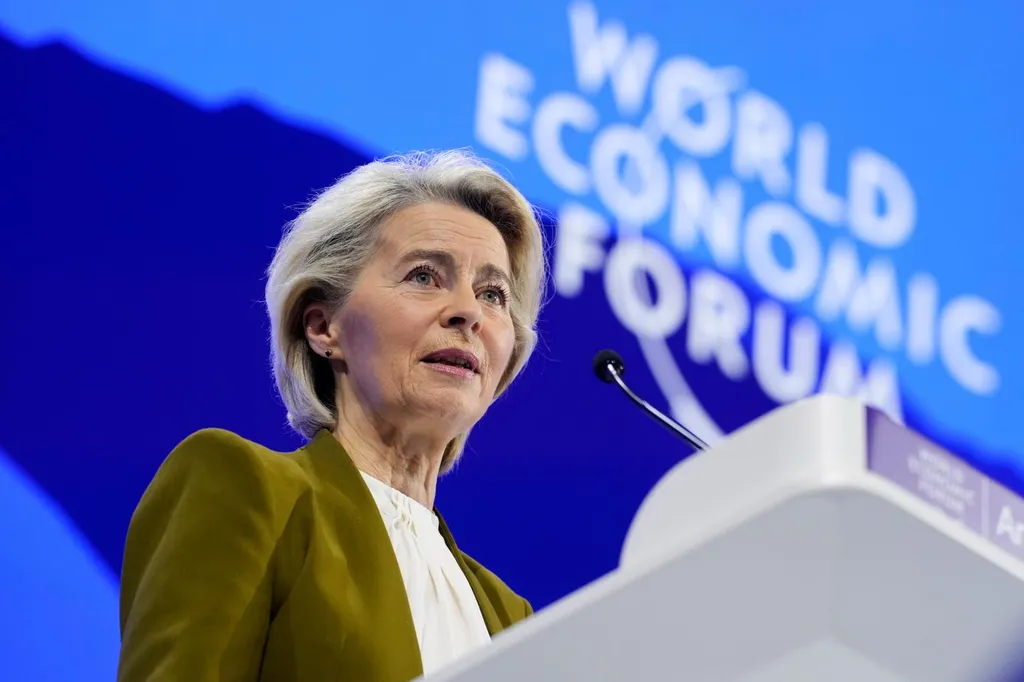
European Commission President Ursula von der Leyen and EU Foreign Policy Chief Kaja Kallas have unveiled a significant proposal to restrict Iran’s export of key drone and missile technologies, marking a bold step in the EU’s ongoing efforts to counter Tehran’s destabilising activities.
During a press conference on Tuesday, President von der Leyen, who is currently attending the World Economic Forum in Davos, announced the proposed ban via social media platform X. She underscored that the European Union has already imposed broad sanctions against Iran, citing human rights abuses, breaches of nuclear proliferation norms, and Iran’s support for Russia’s military campaign in Ukraine.
EU Foreign Policy Chief Kallas confirmed the proposal for additional sanctions during a debate on Iran at the European Parliament in Strasbourg. She detailed that the new restrictions would target components essential for Iran’s production of drones and missiles, aiming to significantly impair Tehran’s capacity to support the Russian arms sector.
“We are actively exploring what further action we could take,” Kallas stated, emphasising the EU’s commitment to addressing the Iranian regime’s harsh repression of protesters. The recent violent crackdown on protests, she noted, is just the latest in a series of concerning actions by the Iranian authorities.
Kallas highlighted additional alarming behaviours exhibited by the regime in Tehran, including illegal nuclear activities, support for Russia, backing terrorist organisations across the Middle East, executing hybrid attacks on European territory, and detaining European citizens.
Protests in Iran began in late December 2025, initially sparked by economic issues, notably a sharp decline in the rial’s value. The demonstrations quickly became political and spread nationwide. According to a report by the Associated Press, the death toll from the Iranian government’s crackdown on these mass protests has reached at least 3,919, based on estimates from activists. Reuters cites at least 5,000 deaths, including around 500 security officers. Some sources suggest the total could reach 20,000.
The proposed sanctions on drone and missile technology exports represent a strategic move by the EU to curtail Iran’s military capabilities and limit its influence on regional and global security. By targeting the supply chain of critical components, the EU aims to disrupt Iran’s ability to manufacture and deploy advanced weaponry, thereby weakening its support for Russia and other malign actors.
The announcement also reflects the EU’s broader strategy to address the multifaceted threats posed by the Iranian regime. The proposed sanctions are part of a comprehensive approach that includes economic measures, diplomatic efforts, and support for human rights and democratic movements within Iran.
As the European Commission continues to formulate new sanctions in response to the Iranian regime’s actions, the proposed ban on drone and missile technology exports sends a clear message: the EU is determined to counter Iran’s destabilising activities and uphold international norms and security.
The move is expected to ignite further debate within the EU and among international partners about the effectiveness of sanctions and the broader strategy for dealing with Iran. As geopolitical tensions continue to rise, the EU’s actions will be closely watched for their impact on regional stability and global security dynamics.