
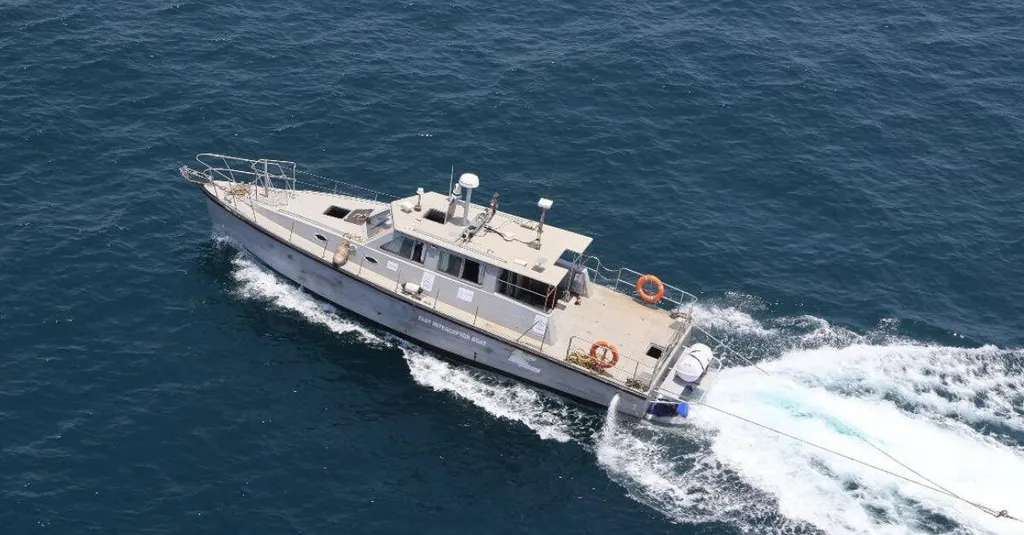
The Indian Navy, in collaboration with Bharat Electronics Limited (BEL), has achieved a significant milestone in indigenous naval technology with the unveiling of the Advanced Autonomous Navigation & Control Software (A2NCS). This breakthrough enables fully autonomous operations of unmanned surface vessels (USVs), marking a pivotal moment for India’s maritime defense capabilities.
The A2NCS software, developed jointly by the Indian Navy’s Weapons and Electrical Engineering Systems Establishment (WESEE) and BEL, positions India at the forefront of autonomous naval systems. This development aligns with the Atmanirbhar Bharat initiative, reinforcing India’s technological sovereignty and reducing reliance on foreign systems.
Integrated into the Navy’s Fast Interceptor Boat (FIB), the A2NCS software transforms the vessel into an Autonomous Fast Interceptor Boat (A-FIB). This evolution allows the FIB to conduct missions with minimal human intervention, enhancing its operational reliability in complex maritime environments.
The A2NCS software supports three distinct operational modes to cater to various tactical and operational requirements:
1. **Remote-Controlled Mode**: Operators stationed onshore or on supporting platforms can directly control the vessel for precision maneuvers and complex mission execution.
2. **Autonomous Waypoint Navigation**: The vessel autonomously follows predefined routes while dynamically adapting to maritime traffic, weather conditions, and sea state changes.
3. **Fully Autonomous Mode**: In this mode, A2NCS assumes complete control, enabling the vessel to independently navigate through dense traffic, avoid obstacles, and complete assigned tasks without human intervention.
A2NCS achieves robust situational awareness and navigation through a network of advanced sensors and systems, including radar systems for long-range object detection, Automatic Identification System (AIS) for tracking marine traffic, Electro-Optical/Infrared (EO/IR) cameras for visual intelligence, Inertial Navigation System (INS) & GPS for accurate positioning, and electronic navigation charts for contextual awareness. Artificial Intelligence (AI) algorithms further enhance predictive analytics, adaptive path planning, and real-time obstacle avoidance.
Built with strong cybersecurity safeguards, A2NCS is resilient against electronic warfare threats, secure against cyberattacks, and equipped with fail-safe mechanisms that ensure mission continuity or safe return in the event of system degradation.
A2NCS made history as the first indigenously developed autonomous navigation software for USVs certified by the Indian Register of Shipping (IRClass). The certification followed rigorous sea trials, demonstrating compliance with international maritime safety and collision regulations (COLREGs), including collision avoidance in simulated high-traffic environments. These validations pave the way for broader operational deployment and potential export opportunities in global defense markets.
The integration of A2NCS into operational vessels enhances the Indian Navy’s force multiplication, enabling longer surveillance missions, reduced risk to personnel, and greater flexibility in multi-domain warfare scenarios, especially in the Indian Ocean Region (IOR). The development also supports India’s Atmanirbhar Bharat goals by advancing indigenous defense technology and strengthening India’s defense manufacturing ecosystem.
Looking ahead, A2NCS may be scaled to other naval assets like offshore patrol vessels and new USV platforms. Integration with DRDO’s autonomous systems and ISRO’s communication networks could enable networked fleets capable of collaborative autonomous missions. Challenges remain, including improving endurance through advanced propulsion systems and countering sophisticated electronic countermeasures. However, the success of A2NCS signals India’s growing prowess in autonomous naval warfare technology.
As the Indian Navy continues to push the boundaries of innovation, the A2NCS stands as a testament to India’s commitment to advancing its defense capabilities and securing its maritime interests in an increasingly complex global landscape.