
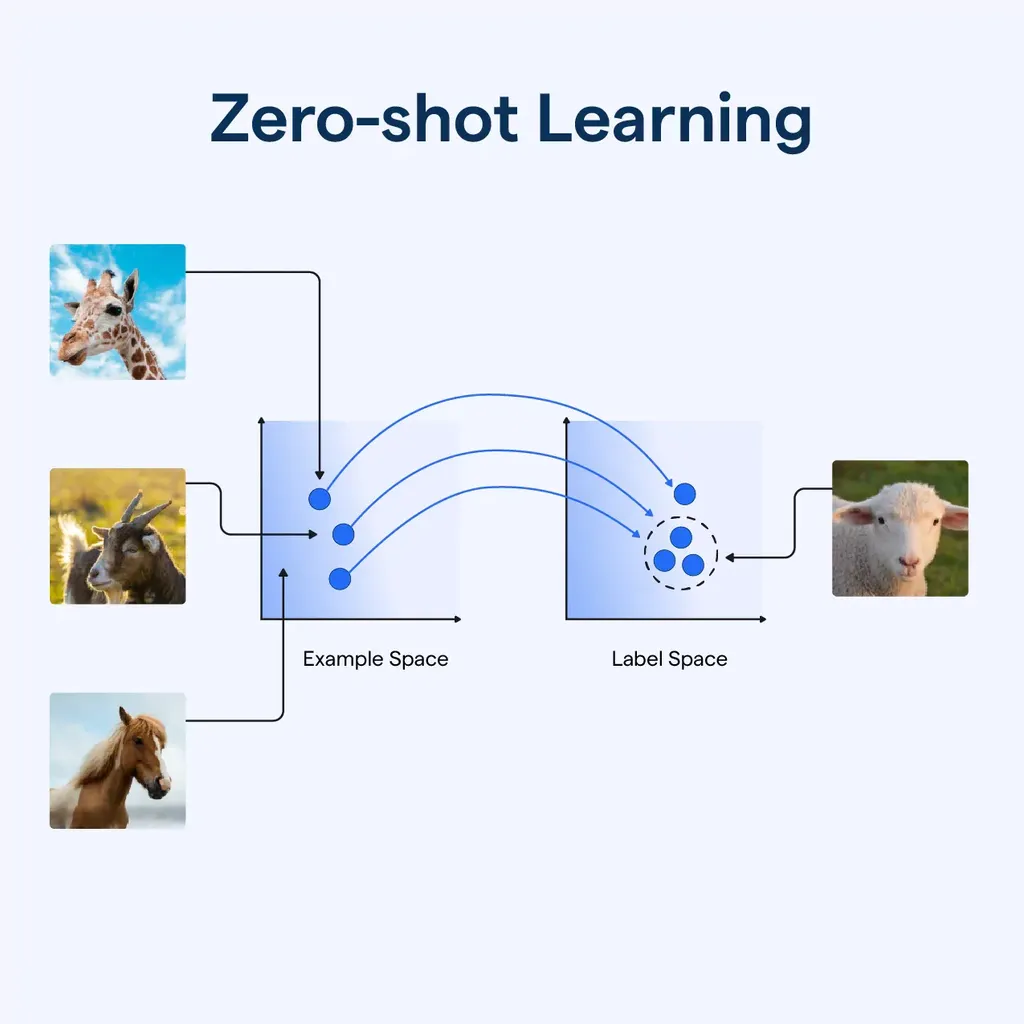
In the realm of chemical detection, the ability to accurately identify and classify chemical compounds is crucial for a wide range of applications, from medical diagnostics to military operations and home safety. Traditional methods of training machine learning models to recognize chemical signatures often involve extensive and costly experiments conducted in controlled laboratory settings. However, even with large datasets, these models frequently struggle to generalize to real-world scenarios, where chemical compositions can be far more complex and varied.
A groundbreaking study led by researchers Alexander M. Moore, Randy C. Paffenroth, Ken T. Ngo, and Joshua R. Uzarski introduces a novel approach to chemical detection that leverages zero-shot learning. This innovative method aims to overcome the limitations of conventional training datasets by using single-analyte exposure signals as building blocks to approximate complex chemical mixtures. By synthesizing these signals, the researchers demonstrate a significant improvement in the detection of out-of-distribution obscured chemical analytes.
The core of this research lies in the creation of synthetic sensor responses that mimic real-world chemical interactions. Instead of relying on exhaustive mixtures of chemical analytes, the team utilizes single-analyte signals to construct a multiple-analyte space. This approach not only reduces the need for costly and time-consuming experiments but also enhances the model’s ability to generalize to new, unseen chemical compositions.
One of the most compelling aspects of this study is the integration of a large corpus of chemistry knowledge to pair synthetic signals with targets in an information-dense representation space. By leveraging semantically meaningful analyte representation spaces, the researchers achieve rapid and accurate analyte classification, even in the presence of obscurants. This is particularly noteworthy because it eliminates the need for corresponding obscured-analyte training data, a significant bottleneck in traditional machine learning approaches.
The study also addresses the limitations of transfer learning for supervised learning with molecular representations, which often makes assumptions about the input data. Drawing inspiration from natural language and image processing literature, the researchers propose a novel approach to chemical sensor signal classification. This method utilizes molecular semantics and is applicable to a wide range of chemical sensor hardware designs, making it a versatile tool for various detection applications.
The implications of this research are far-reaching. By improving the accuracy and efficiency of chemical detection, this approach could revolutionize fields such as environmental monitoring, medical diagnostics, and national security. For instance, in military applications, the ability to rapidly and accurately detect chemical threats could save lives and enhance operational effectiveness. Similarly, in medical settings, precise chemical detection could lead to earlier diagnosis and more effective treatment of diseases.
Moreover, the methodology developed by Moore and his colleagues could pave the way for future advancements in machine learning and artificial intelligence. The integration of zero-shot learning with domain-specific knowledge represents a paradigm shift in how we approach complex detection problems. As the field continues to evolve, this research provides a solid foundation for further exploration and innovation.
In conclusion, the study by Alexander M. Moore and his team offers a promising solution to the challenges of chemical detection. By leveraging zero-shot learning and semantically meaningful representation spaces, the researchers have demonstrated a significant improvement in the accuracy and generalization capabilities of chemical detection models. This work not only advances our understanding of chemical sensor technology but also opens up new possibilities for its application in various domains. As we continue to push the boundaries of machine learning and AI, this research serves as a testament to the power of innovative thinking and interdisciplinary collaboration. Read the original research paper here.