
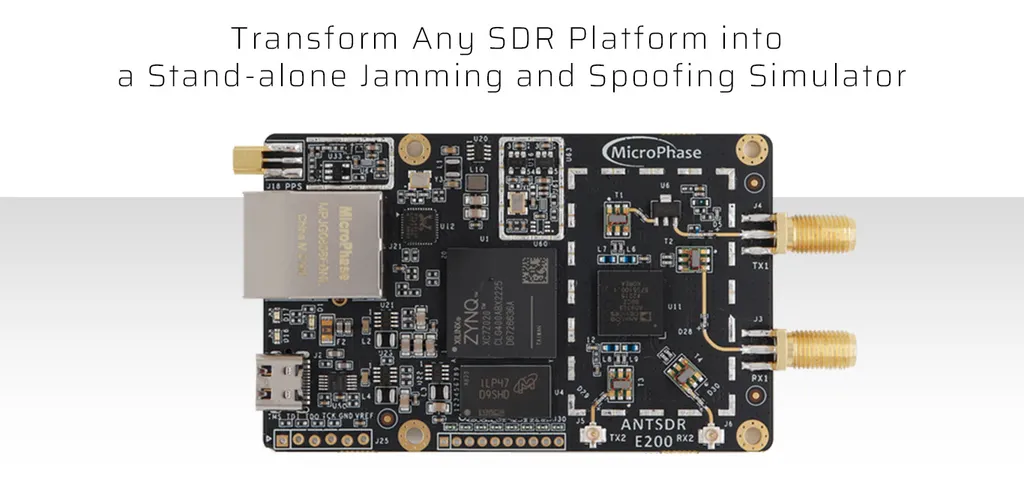
In an era where global navigation satellite systems (GNSS) are integral to civil, commercial, and military operations, the robustness of GPS receivers against interference has become paramount. A recent study led by researchers Erick Schmidt, Zach A. Ruble, David Akopian, and Daniel J. Pack introduces a novel approach to enhancing the resilience of GPS L1 receivers through software-defined radio (SDR) technology. Their work, titled “A Reduced Complexity Cross-correlation Interference Mitigation Technique on a Real-time Software-defined Radio GPS L1 Receiver,” offers a promising solution to the growing challenge of interference in GPS signals.
The study underscores the critical role of the U.S. Global Positioning System (GPS) in modern applications, from everyday navigation to complex military operations. However, the increasing reliance on GPS has exposed its vulnerability to both intentional and unintentional interference. Traditional GPS receivers, often rigid in their design, lack the flexibility needed to adapt to these challenges. This is where software-defined radio (SDR) emerges as a game-changer. SDR technology allows for rapid prototyping and research, making it an ideal platform for developing and testing interference mitigation algorithms.
The researchers propose a minimum mean-squared error (MMSE) interference mitigation technique, optimized for computational efficiency. This technique is implemented on a real-time capable GPS L1 SDR receiver, leveraging the flexibility and adaptability of SDR technology. The GPS SDR receiver software has been meticulously optimized for real-time operation using National Instruments’ LabVIEW platform, augmented with C/C++ dynamic link libraries (DLLs) to enhance performance.
The study delves into the practical implementation of the proposed algorithm, demonstrating its effectiveness through real-world signal tests with injected interference. The results are compelling, showing significant improvements in bit error rate (BER) curves for various types of interferers. This indicates that the proposed SDR receiver can effectively mitigate interference, ensuring more reliable GPS signal reception.
The implications of this research are far-reaching. By enhancing the robustness of GPS receivers, the proposed technique can improve the reliability of positioning and timing information across a wide range of applications. This is particularly crucial for military operations, where the accuracy and integrity of GPS data can be a matter of life and death. Additionally, the use of SDR technology opens up new avenues for research and development in the field of interference mitigation, paving the way for more advanced and adaptive GPS receivers.
In conclusion, the work of Schmidt, Ruble, Akopian, and Pack represents a significant step forward in the quest for more resilient GPS technology. Their innovative use of SDR and the MMSE interference mitigation technique offers a robust solution to the challenges posed by signal interference. As GPS continues to play a pivotal role in our daily lives and critical operations, such advancements are not just beneficial but essential. The study sets a new benchmark for future research in GPS technology, highlighting the potential of SDR in creating more adaptable and reliable navigation systems. Read the original research paper here.