
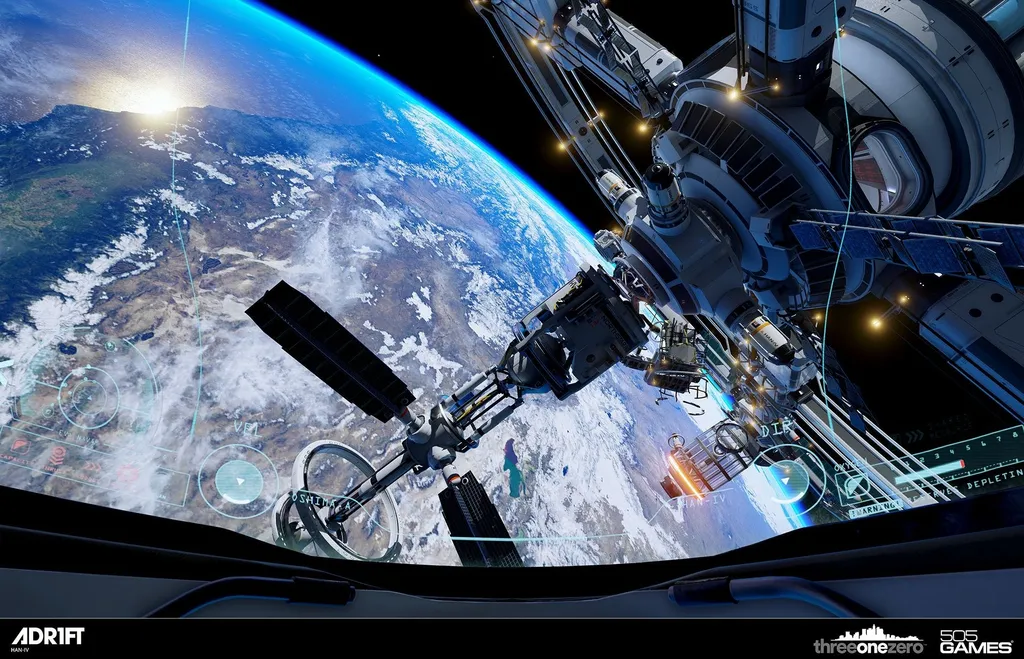
In a groundbreaking study, researchers have explored the effectiveness of different on-orbit manual attitude control methods for non-docking spacecraft using a virtual reality (VR) simulator. The research, conducted by Ajit Krishnan, Himanshu Vishwakarma, Maharudra Kharsade, and Pradipta Biswas, aimed to determine which external visual references and control methods are most efficient for achieving deorbit attitude—a critical maneuver for spacecraft re-entry.
The study compared two distinct visual reference methods: the front view, as seen in NASA spacecraft, which offers a windshield-type perspective with an arc of the Earth’s horizon visible to the crew, and the bottom view, utilized in Russian and Chinese spacecraft, which provides a full view of the Earth’s circular horizon. The researchers developed a custom VR spacecraft simulator using Unity to replicate these scenarios and evaluate their effectiveness.
Twelve participants, including six military test pilots and six civilians with gaming experience, were tasked with achieving the deorbit attitude while in a 400 km circular orbit. The study measured several key metrics, including time taken, fuel consumption, cognitive workload, and user preference. To quantify these results, the researchers employed ocular parameters, EEG (electroencephalography) to monitor brain activity, the NASA Task Load Index (TLX) for cognitive workload assessment, and the IBM System Usability Scale (SUS) for user experience evaluation.
The findings revealed that the bottom view, which offers a comprehensive view of the Earth’s horizon, was significantly easier to operate for the manual deorbit task. This method allowed participants to achieve the required attitude more quickly and with less fuel consumption, indicating higher efficiency. Additionally, participants reported lower cognitive workload and expressed a preference for the bottom view configuration.
Beyond the immediate findings, the study also demonstrated the potential of VR-based systems as effective training tools for both pilots and non-pilots in manual on-orbit flight path control tasks. The immersive nature of VR provides a realistic and safe environment for practicing critical maneuvers, which could enhance training programs and improve operational readiness.
The implications of this research are far-reaching for the design and development of future spacecraft. By integrating the bottom view configuration into spacecraft design, engineers can enhance the efficiency and safety of manual attitude control during deorbit maneuvers. Furthermore, the use of VR simulators for training could revolutionize how astronauts and pilots prepare for complex orbital operations, ensuring they are better equipped to handle real-world scenarios.
In conclusion, this study not only provides valuable insights into the most effective visual reference methods for manual attitude control but also highlights the transformative potential of VR technology in space training and operations. As the aerospace industry continues to evolve, these findings will play a crucial role in shaping the future of spacecraft design and astronaut training. Read the original research paper here.