India and Germany have solidified their strategic partnership through a series of agreements signed during Chancellor Friedrich Merz’s visit, marking a significant step forward in bilateral cooperation across multiple sectors. The agreements, covering defence, semiconductors, critical minerals, green energy, and mobility, underscore the commitment of both nations to foster innovation, sustainability, and economic growth.
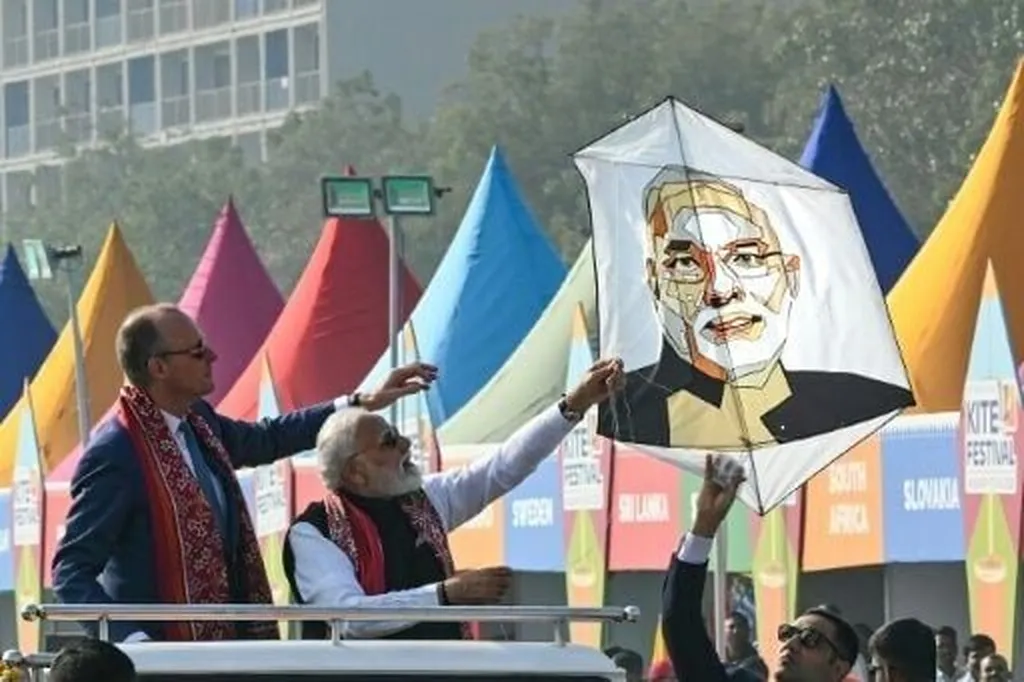
Prime Minister Narendra Modi and Chancellor Merz presided over the India-Germany CEOs Forum in Gandhinagar, Gujarat, where they highlighted the importance of these agreements in driving mutual progress. “This will provide clear policy support to our companies for co-innovation and co-production in defence. New opportunities for cooperation will also open up in the space sector,” Prime Minister Modi stated, emphasizing the transformative potential of the Joint Declaration of Intent on defence industrial cooperation.
The bilateral relationship was further strengthened through the establishment of a CEO Forum integrated into the Joint India-Germany Economic and Investment Committee. This initiative aims to enhance economic ties by facilitating direct engagement between industry leaders from both countries.
In the realm of critical and emerging technologies, India and Germany signed multiple declarations of intent. These include a semiconductor ecosystem partnership, cooperation on critical minerals, and collaboration in telecommunications. These agreements are expected to bolster technological advancements and secure supply chains, ensuring both nations remain at the forefront of innovation.
Energy and sustainability were prominent themes in the agreements. An offtake agreement was signed between India’s AM Green and Germany’s Uniper Global Commodities for green ammonia, a key component in the transition to cleaner energy. Additionally, a memorandum of understanding (MoU) was inked between India’s Petroleum and Natural Gas Regulatory Board and the German Technical and Scientific Association for Gas and Water Industries (DVGW) to promote renewable energy initiatives.
The two countries also adopted a roadmap on higher education, which includes agreements on skilling and mobility. A notable outcome is the establishment of a National Centre of Excellence for Skilling in Renewable Energy at the National Skill Training Institute in Hyderabad. This initiative will enhance the capabilities of the workforce in renewable energy technologies, supporting the global transition to sustainable energy sources.
Germany also declared visa-free transit for Indian passport holders transiting through the country, facilitating easier travel and strengthening people-to-people connections. Furthermore, both nations agreed to establish a Track 1.5 Foreign Policy and Security Dialogue and a bilateral dialogue mechanism on the Indo-Pacific, reflecting their shared commitment to regional stability and security.
Germany committed a new funding of 1.24 billion euros under the Green and Sustainable Development Partnership (GSDP) for projects in renewable energy, green hydrogen, the PM e-Bus Sewa programme, and climate-resilient urban infrastructure. This follows an earlier commitment of 10 billion euros under the programme until 2030, with around 5 billion euros already utilised or earmarked for projects since 2022.
A battery storage working group was also launched under the India-Germany Platform for Investments in Renewable Energy Worldwide, furthering collaboration in energy storage solutions. Other agreements include:
– Joint Declaration of Intent for Joint Cooperation in Research and Development on Bioeconomy
– Joint Declaration of Intent on the extension of tenure of the Indo-German Science and Technology Centre (IGSTC)
– Joint Declaration of Intent on the Framework Conditions of Global Skill Partnerships for Fair, Ethical and Sustainable Recruitment of Healthcare Professionals
– Joint Declaration of Intent on Cooperation in Sport
– Letter of Intent between the Department of Posts, Ministry of Communications, and Deutsche Post AG
– Memorandum of Understanding on Youth Hockey Development between Hockey India and the German Hockey Federation (Deutscher Hockey-Bund e.V.)
These agreements represent a comprehensive approach to enhancing bilateral relations, fostering innovation, and addressing global challenges. By leveraging their respective strengths, India and Germany are poised to set new benchmarks in defence, technology, energy, and sustainability, paving the way for a more secure and prosperous future.