
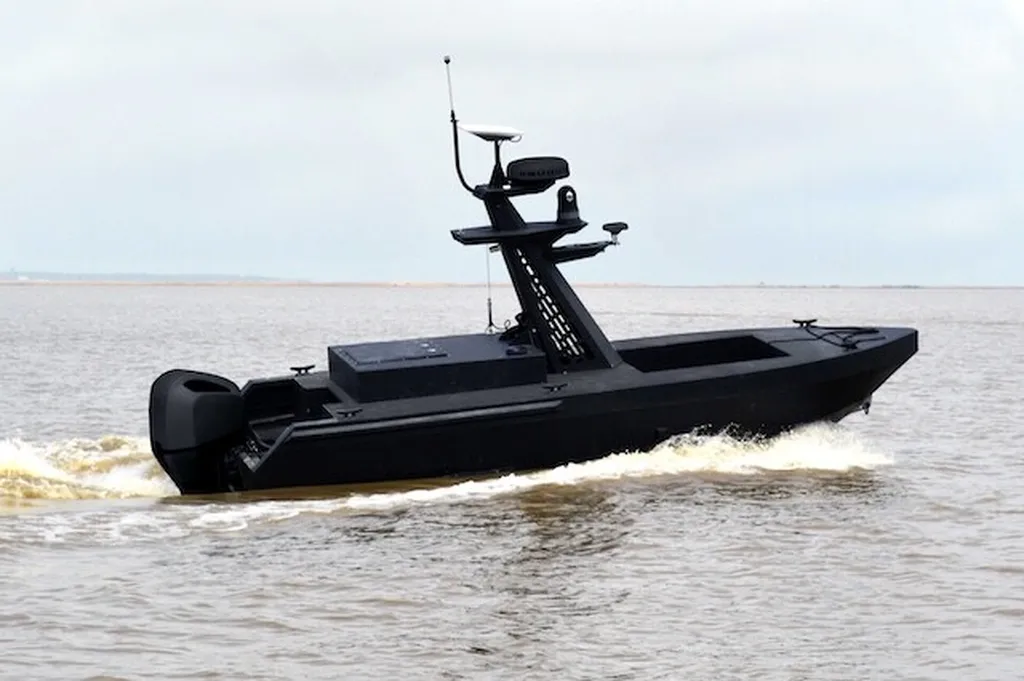
Hanwha Defense USA (HDUSA), Hanwha Systems (HSC), and US-based collaborative autonomy company HavocAI have announced a groundbreaking partnership to develop a new series of 200-foot (60-metre) autonomous surface vessels (ASVs) for defence applications. This collaboration marks a significant step forward in the integration of advanced manufacturing and cutting-edge autonomy technology within the defence sector.
The joint venture underscores Hanwha Group’s unique position as the only shipbuilder with an operational shipyard in the United States to enter into such an agreement with an autonomous vessel company. Hanwha Philly Shipyard in Pennsylvania is currently under consideration to produce the 200-foot ASVs, leveraging its robust manufacturing capabilities and strategic location.
“This partnership between Hanwha, a defence company with advanced manufacturing scale, and HavocAI, a software-first defence technology company, will deliver state-of-the-art ASVs at scale for American service members,” said HDUSA CEO Michael Coulter. The collaboration aims to harness the strengths of both entities to produce highly capable autonomous vessels that can meet the evolving demands of modern defence operations.
The development of these ASVs is poised to revolutionise maritime defence by enhancing situational awareness, operational efficiency, and mission effectiveness. Autonomous surface vessels can perform a wide range of tasks, from intelligence, surveillance, and reconnaissance (ISR) to mine countermeasures and maritime security operations. By integrating advanced autonomy technology, these vessels can operate in high-risk environments while reducing the need to expose human personnel to danger.
“This partnership is a testament to our commitment to innovation and our dedication to supporting the US military with the most advanced technologies available,” Coulter added. “By combining Hanwha’s shipbuilding expertise with HavocAI’s cutting-edge autonomy solutions, we are poised to set new standards in maritime defence.”
The collaboration between Hanwha and HavocAI also highlights the growing trend of public-private partnerships in the defence sector. As geopolitical tensions continue to evolve, there is an increasing need for innovative solutions that can address complex security challenges. By leveraging the strengths of both the private and public sectors, this partnership aims to deliver next-generation defence capabilities that can safeguard national interests and enhance global security.
The joint development of these 200-foot ASVs is expected to create new opportunities for technological advancement and economic growth. The project will not only support high-skilled jobs in the US but also drive innovation in the defence technology sector. As the partnership progresses, it is likely to serve as a model for future collaborations between defence companies and technology firms, fostering a more integrated and resilient defence ecosystem.
In conclusion, the partnership between Hanwha Defense USA, Hanwha Systems, and HavocAI represents a significant milestone in the evolution of autonomous defence technologies. By combining advanced manufacturing capabilities with cutting-edge autonomy solutions, this collaboration is poised to deliver state-of-the-art ASVs that will enhance the capabilities of the US military and contribute to global security. As the project moves forward, it will undoubtedly shape the future of maritime defence and set new benchmarks for innovation and excellence in the defence sector.