
In an era where communication technologies are advancing at an unprecedented pace, the security of satellite communications has become a critical concern. Recent geopolitical events, such as the Viasat cyberattack in February 2022, have underscored the urgent need for robust and reliable satellite missions, particularly for military and civil security operations. A recent study by researchers Olfa Ben Yahia, William Ferguson, Sumit Chakravarty, Nesrine Benchoubane, Gunes Karabulut Kurt, Gürkan Gür, and Gregory Falco explores innovative strategies to enhance the security of satellite communications through a secure-by-component design approach.
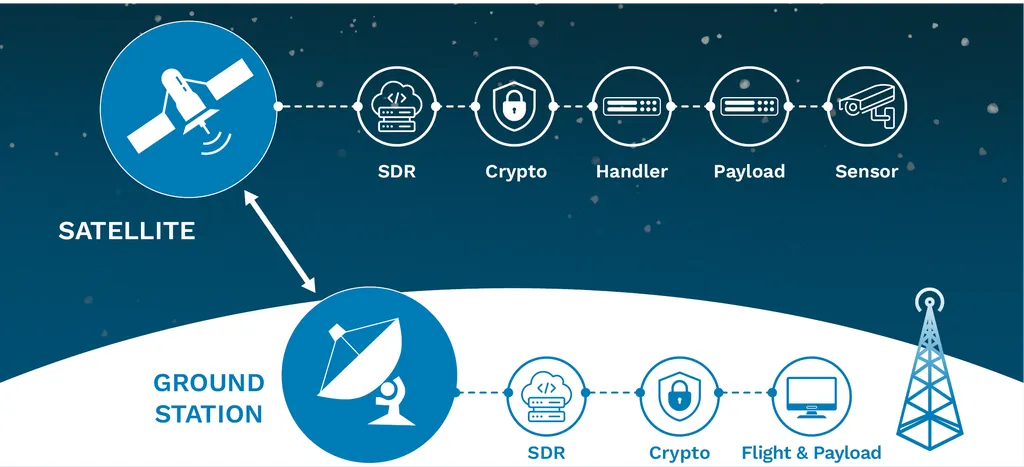
The research focuses on two Earth observation (EO) missions: one utilizing a single low Earth orbit (LEO) satellite and another employing a network of LEO satellites. The study begins by defining the scope of technical security engineering, breaking down the system into its constituent components and data flows, and identifying potential attack surfaces. This meticulous decomposition is crucial for understanding the vulnerabilities inherent in satellite communication systems.
By identifying threats at the component level, the researchers apply secure-by-design principles to redesign these components into secure blocks. This process aligns with the Space Attack Research & Tactic Analysis (SPARTA) framework, which provides a structured approach to addressing security challenges in space systems. The researchers then craft specific “shall” statements to refactor the system design, with a particular emphasis on improving the security of the link segment—the critical pathway through which data is transmitted between satellites and ground stations.
The secure-by-component design strategy offers a proactive approach to mitigating cyber threats. By addressing security at the component level, the researchers aim to create a more resilient and secure satellite communication infrastructure. This method not only enhances the overall security posture of satellite missions but also ensures that any vulnerabilities are identified and addressed early in the design process.
The practical applications of this research are significant for the defence and security sectors. As nations increasingly rely on satellite communications for military operations, civil security, and disaster response, the need for secure and reliable satellite links has never been greater. The secure-by-component design approach provides a robust framework for developing satellite systems that can withstand cyber threats and ensure the integrity and availability of critical communications.
Furthermore, the research highlights the importance of collaboration and innovation in addressing the evolving security challenges in the space domain. By leveraging the expertise of researchers from diverse backgrounds, the study offers a comprehensive and forward-thinking approach to securing satellite communications. This collaborative effort underscores the need for continued investment in research and development to stay ahead of emerging threats.
In conclusion, the study by Ben Yahia et al. represents a significant step forward in the quest for secure satellite communications. By adopting a secure-by-component design strategy, the researchers provide a blueprint for developing resilient and secure satellite systems that can meet the demands of modern military and civil security operations. As the geopolitical landscape continues to evolve, the insights and methodologies presented in this research will be invaluable in shaping the future of satellite communication security. Read the original research paper here.