
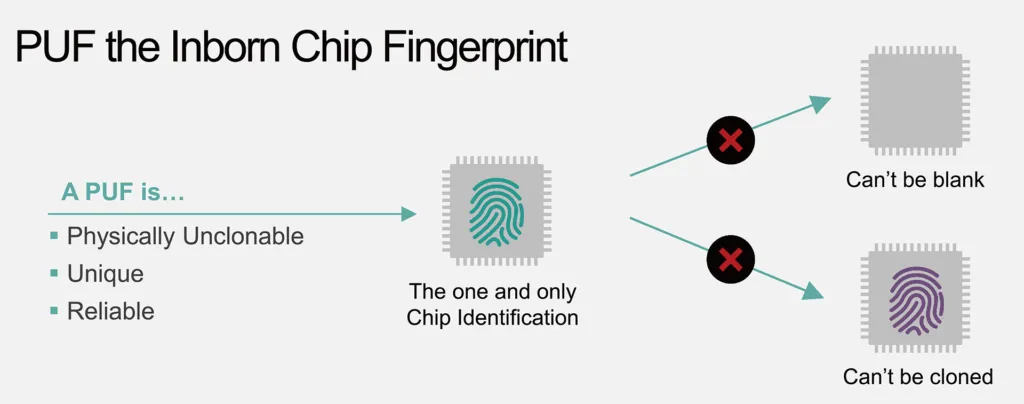
In an era where electronic devices are ubiquitous, the semiconductor industry faces an escalating threat from counterfeit integrated circuits (ICs). These counterfeit components pose significant risks to public health, financial systems, and national security, particularly in sectors heavily reliant on electronic systems. Traditional electronic physically unclonable functions (PUFs) have been the go-to solution for authenticating IC chips at the unit level. However, these methods come with critical limitations: they require the IC chips to be functional for measurements and are highly sensitive to environmental variations.
A groundbreaking study led by researchers Runze Liu, Prasun Datta, Anirudh Nakra, Chau-Wai Wong, and Min Wu introduces an innovative approach to IC chip authentication using optical PUFs. This method leverages the unique microscopic structures found on the packaging surface of individual IC chips. Unlike electronic PUFs, this optical method does not require the IC chips to be operational, making it a more versatile solution.
The researchers utilized color images of IC chip surfaces captured using common imaging devices such as flatbed scanners or mobile cameras. Their initial findings revealed that these consumer-grade devices can effectively capture meaningful physical features from the surfaces of IC chips. Building on this discovery, the team developed an efficient, lightweight verification scheme that extracts specular-reflection-based features from videos. This method achieved an impressively low equal error rate (EER) of 0.0008, indicating a high level of accuracy and reliability.
The proposed verification scheme was rigorously tested through factor, sensitivity, and ablation studies to thoroughly understand its characteristics and robustness. These studies confirmed the effectiveness of the method and highlighted its potential to enhance the security of the semiconductor supply chain.
This research marks the first application of the optical PUF principle for IC chip authentication, successfully integrating image and video processing with semiconductor technology. The findings suggest a promising avenue for bolstering the security of electronic systems against counterfeiting, thereby safeguarding critical sectors such as healthcare, finance, and defence.
The implications of this research are far-reaching. By providing a reliable method for authenticating IC chips without the need for them to be functional, the proposed optical PUF technique offers a robust solution to a pressing industry challenge. As the semiconductor industry continues to evolve, innovations like this will be crucial in maintaining the integrity and security of electronic systems worldwide. Read the original research paper here.