
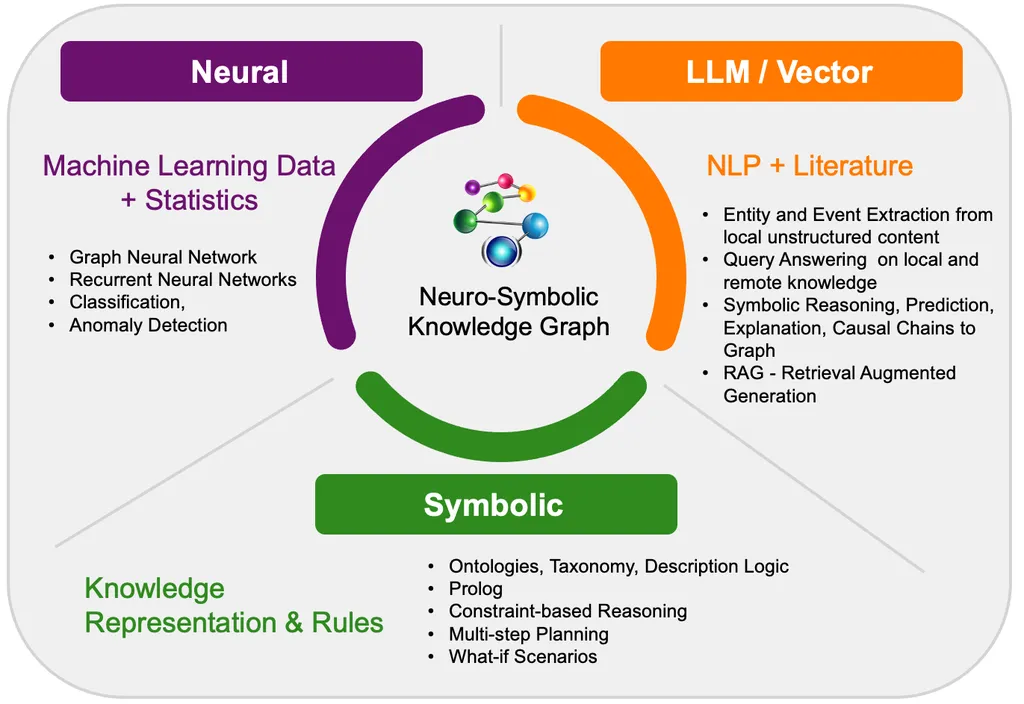
Artificial Intelligence (AI) is transforming the defence sector, enhancing strategic decision-making and revolutionizing military operations. Among the latest advancements, Neuro-Symbolic AI stands out as a promising approach that combines the strengths of neural networks and symbolic reasoning. This hybrid model offers greater flexibility and impact compared to traditional AI systems, making it particularly suited for military applications.
In a groundbreaking study led by Desta Haileselassie Hagos and Danda B. Rawat, researchers explore the potential of Neuro-Symbolic AI to revolutionize defence systems. The study highlights its capacity to improve decision-making, automate complex intelligence analysis, and strengthen autonomous systems. By integrating neural networks’ ability to process vast amounts of data with symbolic reasoning’s logical precision, Neuro-Symbolic AI can tackle intricate tasks across various domains, including military operations.
The research delves into the practical applications of Neuro-Symbolic AI in military contexts. For instance, it can enhance situational awareness by processing real-time data from multiple sources, enabling faster and more accurate decision-making. Additionally, it can automate the analysis of intelligence, identifying patterns and anomalies that might elude human analysts. This capability is crucial in threat detection and response, where timely and precise information can mean the difference between success and failure.
Beyond its operational benefits, Neuro-Symbolic AI also raises important ethical, strategic, and technical considerations. The study addresses these challenges, emphasizing the need for robust ethical frameworks to guide its development and deployment. Strategic implications are also explored, as the adoption of Neuro-Symbolic AI could shift the balance of power in military capabilities. Technically, the research underscores the need for continuous advancements to ensure the system’s reliability, security, and adaptability in dynamic military environments.
The study represents a significant contribution to the growing body of research on Neuro-Symbolic AI. By comprehensively exploring its extensive possibilities, it provides valuable insights into how this technology can shape the future of military and civilian applications. As defence technologies continue to evolve, Neuro-Symbolic AI could play a pivotal role in enhancing operational efficiency, strategic planning, and overall military effectiveness.
In conclusion, the research by Hagos and Rawat offers a compelling vision of how Neuro-Symbolic AI can transform defence systems. By addressing both the opportunities and challenges associated with this technology, the study paves the way for further innovation and collaboration in the field. As we stand on the brink of a new era in AI-driven defence, Neuro-Symbolic AI emerges as a key player in shaping the future of military operations. Read the original research paper here.