
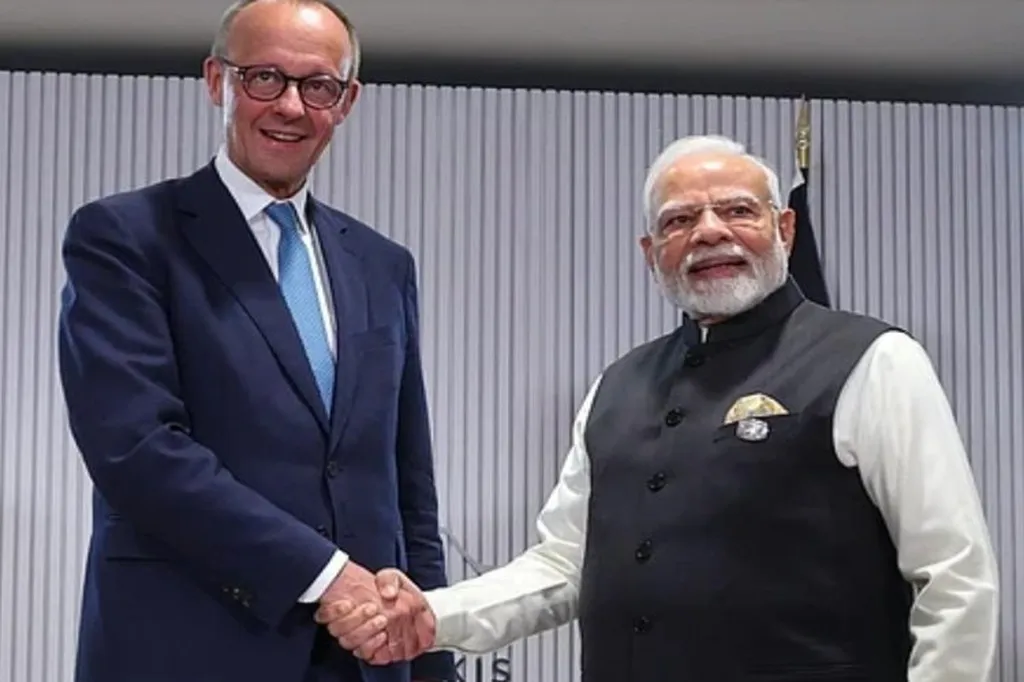
German Chancellor Friedrich Merz embarks on his first bilateral visit outside NATO and the European Union, setting his sights on India. This significant journey, beginning on Monday, underscores the escalating importance of India in German foreign policy. As German Ambassador to India Philipp Ackermann puts it, this visit is a “very strong signal” of the deepening ties between the two nations.
Chancellor Merz’s itinerary is packed with high-level engagements and symbolic visits. In Ahmedabad, he will meet Prime Minister Narendra Modi and visit the historic Sabarmati Ashram. This invitation to Modi’s hometown, extended by the Prime Minister himself, is seen as a gesture of friendship and a warm welcome, which Merz greatly appreciates.
From Ahmedabad, the Chancellor will proceed to Bengaluru on January 13, where he will tour the Indian Institute of Science and the campus of German industrial giant Bosch. Accompanying Merz is a substantial business delegation, including CEOs from 25 German companies, both large and medium-sized, highlighting the visit’s economic significance.
The agenda for this visit is comprehensive, covering defence, supply chains, technology, education, and skilling. Merz, who has been in office for eight months, aims to strengthen the already robust partnership with India. Discussions will likely touch on global politics, reflecting the shifting geopolitical landscape.
Business and trade will be central to the visit. Germany and India achieved a combined trade volume of $50 billion in goods and services last year, demonstrating Germany’s deep engagement in India. Over 2,000 German companies operate in India, while around 750 Indian companies have invested in Germany. Trade between the two nations is relatively balanced, with Germany holding a small surplus in goods and India maintaining a slight surplus in services. Ackermann anticipates further growth in trade, driven by increasing interest from German companies, with an average of two companies per week contacting the Indo-German Chamber of Commerce to explore operations in India.
Migration and skilled labour are also key topics. Germany and India already have a migration agreement in place, with legal Indian migration proving to be a success story. Indian workers in Germany earn, on average, 20% more than their German counterparts. Germany is keen on attracting skilled workers in caregiving, nursing, and craftsmanship, areas where India shows strong willingness and readiness. During his visit, Chancellor Merz will engage with students, engineers, and individuals interested in vocational training in Germany.
Higher education cooperation between the two countries is robust, with German universities reporting positive experiences with Indian students. There is a growing interest among Indian students in studying in Germany.
Global issues, including the war in Ukraine and broader international developments, will also be discussed. While defence talks, particularly regarding submarines, are ongoing, they are not the primary focus of this visit. However, Germany and India are expected to initiate work on a broader roadmap for defence cooperation.
Chancellor Merz’s visit to India is a testament to the strengthening bonds between the two nations. As global dynamics evolve, this visit is poised to further solidify the partnership, paving the way for enhanced collaboration in trade, technology, education, and defence.