
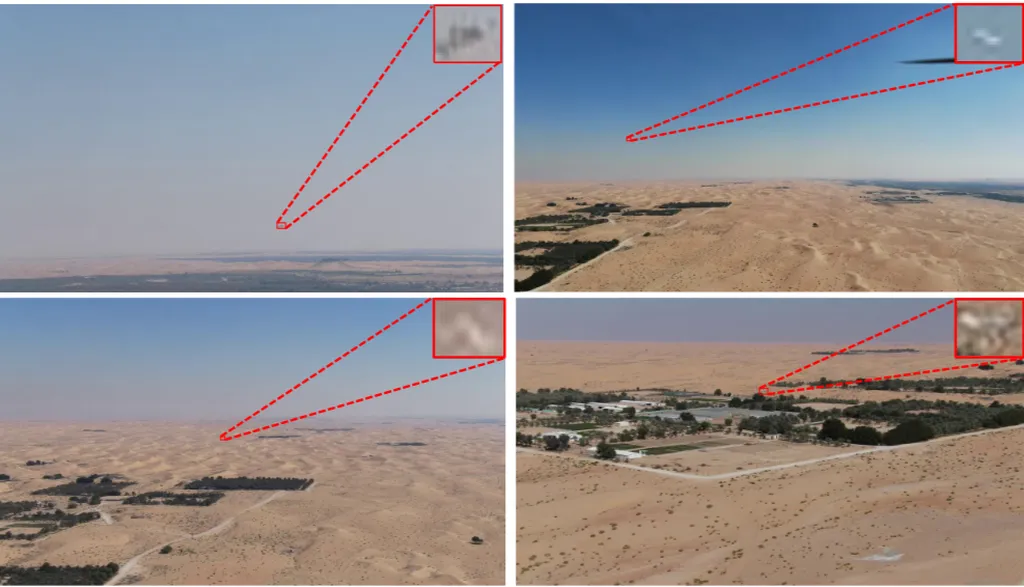
In the rapidly evolving landscape of unmanned aerial vehicles (UAVs), the need for advanced detection technologies has become paramount. Traditional methods often struggle with identifying small UAV targets at long distances, where the targets appear as extremely small pixels. To address this critical gap, a team of researchers has developed the Global-Local YOLO-Motion (GL-YOMO) detection algorithm, a groundbreaking approach that combines the strengths of You Only Look Once (YOLO) object detection with multi-frame motion detection techniques.
The GL-YOMO algorithm represents a significant leap forward in UAV detection technology. At its core, the YOLO detection algorithm is optimized through multi-scale feature fusion and attention mechanisms, which enhance its ability to identify small targets. The integration of the Ghost module further improves the efficiency of the system, making it more suitable for real-time applications. This optimization allows the algorithm to process and analyze data more quickly, which is crucial in scenarios where immediate detection and response are necessary.
In addition to the YOLO component, the GL-YOMO algorithm incorporates a motion detection approach based on template matching. This technique augments the system’s capabilities by detecting minute movements associated with small UAV targets. By analyzing multiple frames, the algorithm can identify subtle changes in the target’s position, even when the target is barely visible. This multi-frame motion analysis enhances the overall accuracy and stability of the detection process, ensuring that even the smallest UAVs are not overlooked.
One of the key innovations of the GL-YOMO algorithm is its global-local collaborative detection strategy. This approach involves a two-tiered system where global detection provides a broad overview of the area, while local detection focuses on specific regions of interest. By combining these two perspectives, the algorithm achieves a high level of precision and efficiency. This collaborative strategy ensures that the system can effectively detect and track UAVs in various environments and conditions.
The researchers conducted extensive experiments using a self-constructed fixed-wing UAV dataset to validate the effectiveness of the GL-YOMO algorithm. The results demonstrated a significant enhancement in detection accuracy and stability compared to traditional methods. The algorithm’s ability to accurately identify small UAV targets at long distances underscores its potential for a wide range of applications in both military and civilian sectors.
The implications of this research are far-reaching. In military applications, the GL-YOMO algorithm can be deployed to enhance border security, monitor restricted airspace, and protect critical infrastructure from potential UAV threats. In civilian applications, it can be used for traffic monitoring, search and rescue operations, and environmental surveillance. The algorithm’s real-time detection capabilities make it particularly valuable in scenarios where immediate action is required to mitigate risks and ensure safety.
As the use of UAVs continues to grow, the need for advanced detection technologies will only become more pressing. The GL-YOMO algorithm represents a significant step forward in addressing this challenge. By combining the strengths of YOLO object detection with multi-frame motion analysis, the algorithm offers a robust and efficient solution for identifying small UAV targets. Its potential applications in both military and civilian sectors highlight the importance of ongoing research and development in this field. The GL-YOMO algorithm not only enhances our ability to detect and respond to UAV threats but also paves the way for future innovations in the rapidly evolving landscape of unmanned aerial systems. Read the original research paper here.