
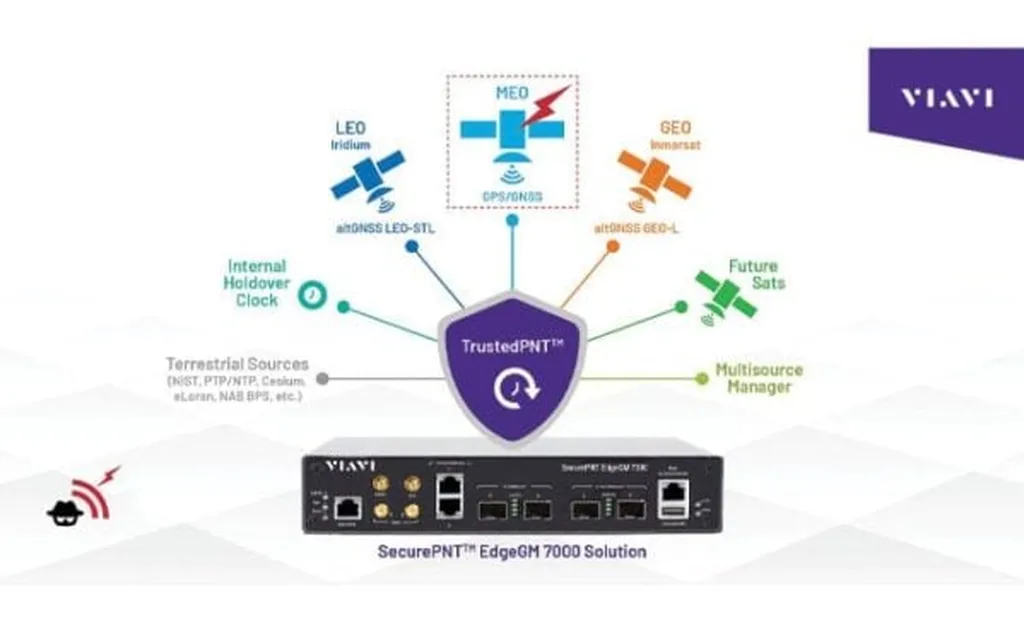
In an era where Global Navigation Satellite Systems (GNSS), particularly the Global Positioning System (GPS), underpin critical infrastructure and services, the threat of spoofing and jamming has become a pressing concern. These malicious activities can disrupt positioning, navigation, and timing (PNT) across sectors such as transportation, telecommunications, and emergency services, leading to potentially catastrophic outcomes. Ali Ghanbarzade and Hossein Soleimani, researchers at the forefront of this challenge, have published groundbreaking research that leverages machine learning and deep learning to detect and mitigate these threats with unprecedented accuracy.
The vulnerability of GNSS systems to spoofing and jamming attacks stems from their lack of inherent security measures. Spoofing involves transmitting counterfeit signals to deceive receivers into calculating incorrect positions, while jamming disrupts GNSS signals entirely. These threats can cause navigational errors in civilian aviation, security breaches in military operations, and disruptions in various civilian applications. The researchers’ work addresses these challenges head-on, utilizing advanced algorithms to distinguish between authentic and malicious signals, thereby safeguarding the integrity of GNSS systems.
The study conducted by Ghanbarzade and Soleimani is notable for its comprehensive approach to real-world challenges. By employing machine learning, deep learning, and computer vision techniques, the researchers tackled both spoofing and jamming detection. Their experiments were conducted on two real-world datasets, focusing on spoofing and jamming detection. The results were impressive: in the GNSS/GPS jamming detection task, they achieved approximately 99% accuracy, marking a significant improvement of around 5% compared to previous studies. Furthermore, their work on spoofing detection yielded results that highlight the potential of these advanced technologies in enhancing security measures.
The implications of this research are far-reaching. For the defence and security sector, the ability to accurately detect and mitigate spoofing and jamming attacks is crucial. The high accuracy achieved by Ghanbarzade and Soleimani’s methods provides a robust framework for protecting military and civilian applications from malicious interference. This research not only advances the field of GNSS security but also sets a new standard for the application of machine learning and deep learning in defence technology.
As the threat landscape continues to evolve, the need for advanced detection and mitigation strategies becomes ever more critical. The work of Ghanbarzade and Soleimani represents a significant step forward in this domain, offering a promising avenue for enhancing the security of GNSS systems. By leveraging the power of machine learning and deep learning, researchers and defence experts can develop more resilient and reliable systems capable of withstanding the sophisticated threats of today and tomorrow. This research underscores the importance of continuous innovation and collaboration in the defence and security sector, ensuring that our critical infrastructure remains secure in an increasingly interconnected world. Read the original research paper here.