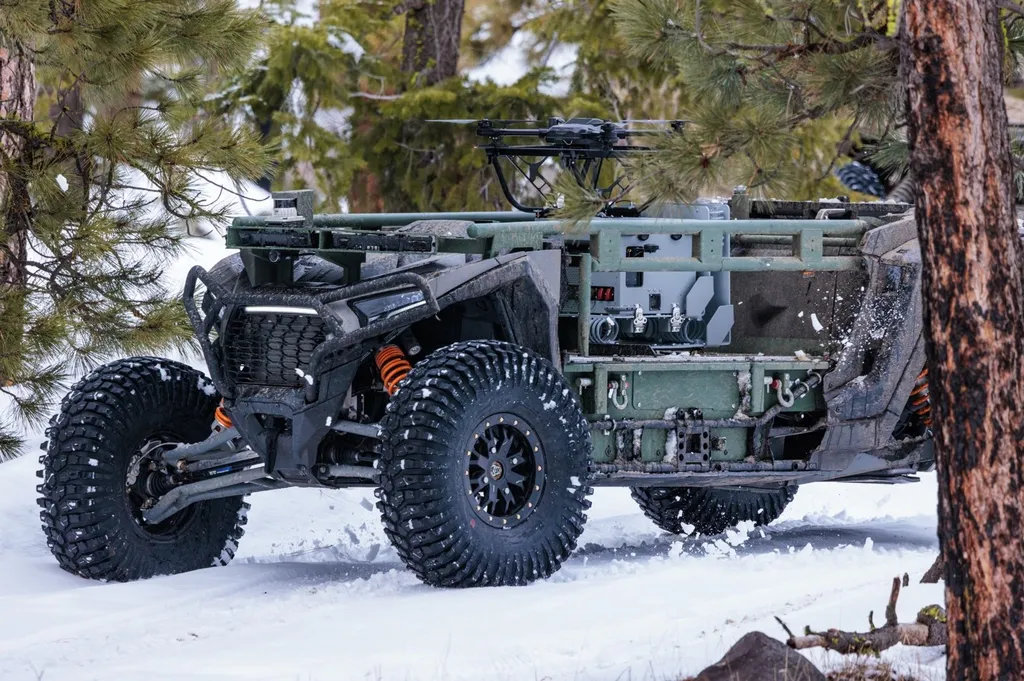
The rapid evolution of Artificial Intelligence (AI) and its subset, Deep Learning (DL), has significantly transformed numerous domains, with autonomous driving being one of the most prominent. The integration of autonomous driving in military settings is a game-changer, offering the potential to reduce human casualties and execute missions with precision and safety in hazardous environments. This technology also provides reliable logistics support, mitigating risks associated with human error due to fatigue.
However, the reliance on autonomous driving in mission-critical scenarios necessitates an advanced decision-making model that is both adaptable and optimal. The presence of numerous interconnected autonomous vehicles in such environments underscores the importance of Ultra-Reliable Low Latency Communication (URLLC). URLLC is essential for seamless coordination, real-time data exchange, and instantaneous responses to dynamic driving conditions.
The advent of 6G technology is set to revolutionize the concept of the Internet of Automated Defense Vehicles (IoADV) within the broader framework of the Internet of Military Defense Things (IoMDT). 6G’s robust connectivity will facilitate real-time data exchange, advanced navigation, and enhanced safety features, all of which are crucial for the effective functioning of IoADV.
In addition to 6G, another critical advancement in this space is the use of pre-trained Generative Large Language Models (LLMs) for decision-making and communication optimization in autonomous driving. These models can significantly enhance the capabilities of autonomous vehicles by providing more accurate and context-aware decision-making processes.
Researchers Murat Arda Onsu, Poonam Lohan, and Burak Kantarci have explored the opportunities and challenges associated with these technologies. Their work highlights the potential of these advancements in critical defense applications, particularly through the development of IoADV. The integration of AI, DL, URLLC, 6G, and LLMs into IoADV can greatly enhance autonomous military operations, making them more efficient, reliable, and safe.
The researchers emphasize the need for further exploration and development in this area to fully realize the potential of these technologies. By addressing the challenges and leveraging the opportunities, the defense sector can significantly benefit from the advancements in autonomous driving and related technologies. This will not only improve the effectiveness of military operations but also ensure the safety and security of personnel involved in high-risk missions. Read the original research paper here.