
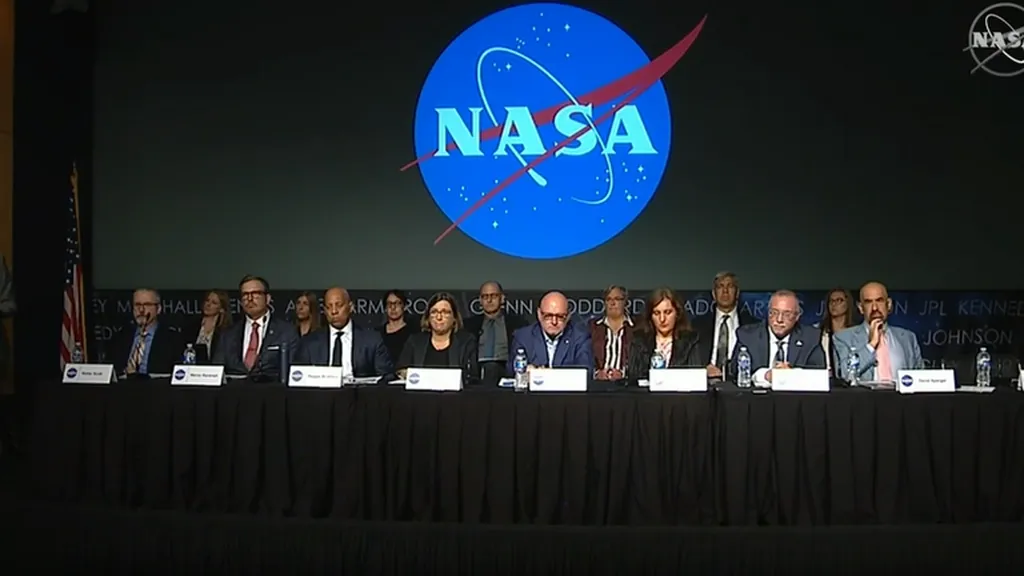
Unidentified Anomalous Phenomena (UAP), once relegated to the fringes of scientific inquiry, have recently garnered serious attention from both astronomers and military experts. Traditionally dismissed as pseudoscience due to a lack of empirical evidence, UAP are now being scrutinized with renewed vigor. This shift is driven by a growing recognition that these phenomena could offer insights into unexplained aerial observations that defy conventional understanding. Researchers Beatriz Villarroel and Kevin Krisciunas are at the forefront of this emerging field, advocating for a more structured and empirical approach to UAP research.
In their recent review, Villarroel and Krisciunas argue that the key to advancing UAP research lies in moving beyond mere data collection and categorization. Instead, they propose a hypothesis-driven approach, where specific theories—such as the possibility of extraterrestrial visitations—are rigorously tested. This method mirrors the scientific rigor applied to astronomical discoveries, where hypotheses are formulated, tested, and refined based on empirical evidence. By adopting this approach, researchers can systematically explore the nature of UAP and potentially uncover groundbreaking insights.
One of the innovative contributions of Villarroel and Krisciunas is the proposal of a “toy model” involving a network of neuro-interface extraterrestrial probes. This model serves as a theoretical framework to predict the signatures and behaviors of exotic UAP. By simulating how such probes might interact with Earth’s environment, researchers can refine their detection methods and better understand the underlying mechanisms of UAP. This model also addresses ethical concerns, ensuring that any potential interactions with extraterrestrial intelligence are approached with caution and responsibility.
The comparison between UAP research and the calibration and interpretation of astronomical discoveries is particularly illuminating. Just as astronomers calibrate their instruments to filter out noise and identify genuine celestial phenomena, UAP researchers must develop robust methodologies to distinguish between natural, human-made, and potentially extraterrestrial sources. This process involves not only advanced technological tools but also interdisciplinary collaboration, integrating insights from fields such as physics, engineering, and cognitive science.
The growing interest in UAP from both civilian astronomers and military experts underscores the potential significance of these phenomena. As Villarroel and Krisciunas highlight, a structured and empirical approach to UAP research could yield valuable scientific discoveries and enhance our understanding of the universe. By focusing on specific hypotheses and employing rigorous testing methods, researchers can demystify UAP and potentially uncover new aspects of reality that challenge our current scientific paradigms.
In conclusion, the work of Villarroel and Krisciunas represents a pivotal step forward in the scientific study of UAP. Their hypothesis-driven approach and innovative modeling techniques offer a roadmap for future research, encouraging a more systematic and empirical investigation of these enigmatic phenomena. As the scientific community continues to explore the mysteries of UAP, their findings could redefine our understanding of the cosmos and our place within it. Read the original research paper here.