
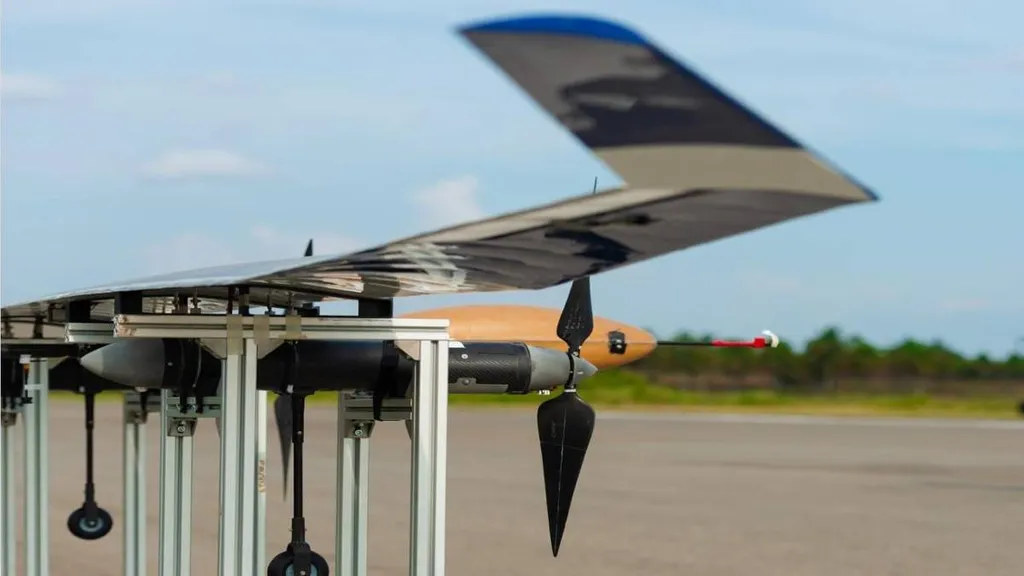
In a significant stride towards indigenous defence innovation, the Indian Army has begun deploying solar-powered surveillance drones to bolster border monitoring and intelligence operations. This pioneering initiative underscores India’s dedication to sustainable, autonomous, and long-endurance defence solutions, aligning with the Atmanirbhar Bharat initiative and the evolving demands of modern warfare.
The deployment of these drones is a strategic response to the challenges posed by India’s 7,517 km of international borders, which traverse diverse and often inhospitable terrains, from the towering Himalayas to the arid deserts. Traditional battery-powered and tethered drones, which require frequent landings and logistical support, are impractical for remote and rugged sectors. The newly inducted solar-powered UAV, named the Medium Altitude Persistent Surveillance System (MAPSS), addresses these limitations by harnessing solar energy for extended flight endurance, reducing the need for ground support.
Developed by NewSpace Research & Technologies (NRT), a Bengaluru-based defence startup incubated under the Ministry of Defence’s Innovations for Defence Excellence (iDEX) programme, MAPSS represents India’s first solar-electric surveillance UAV to be operationalised by the armed forces. Key features of the MAPSS include:
– **Solar-Powered and Fully Electric UAV:** Minimises dependency on conventional fuel and batteries.
– **Extended Operational Endurance:** Capable of sustained flight for over 24–27 hours, even under partial sunlight.
– **Multi-Terrain Surveillance:** Suitable for mountainous, desert, and communication-denied border zones.
– **Modular Payloads:** Supports Intelligence, Surveillance & Reconnaissance (ISR), Electronic Intelligence (ELINT), and communications relay roles.
– **Low Detection Profile:** Quiet electric motors and minimal thermal signature enhance covert operations.
– **Autonomy in GNSS-Denied Zones:** Advanced navigation supports operations even when GPS signals are weak or unavailable.
The Indian Army has placed a ₹168 crore contract for this innovative solar UAV system, marking its formal induction into active surveillance and reconnaissance roles. This procurement is not only significant for its advanced technology but also for its origins in indigenous R&D and domestic startup engagement, showcasing the success of government programs aimed at bolstering self-reliant defence production.
The MAPSS project is a product of the iDEX initiative, launched in 2018 to bridge the gap between innovators and the Indian armed forces. Through iDEX, over 200 startups have progressed from concept to practical defence deployments. NewSpace Research & Technologies, the developer behind MAPSS, has previously supplied heterogeneous swarm drones to the Army under fast-track acquisition programs.
Experts highlight that this solar UAV acquisition symbolises a broader shift towards self-sustaining, low-logistics autonomous systems, particularly relevant for India’s expansive and complex border zones. The Indian Army has accelerated drone deployments in recent years, driven by operational needs post-conflicts and emerging threats. Following Operation Sindoor, which saw increased use of loitering munitions and surveillance systems, the Army has signed multiple contracts aggregating hundreds of crores for various UAV systems. Simultaneously, Indian defence startups and private firms are rising to meet these requirements, catalyzing a renaissance in domestic UAV manufacturing aligned with global military modernization trends.
MAPSS is expected to substantially strengthen India’s persistent ISR posture along contested border areas such as Ladakh & Himalayan Frontiers, Western Desert Frontiers (Rajasthan & Gujarat), and connectivity-poor regions. Its ability to stay airborne for long durations will assist in real-time threat detection, smuggling interdiction, troop movement tracking, and early warning—all vital for rapid responses along strategic frontiers.
This strategic leap in indigenous defence technology not only enhances India’s border security but also sets a precedent for sustainable and innovative defence solutions. As the Indian Army continues to integrate advanced UAVs into its operational framework, the collaboration between defence startups and the military will likely drive further advancements in autonomous and eco-friendly defence technologies.