
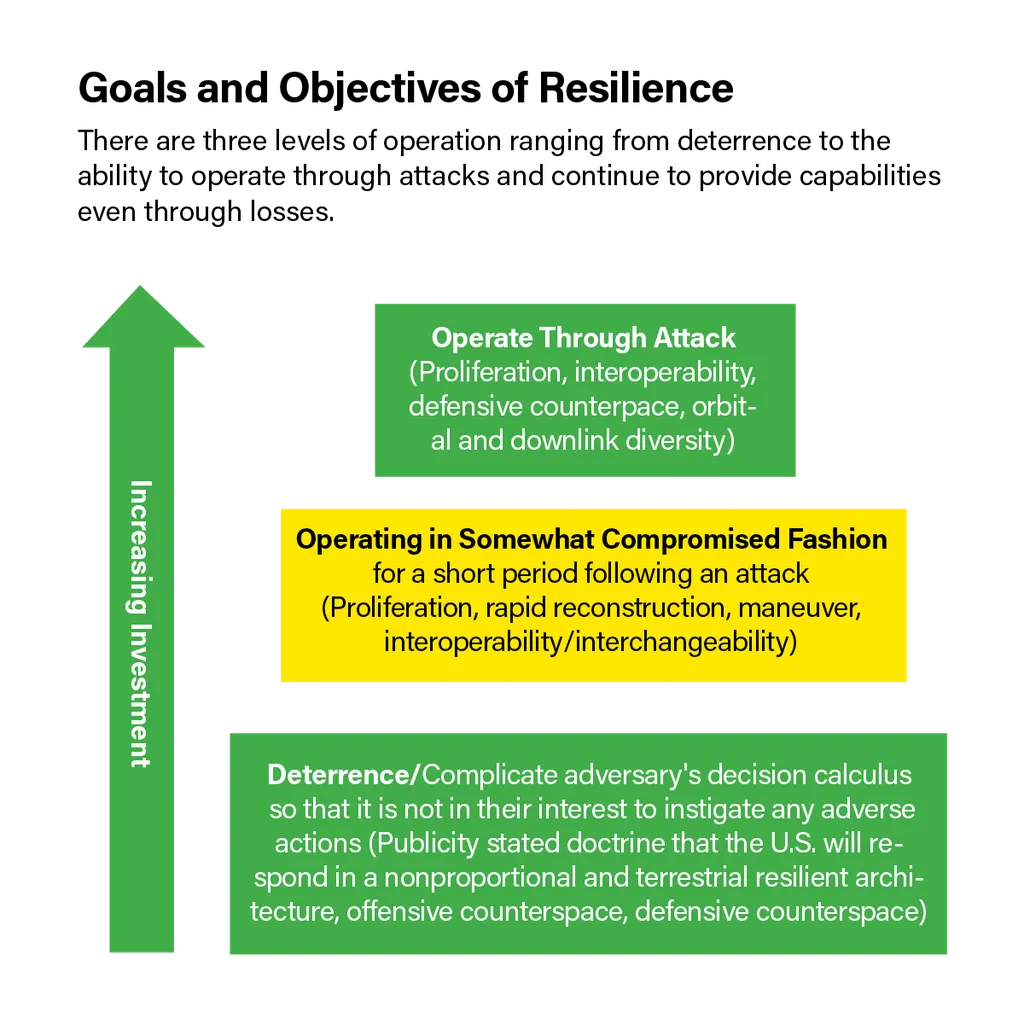
In an era where satellite systems are increasingly vulnerable to jamming, cyberattacks, and electromagnetic disruptions, traditional redundancy strategies often fall short. A groundbreaking study introduces a resilience-by-design framework that adapts the PACE (Primary, Alternate, Contingency, Emergency) methodology, originally developed for tactical communications in military operations, to the realm of satellite systems. This innovative approach leverages a layered state-transition model informed by established threat scoring frameworks such as CVSS, DREAD, and NASA’s risk matrix.
The research, led by Anouar Boumeftah, Sarah McKenzie-Picot, Peter Klimas, and Gunes Karabulut Kurt, introduces a dynamic resilience index to quantify system adaptability. The study evaluates three PACE variants: static, adaptive, and softmax-based decision models, to assess resilience under diverse disruption scenarios. This framework aims to enhance the survivability and operational continuity of next-generation space assets.
The PACE methodology provides a structured approach to managing satellite threats by defining multiple layers of operational fallback mechanisms. The primary system operates under normal conditions, while alternate, contingency, and emergency systems activate in response to escalating threats. This layered approach ensures that satellite systems can maintain functionality even under severe disruptions.
The researchers implemented a state-transition model that dynamically adjusts based on real-time threat assessments. By integrating threat scoring frameworks like CVSS (Common Vulnerability Scoring System), DREAD (Damage, Reproducibility, Exploitability, Affected Users, Discoverability), and NASA’s risk matrix, the model can accurately evaluate the severity and impact of potential threats. This enables the system to transition seamlessly between different operational states, ensuring continuous functionality.
One of the key innovations of this study is the introduction of a dynamic resilience index. This index quantifies the adaptability of the satellite system, providing a measurable metric for resilience. The researchers tested three variants of the PACE model: static, adaptive, and softmax-based decision models. Each variant was evaluated under various disruption scenarios to determine its effectiveness in maintaining operational continuity.
The static PACE model relies on pre-defined fallback mechanisms that activate based on specific threat conditions. While this approach provides a straightforward and predictable response, it may not be as flexible in dealing with dynamic and evolving threats. The adaptive PACE model, on the other hand, uses real-time data to adjust its response strategies dynamically. This adaptability allows the system to respond more effectively to a wide range of threats.
The softmax-based decision model introduces a probabilistic approach to decision-making. By assigning probabilities to different threat scenarios, the model can make more informed decisions about the best course of action. This approach enhances the system’s ability to prioritize responses and allocate resources effectively, further improving its resilience.
The study highlights the effectiveness of lightweight, decision-aware fallback mechanisms in improving the survivability of satellite systems. By integrating the PACE methodology with advanced threat scoring frameworks, the researchers have developed a robust and adaptable resilience framework. This framework not only enhances the operational continuity of satellite systems but also sets a new standard for resilience-by-design in the defence and security sector.
The implications of this research are far-reaching. As satellite systems become increasingly integral to modern military and civilian operations, the need for resilient and adaptable threat response mechanisms becomes ever more critical. The PACE framework provides a comprehensive solution that can be tailored to meet the specific needs of different satellite systems, ensuring their continued functionality in the face of evolving threats.
In conclusion, the resilience-by-design framework introduced by Boumeftah, McKenzie-Picot, Klimas, and Karabulut Kurt represents a significant advancement in the field of satellite threat response. By adapting the PACE methodology and integrating advanced threat scoring frameworks, the researchers have developed a robust and adaptable solution that enhances the survivability and operational continuity of next-generation space assets. This innovative approach sets a new benchmark for resilience in the defence and security sector, ensuring that satellite systems can continue to function effectively in an increasingly threat-laden environment. Read the original research paper here.