
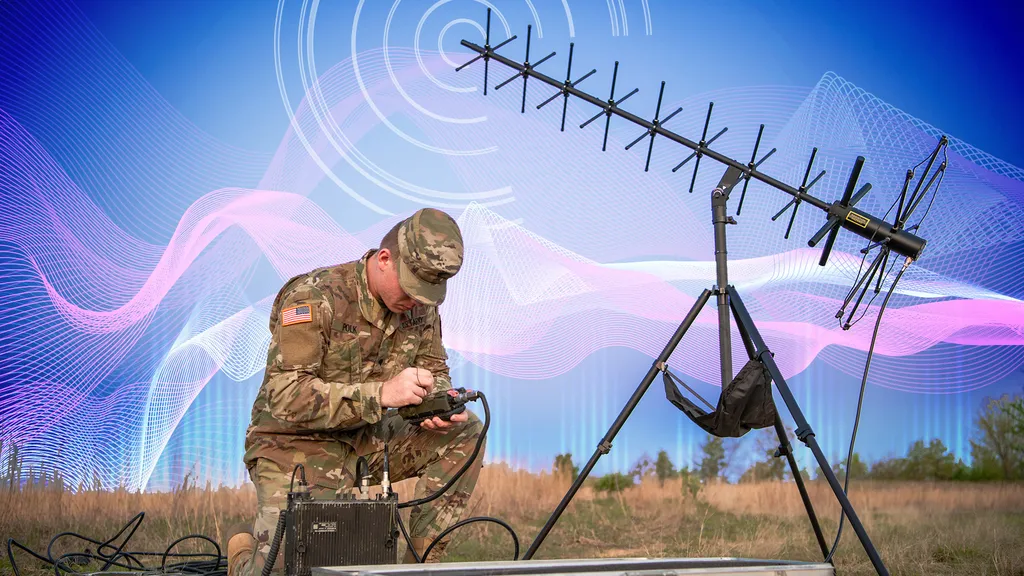
In the rapidly evolving landscape of wireless communication, spectrum sharing has emerged as a critical strategy to meet the ever-growing demands of commercial wireless services. However, the coexistence of these services with incumbent systems, particularly military communications, presents significant regulatory and technological challenges. A recent study by researchers Shafi Ullah Khan, Michel Kulhandjian, and Debashri Roy explores the potential of machine learning (ML) to enhance spectrum sharing within the Citizens Broadband Radio Service (CBRS) band, focusing on the coexistence of commercial signals, such as 5G, and military radar systems.
The Federal Communications Commission (FCC) has established regulatory frameworks to manage shared commercial use alongside mission-critical operations. However, the coexistence of commercial signals and military radar systems within the CBRS band remains a complex issue. The researchers demonstrate that ML techniques can potentially extend the FCC-recommended signal-to-interference-plus-noise ratio (SINR) boundaries by improving radar detection and waveform identification in high-interference environments.
The study employs ML models utilizing In-phase/Quadrature (IQ) data and spectrograms to achieve the FCC-recommended 99% radar detection accuracy even when subjected to high interference from 5G signals up to -5dB SINR, exceeding the required limits of 20 SINR. This represents a significant advancement over existing technologies, which typically achieve 99% radar detection accuracy at approximately 12 dB SINR. The researchers’ experimental studies distinguish their work from the state-of-the-art by significantly extending the SINR limit for 99% radar detection accuracy down to -5 dB.
Beyond detection, the researchers apply ML to analyze and identify radar waveforms. The proposed models demonstrate the capability to classify six distinct radar waveform types with 93% accuracy. This dual functionality—enhanced detection and waveform identification—positions ML as a powerful tool for managing spectrum sharing in the CBRS band.
The implications of this research are profound for the defence and security sector. As commercial wireless services continue to expand, the ability to coexist with military communications without compromising operational effectiveness is paramount. The ML-based approaches outlined in this study offer a robust solution to this challenge, ensuring that both commercial and military systems can operate efficiently within the same spectrum.
Furthermore, the findings highlight the broader potential of ML in addressing complex coexistence issues in wireless communication. By leveraging advanced algorithms and data-driven insights, the defence sector can enhance its spectrum sharing capabilities, ultimately contributing to more secure and reliable military communications.
In conclusion, the research by Khan, Kulhandjian, and Roy represents a significant step forward in the field of spectrum sharing. Their work not only addresses current regulatory and technological challenges but also paves the way for future innovations in wireless communication. As the defence and security sector continues to evolve, the integration of ML techniques will be crucial in meeting the demands of an increasingly complex electromagnetic environment. Read the original research paper here.