In the realm of survival analysis, particularly for systems subject to maintenance over time, the Weibull distribution has long been a go-to statistical tool. However, when dealing with proxy indicators and censored observations, traditional models often fall short. This is where deep neural networks come into play, offering the flexibility to learn complex relationships between time-dependent covariates and operational lifetime. Enter WTNN—Weibull-Tailored Neural Networks—a groundbreaking framework designed to revolutionize survival analysis in demanding environments.
Developed by researchers Gabrielle Rives, Olivier Lopez, and Nicolas Bousquet, WTNN addresses the limitations of existing methodologies by leveraging the power of neural networks. The framework is specifically tailored to incorporate qualitative prior knowledge about the most influential covariates, aligning seamlessly with the shape and structure of the Weibull distribution. This innovative approach not only enhances the accuracy of survival predictions but also ensures that the models remain robust and interpretable.
The inspiration for WTNN stems from the challenging conditions faced by military vehicles operating in highly variable environments. Traditional survival models often struggle to account for the intricate interplay of factors that influence the longevity of such systems. By expressing the Weibull distribution’s parameters as functions of time-dependent covariates, WTNN provides a more nuanced and accurate representation of system survival.
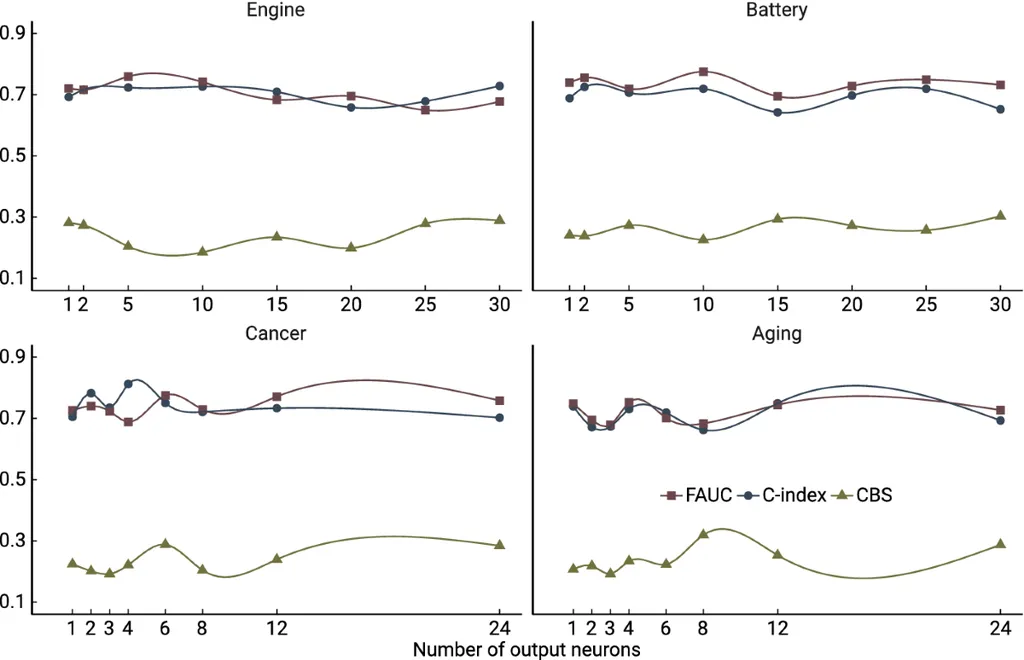
One of the standout features of WTNN is its ability to be reliably trained on proxy and right-censored data. This capability is crucial for real-world applications where complete and uncensored data is often unavailable. The researchers demonstrated the efficacy of WTNN through numerical experiments, showcasing its ability to produce robust and interpretable survival predictions. These findings suggest that WTNN can significantly improve upon existing approaches, offering a more reliable tool for survival analysis in complex and dynamic settings.
The practical applications of WTNN extend beyond military vehicles to any system subject to maintenance and wear over time. Industries such as aerospace, automotive, and manufacturing could benefit greatly from the enhanced predictive capabilities offered by this framework. By providing more accurate survival predictions, WTNN can help optimize maintenance schedules, reduce downtime, and ultimately extend the operational lifespan of critical systems.
In summary, WTNN represents a significant advancement in the field of survival analysis. By combining the flexibility of deep neural networks with the robustness of the Weibull distribution, this framework offers a powerful tool for modeling the survival of systems in demanding environments. As industries continue to seek ways to improve the reliability and longevity of their systems, WTNN stands out as a promising solution that can drive innovation and efficiency. Read the original research paper here.