
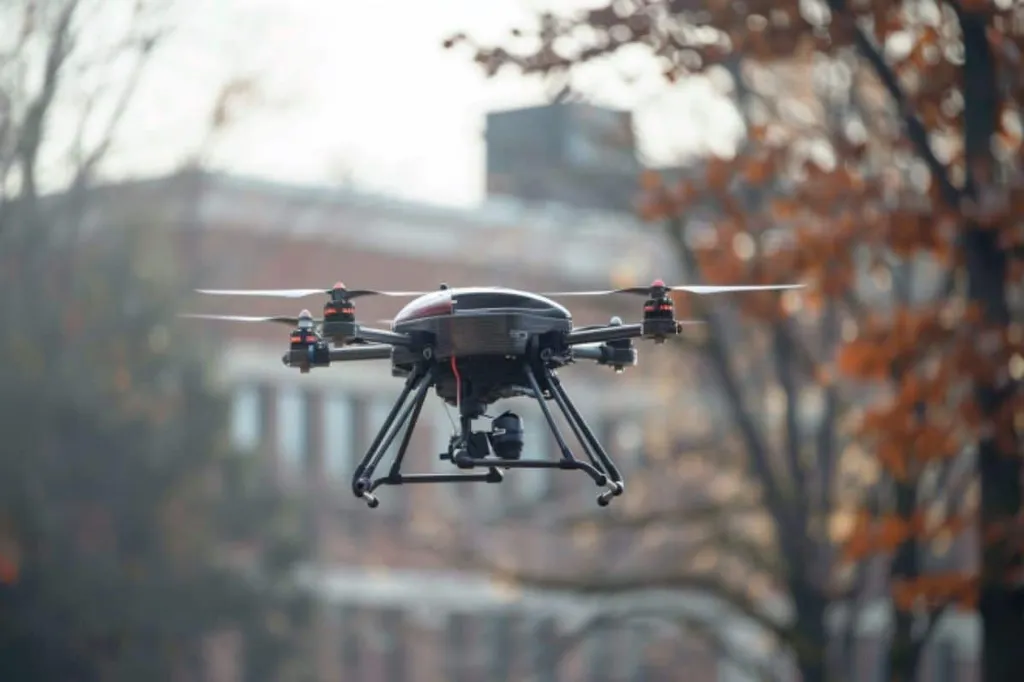
The rapid proliferation of small drones has introduced a new layer of complexity to modern security challenges, posing significant threats to both military operations and civilian infrastructure. In response to this growing concern, a team of researchers has developed an innovative drone detection system that leverages the power of spiking neural networks and neuromorphic cameras. This cutting-edge technology promises to revolutionise early and automated drone detection, offering a robust solution for safeguarding sensitive areas.
The research, conducted by Anton Eldeborg Lundin, Rasmus Winzell, Hanna Hamrell, David Gustafsson, and Hannes Ovrén, focuses on creating a fully neuromorphic system capable of detecting drones with unprecedented energy efficiency. By deploying detection models on a neuromorphic chip, the system can operate autonomously, forming a virtual tripwire that alerts authorities when drones enter restricted zones. This approach not only enhances security but also ensures that the system can be easily deployed in remote or contested areas, thanks to its low power consumption and small size.
One of the standout features of this neuromorphic solution is its remarkable energy efficiency. The researchers demonstrated that their system is several orders of magnitude more energy-efficient than a reference solution deployed on an edge GPU. This efficiency allows the system to run on battery power for over a year, making it an ideal choice for long-term surveillance in locations lacking power infrastructure. The ability to operate independently for extended periods is a game-changer for military and civilian security applications, providing continuous protection without the need for frequent maintenance or recharging.
The research also explored the use of synthetically generated data for training the detection models. The findings suggest that the models are more likely to rely on the shape of the drone rather than the temporal characteristics of its propellers. This insight is crucial for improving the accuracy and reliability of drone detection systems, as it highlights the importance of focusing on the visual distinctiveness of drones during the training process. By refining the training data and models, the researchers aim to enhance the system’s ability to distinguish between different types of drones and other objects, reducing false positives and improving overall performance.
The practical applications of this neuromorphic drone detection system are vast. For the defence sector, it offers a powerful tool for securing military bases, training grounds, and other strategic locations from potential drone incursions. The system’s low power consumption and small form factor make it suitable for deployment in a variety of environments, from remote outposts to urban settings. Additionally, the technology can be integrated into existing security infrastructure, providing an added layer of protection against emerging threats.
For civilian infrastructure, the system can be used to protect critical assets such as airports, power plants, and government buildings from unauthorized drone activity. The ability to detect and track drones in real-time allows authorities to respond swiftly to potential threats, preventing accidents and ensuring public safety. The system’s energy efficiency and ease of deployment make it an attractive option for municipalities and private organizations looking to enhance their security measures without significant investment in infrastructure.
In conclusion, the development of this neuromorphic drone detection system represents a significant advancement in the field of security technology. By combining spiking neural networks with neuromorphic cameras, the researchers have created a solution that is both highly efficient and effective. The system’s ability to operate autonomously for extended periods, its reliance on synthetically generated data for training, and its potential applications in both military and civilian contexts make it a promising tool for addressing the growing threat posed by small drones. As the technology continues to evolve, it is likely to play an increasingly important role in safeguarding critical assets and ensuring the safety of both military personnel and civilian populations. Read the original research paper here.