
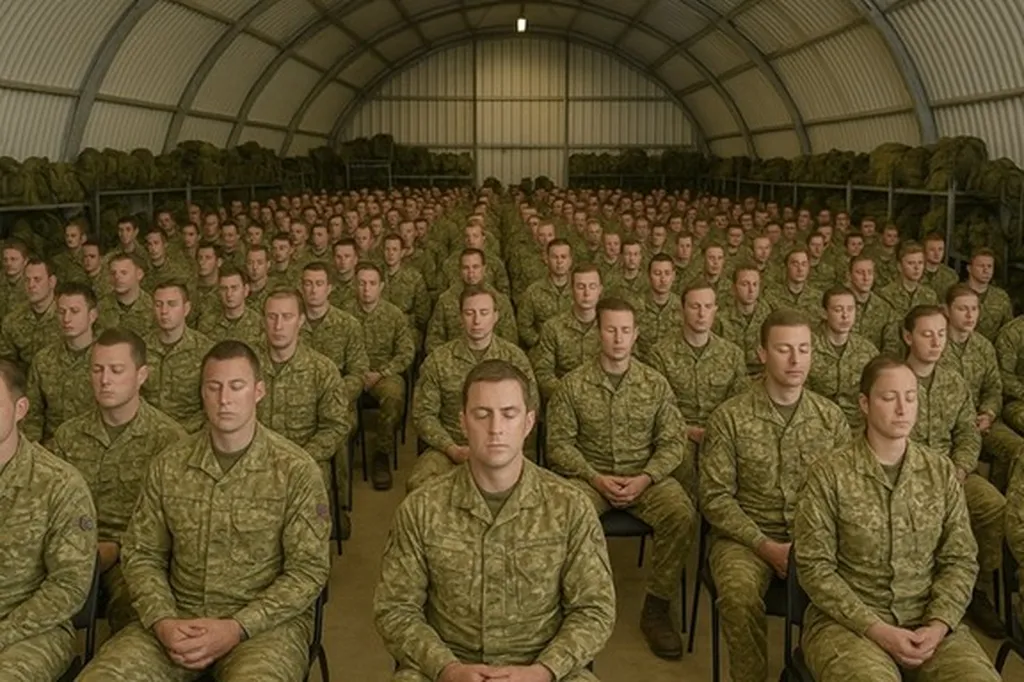
For decades, the world has grappled with the devastating impacts of intrastate and interstate violence, from civil wars to terrorism. Despite extensive efforts in mediation, peacekeeping, and negotiated settlements, these conventional strategies often provide only temporary relief, leaving the deeper causes of conflict unresolved. A growing body of scientific research now points to a new paradigm for peace: reducing societal stress through collective consciousness-based practices. At the heart of this approach is Invincible Defence Technology (IDT), a non-lethal and scientifically validated method designed to neutralize violence at its source.
Invincible Defence Technology: A Name That Defines Its Mission
The name Invincible Defence Technology encapsulates its mission. “Invincible” conveys the idea of being impossible to defeat, capturing the essence of fostering deep societal harmony that transforms adversaries into allies, removing the desire for conflict. “Defence” signifies protection from harm, not as a reactive measure but as a proactive approach that prevents conflict before it arises. “Technology” refers to the systematic application of knowledge and tools, in this case, the structured use of the Transcendental Meditation programme and the advanced TM-Sidhi programme. Large group practice of these consciousness-based techniques reduces individual and collective societal stress, the underlying driver of war, terrorism, and crime, thereby promoting peace and stability.
IDT operates through the Maharishi Effect, a phenomenon observed when large groups practice Transcendental Meditation (TM) and the TM-Sidhi programme together. Studies show that once a group reaches a critical threshold in size, the resulting coherence in collective consciousness produces measurable reductions in violence, crime, and social unrest. This demonstrates that cultivating inner peace on a large scale can generate outer peace across entire populations.
Recent Evidence and Historical Context
The most recent demonstration of IDT occurred during the Assembly of 10,000 for World Peace in India (December 2023–January 2024). Analysis of political violence data from the Armed Conflict and Location Event Data (ACLED) project revealed a statistically significant reduction (p 0.001) in violent events across Palestine, Myanmar, and Syria, the world’s most unstable regions at the time. This quasi-experimental study provides compelling evidence that large-scale group meditation can measurably reduce violence.
This demonstration builds on decades of empirical, peer-reviewed research. The Jerusalem Experiment (1983) found that increases in group TM-Sidhi practice correlated with statistically significant reductions in war-related fatalities, crime, and traffic accidents. The Global Terrorism and Conflict Study (1983–1985) revealed a 72% reduction in terrorism and an average 32% decrease in international conflict. The Washington, D.C. Demonstration (1993) showed a 23.3% reduction in violent crime, and a 17-year longitudinal study (2021) associated sustained group practice of the TM-Sidhi programme with significant decreases in urban crime rates and social unrest. Health outcomes (2023) also correlated group meditation with reductions in drug-related mortality, suggesting that IDT’s benefits extend beyond violence prevention to broader public health improvements.
Military Applications of IDT
Military organisations, as well as civilian groups, have explored the use of IDT, recognising its value as part of a “prevention wing of the military.” The IDT approach is currently in the early stages of global deployment, with many initiatives not yet fully operational. Across multiple countries, large numbers of personnel from different branches have been trained in IDT, reporting measurable benefits including improved performance, reduced stress, and heightened readiness. Elite security forces have incorporated IDT training in preparation for major international events, employing it as a tool to deter terrorism and enhance operational effectiveness. Defence institutions have also initiated pilot programmes, with evidence pointing to reductions in violence and greater societal stability.
Toward Invincible Defence
The implications of IDT are profound. By establishing permanent groups of trained practitioners within the military, nations can create a shield of coherence that prevents violence before it erupts. Unlike conventional defence systems, IDT does not rely on weapons or deterrence. Instead, it addresses the root causes of conflict by reducing societal stress and tension through consciousness-based practices. The promise of IDT is both radical and practical: a defence system that is non-lethal, cost-effective, and sustainable. The evidence from India and decades of prior studies make one point clear: lasting peace is achievable when nations harness the power of coherent collective consciousness.
Invincible Defence Technology Presented at the United Nations
The event drew an audience of approximately 500 diplomats, UN staff members, and representatives from international meditation organizations. The keynote address, titled “World Peace Through Inner Peace: An Evidence-Based Approach,” was delivered by Harvard-trained physicist John