
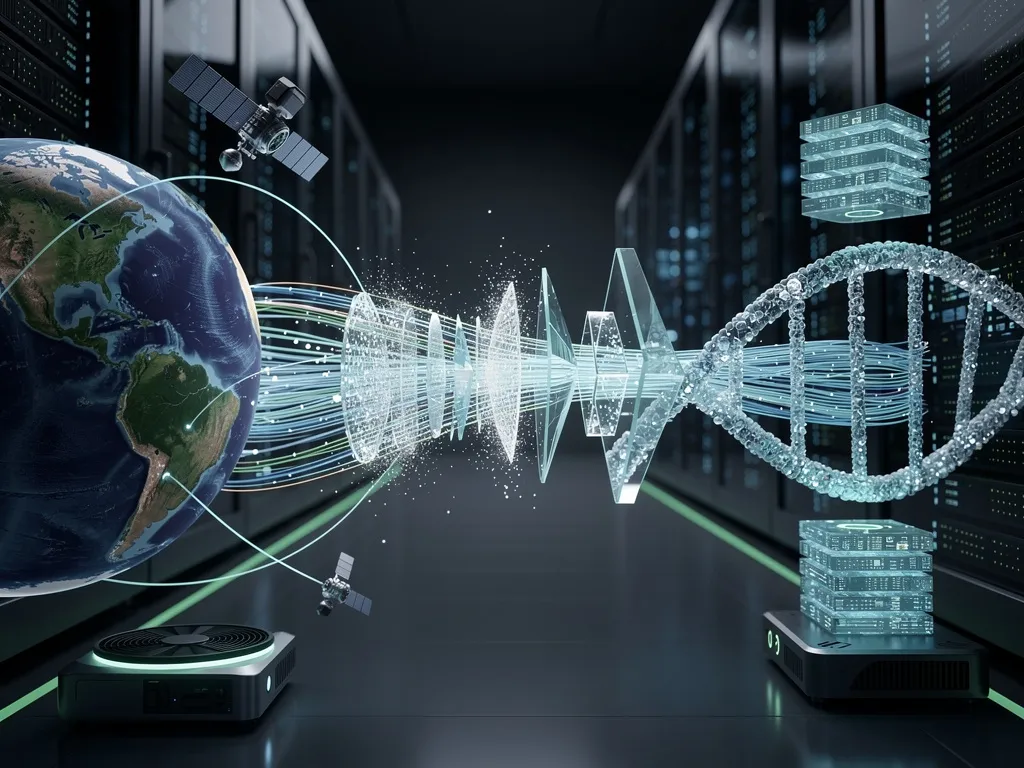
In the age of big data, the sheer volume and complexity of information generated across various domains—from medical records to defence logs and web traffic—pose significant challenges for efficient storage and transmission. Traditional compression algorithms, while effective, often struggle with domain-specific structured data formats like JSON, XML, HTML, and log files. These formats, though structured, may lack the syntactic repetition that algorithms like Gzip rely on, leading to suboptimal compression.
Enter a groundbreaking solution proposed by Anurag Kumar Ojha, which leverages the power of GPT-2, a state-of-the-art language model, as a preprocessor to enhance the compression capabilities of Gzip for structured text domains. The proposed pipeline involves feeding domain-specific files into GPT-2, which then processes these files to create an output optimized for compression by Gzip. This two-step approach aims to bridge the gap between the semantic repetition inherent in structured data and the syntactic repetition required for effective compression.
The research focused on a variety of data types, including both real-world and synthetically generated logs and HTML files. The results were promising, with notable improvements in compression efficiency. Defence logs saw a compression improvement of 0.34%, while HTML files experienced a more substantial enhancement of 5.8%. These findings suggest that using GPT-2 as a preprocessor can significantly boost the performance of traditional compression algorithms like Gzip, particularly for data types that are rich in semantic but poor in syntactic repetition.
The implications of this research are far-reaching, particularly for sectors dealing with large volumes of structured data. In the defence industry, for instance, efficient compression of logs and other structured data can lead to faster transmission and more secure storage of critical information. Similarly, in the healthcare sector, compressing medical records and clinical files more efficiently can enhance data management and retrieval processes.
Moreover, this approach could revolutionize how web traffic data is handled. HTML files, which form the backbone of web content, often contain repetitive elements that are semantically rich but syntactically diverse. By pre-processing these files with GPT-2 before applying Gzip, web servers could achieve better compression rates, leading to faster load times and reduced bandwidth usage.
The integration of advanced language models like GPT-2 into traditional data compression pipelines represents a significant leap forward in the field of data management. As the volume of structured data continues to grow, innovative solutions like Ojha’s will be crucial in ensuring that data can be stored and transmitted efficiently. This research not only highlights the potential of AI-driven preprocessing but also sets the stage for further exploration into how machine learning can enhance traditional data compression techniques. Read the original research paper here.