
In an era where biometric systems are becoming increasingly integral to security infrastructure, the arms race between detection methods and attack techniques is intensifying. A recent study by Lazaro Janier Gonzalez-Soler, Maciej Salwowski, and Christoph Busch explores a novel approach to bolstering the defences of face recognition systems against both physical and digital attacks. Their research, published in the journal “Pattern Recognition,” introduces an innovative framework leveraging Vision Language Models (VLMs) and in-context learning to detect sophisticated biometric attacks.
Biometric systems, particularly face recognition technology, have seen remarkable advancements in recent years. These systems are now capable of detecting and preventing fraudulent activities with high accuracy. However, as these detection methods improve, so do the techniques employed by attackers. Physical attacks, such as using masks or photographs, and digital attacks, such as morphing images, pose significant threats to the integrity of face recognition systems. Traditional deep learning models, while effective in scenarios they have been specifically trained for, often struggle to adapt to new types of attacks or varying environmental conditions.
One of the primary challenges in developing robust defence mechanisms is the need for substantial amounts of training data. Biometric data collection is fraught with privacy concerns and logistical difficulties, making it challenging to capture diverse attack scenarios under controlled conditions. This limitation has spurred researchers to explore alternative approaches that can achieve reliable performance without extensive training data.
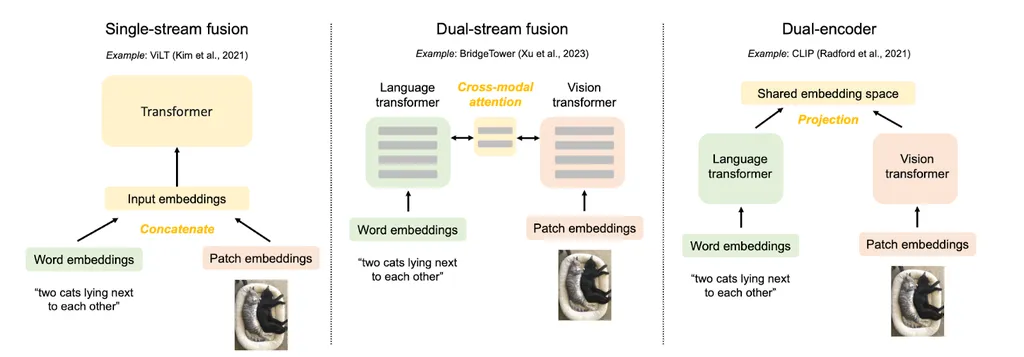
The study by Gonzalez-Soler, Salwowski, and Busch investigates the application of Vision Language Models (VLMs) and proposes an in-context learning framework for detecting physical presentation attacks and digital morphing attacks. VLMs, which combine visual and linguistic information, offer a promising avenue for improving the generalisation capabilities of biometric systems. The researchers established the first systematic framework for the quantitative evaluation of VLMs in security-critical scenarios through in-context learning techniques.
In-context learning allows models to adapt to new tasks or environments by leveraging contextual information rather than requiring extensive retraining. This approach is particularly advantageous in the context of biometric security, where the diversity of potential attack vectors is vast and constantly evolving. By using open-source models and freely available databases, the researchers demonstrated that their proposed subsystem achieves competitive performance for both physical and digital attack detection.
The experimental evaluation conducted by the researchers highlights the efficacy of the proposed framework. The results show that the VLM-based subsystem outperforms some traditional Convolutional Neural Networks (CNNs) without the need for resource-intensive training. This achievement is significant, as it suggests that in-context learning with VLMs can provide a more flexible and adaptable defence mechanism against biometric attacks.
The implications of this research extend beyond the immediate application in face recognition systems. The proposed framework could be adapted to enhance the security of other biometric modalities, such as fingerprint or iris recognition. Furthermore, the use of open-source models and freely available databases ensures that the findings are accessible and reproducible, fostering further innovation in the field.
As the threat landscape continues to evolve, the need for adaptive and robust defence mechanisms becomes increasingly critical. The research by Gonzalez-Soler, Salwowski, and Busch represents a significant step forward in the ongoing effort to protect biometric systems from sophisticated attacks. By leveraging the power of Vision Language Models and in-context learning, they have demonstrated a promising approach that could redefine the future of biometric security. Read the original research paper here.