
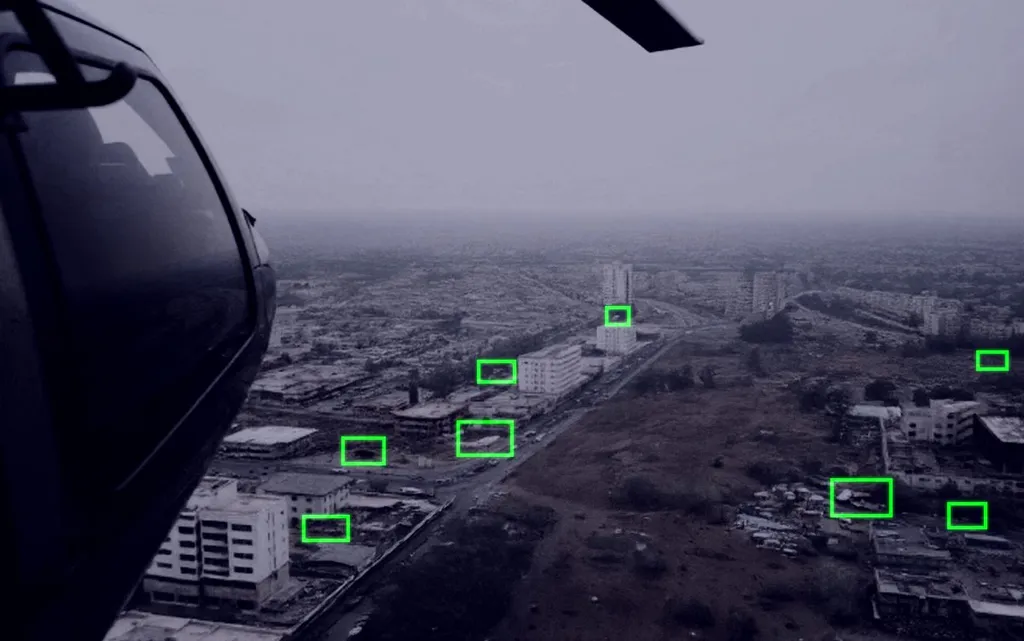
In the realm of military and civil applications, object detection stands as a critical task, particularly in real-world scenarios where it plays a pivotal role in decision-making during command and reconnaissance operations. However, current domain adaptive object detection algorithms are primarily designed to adapt one domain to another within the confines of natural or autonomous driving scenes. This limitation poses a significant challenge in military contexts, where environments are diverse and varied.
The use of synthetic aperture radar (SAR) data has been prevalent in armored military target detection due to its robustness in all weather conditions, long-range capabilities, and high-resolution characteristics. Despite these advantages, SAR data acquisition and processing remain costly compared to conventional RGB cameras, which offer a more affordable alternative with significantly lower data processing times. The scarcity of military target detection datasets further compounds the issue, restricting the feasibility of low-cost approaches.
To address these challenges, researchers Jongoh Jeong, Youngjin Oh, Gyeongrae Nam, Jeongeun Lee, and Kuk-Jin Yoon have proposed a novel solution involving the generation of RGB-based synthetic data using Unreal Engine, a photorealistic visual tool. This approach aims to facilitate military target detection in a cross-domain setting. The team conducted synthetic-to-real transfer experiments by training their synthetic dataset and validating it against web-collected real military target datasets.
The study benchmarked state-of-the-art domain adaptation methods, distinguishing them by the degree of supervision required. The findings revealed that methods utilizing minimal hints, such as object class information, achieved substantial improvements over unsupervised or semi-supervised domain adaptation methods. This observation underscores the current challenges that remain to be overcome in the field.
The implications of this research are profound for the defence and security sector. By leveraging synthetic data generation, military target detection systems can be trained more effectively and efficiently, reducing reliance on costly SAR data. This approach not only lowers operational costs but also enhances the adaptability of detection algorithms to diverse military environments.
Furthermore, the use of photorealistic synthetic data can mitigate the scarcity of real-world military target datasets, providing a viable solution for training and validating detection models. This advancement is crucial for improving the accuracy and reliability of military reconnaissance and command systems, ultimately supporting better decision-making processes.
In conclusion, the proposed method of generating RGB-based synthetic data using Unreal Engine represents a significant step forward in military target detection. By addressing the limitations of current domain adaptation algorithms and the high costs associated with SAR data, this research paves the way for more efficient and effective military applications. The findings highlight the potential of synthetic data in enhancing the capabilities of defence technologies, ensuring that military forces are better equipped to handle the complexities of modern warfare. Read the original research paper here.