
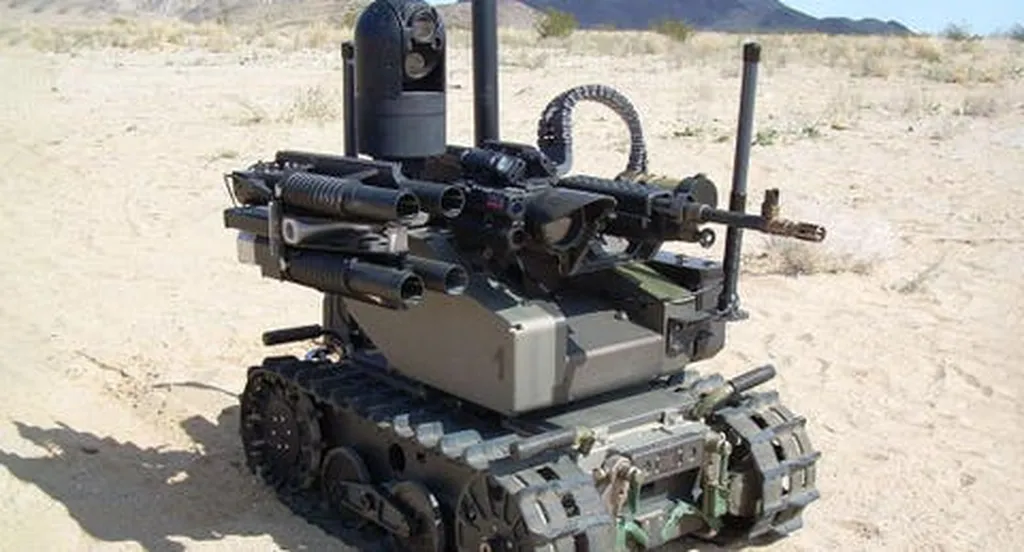
In the rapidly evolving landscape of military technology, the U.S. Army faces the persistent challenge of keeping its ground vehicle fleets relevant amid shifting combat environments and technological advancements. The rapid obsolescence of military vehicles and equipment has prompted researchers to explore innovative solutions, with a particular focus on modular military vehicles. These vehicles are designed with interchangeable components, or modules, that can be quickly assembled and disassembled, allowing for real-time reconfiguration to meet dynamic operational demands.
Xingyu Li and Bogdan I. Epureanu, researchers at the University of Michigan, have developed an intelligent agent-based model to simulate decision-making processes in fleet operations. Their model integrates real-time optimization with artificial intelligence, enabling agents to infer enemy movements based on historical data and optimize dispatch and operational decisions accordingly. This approach captures the stochastic and time-varying nature of military demands, where commanders must constantly adapt to enemy actions.
The researchers implemented their model to simulate an attacker-defender game between two adversarial and intelligent players, representing commanders from modularized and conventional fleets, respectively. The simulation provided a controlled environment to compare the tactical advantages of fleet modularity. Despite both fleets having equal combat resources and intelligence, the modularized fleet demonstrated superior performance in terms of win rate, unpredictability, and reduced damage.
The findings highlight the strategic benefits of modular military vehicles. The ability to quickly reconfigure fleets allows commanders to respond more effectively to changing battlefield conditions, enhancing operational flexibility and resilience. This adaptability is crucial in modern combat environments, where unpredictability and rapid technological advancements can quickly render traditional fleets obsolete.
The research underscores the potential for modularity to revolutionize military logistics and strategy. By enabling real-time adjustments, modular vehicles can optimize resource allocation, reduce downtime, and improve overall fleet efficiency. Furthermore, the unpredictability introduced by modular configurations can confound enemy forces, providing a tactical edge in combat situations.
As the U.S. Army continues to invest in advanced technologies, the adoption of modular military vehicles could offer a sustainable solution to the challenges of fleet obsolescence. The insights gained from this research provide a compelling case for further exploration and implementation of modular systems in military operations. By embracing modularity, the U.S. Army can enhance its strategic capabilities and maintain a competitive edge in an ever-evolving battlefield landscape. Read the original research paper here.