In an era where cyber threats are escalating at an unprecedented rate, driven by fierce global competition in economic, military, and technological arenas, traditional security models are increasingly proving inadequate. The rise of sophisticated cyber-attacks that exploit zero-day vulnerabilities, infiltrate supply chains, and manipulate system interdependencies has underscored the urgent need for a paradigm shift in cybersecurity. Enter Zero Trust Architecture (ZTA), a transformative framework that replaces implicit trust with continuous verification of identity and granular access control. At the forefront of this innovation is TrustZero, a groundbreaking initiative that promises to redefine cybersecurity in Europe and beyond.
TrustZero, developed by researchers Adrian-Tudor Dumitrescu and Johan Pouwelse, introduces a scalable layer of zero-trust security built around a universal “trust token.” This token serves as a passport-level trust mechanism, enabling robust, mathematically grounded trust attestations through non-revocable self-sovereign identity and cryptographic signatures. The concept of self-sovereign identity is central to TrustZero, empowering individuals and organisations to control their digital identities without relying on centralised authorities.
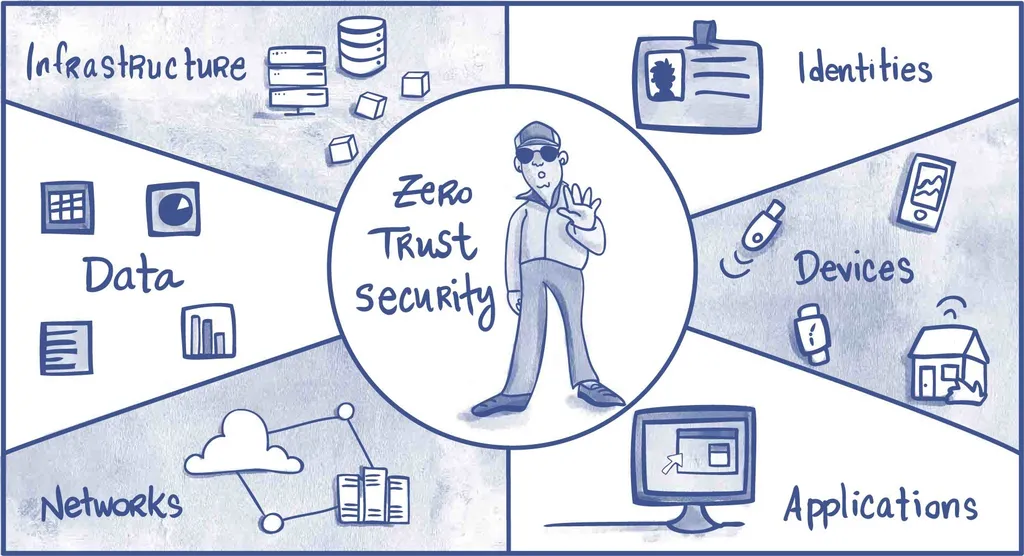
The core principle of Zero Trust Architecture is “never trust, always verify.” This principle challenges the traditional perimeter-based security models that assume everything inside a network can be trusted. Instead, ZTA advocates for continuous authentication and authorisation of all users and devices, regardless of their location. TrustZero takes this principle further by integrating it with advanced cryptographic techniques, creating a secure web-of-trust framework that is both adaptable to legacy systems and capable of facilitating inter-organisational communication.
One of the most compelling aspects of TrustZero is its scalability. The universal trust token can be deployed across various sectors, from government and military to finance and healthcare, providing a unified approach to cybersecurity. This scalability is crucial in an interconnected world where cyber threats do not respect organisational or national boundaries. By establishing a common framework for trust, TrustZero can help mitigate the risks associated with system interdependencies and supply chain vulnerabilities.
The practical applications of TrustZero are vast. In the defence sector, for instance, the ability to verify the identity and integrity of every device and user within a network can significantly enhance operational security. This is particularly important in an era where military systems are increasingly interconnected and vulnerable to cyber-attacks. Similarly, in the financial sector, TrustZero can provide an additional layer of security for transactions, reducing the risk of fraud and unauthorised access.
Moreover, TrustZero’s adaptability to legacy systems means that organisations do not have to overhaul their entire IT infrastructure to benefit from zero-trust security. This makes the framework particularly attractive to large enterprises and government agencies that often rely on outdated systems that are difficult to replace. By integrating TrustZero with existing systems, these organisations can enhance their security posture without incurring the high costs and disruptions associated with a complete overhaul.
The introduction of TrustZero marks a significant step forward in the evolution of cybersecurity. By combining the principles of Zero Trust Architecture with advanced cryptographic techniques, TrustZero offers a robust, scalable, and adaptable solution to the growing cyber threats of the 21st century. As global competition intensifies and cyber-attacks become more sophisticated, initiatives like TrustZero will be crucial in safeguarding critical infrastructure and ensuring the integrity of digital communications.
In conclusion, TrustZero represents a paradigm shift in how we approach cybersecurity. Its universal trust token, built on the principles of self-sovereign identity and continuous verification, offers a powerful tool for enhancing security across various sectors. As the world becomes increasingly interconnected, the need for such a framework will only grow, making TrustZero a vital component in the fight against cyber threats. Read the original research paper here.