
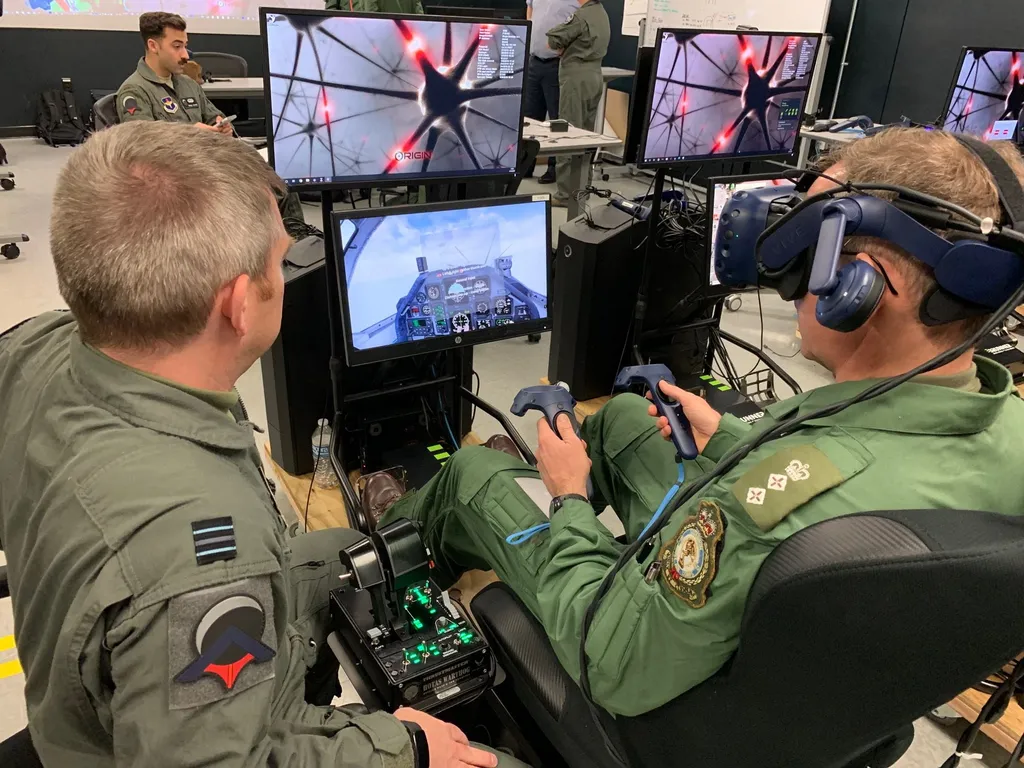
In the rapidly evolving landscape of military training, the integration of advanced technologies is crucial for enhancing pilot performance and safety. A recent study, led by a team of researchers including Evy van Weelden, Jos M. Prinsen, Caterina Ceccato, Ethel Pruss, Anita Vrins, Maryam Alimardani, Travis J. Wiltshire, and Max M. Louwerse, has explored the potential of brain-computer interfaces (BCIs) in creating a neuro-adaptive virtual reality (VR) flight training system. This innovative approach aims to dynamically adjust training difficulty based on real-time estimations of pilot workload, derived from brain signals, thereby optimizing the training experience.
The study focused on developing and evaluating an EEG-based neuro-adaptive training system within VR flight simulations. The primary objective was to determine whether this adaptive system could enhance training effectiveness compared to a fixed sequence that progressively increased in difficulty. The evaluation included both subjective measures, such as self-reported user engagement, workload, and simulator sickness, and objective metrics, specifically flight performance. The research team sought to understand the relationships between subjective workload and flight performance in the VR simulator for each condition.
The findings revealed no significant differences between the adaptive and fixed sequence conditions in terms of subjective measures or flight performance. Interestingly, in both conditions, flight performance decreased as subjective workload increased. This suggests that while the neuro-adaptive system did not significantly outperform the fixed sequence, it also did not hinder performance. The study also included semi-structured interviews with the pilots to gather qualitative insights into their experiences with the neuro-adaptive prototype. The pilots expressed a preference for the neuro-adaptive VR training system over the fixed sequence, although individual differences were noted in the perception of difficulty and the order of changes in difficulty.
Despite the lack of significant performance differences, the study highlights the potential of BCI-based flight training systems to offer a more personalized and varied training experience. The ability to adapt training difficulty in real-time based on the pilot’s cognitive state could lead to more effective and engaging training sessions. This personalized approach could help manage pilot workload more effectively, reducing the risk of overload and enhancing overall training outcomes.
The integration of neuro-adaptive technologies into military training programs represents a promising avenue for innovation. As the defence sector continues to explore the capabilities of BCIs and VR, the potential for creating more immersive, effective, and personalized training experiences becomes increasingly apparent. While further research is needed to fully realize the benefits of these technologies, the findings from this study provide a solid foundation for future developments in neuro-adaptive training systems.
In conclusion, the study’s results indicate that while BCI-based flight training systems may not yet offer a clear performance advantage over traditional methods, they hold significant promise for enhancing the training experience. By providing a more personalized and adaptive approach, these systems could play a crucial role in preparing pilots for the complexities of modern flight operations. As technology continues to advance, the potential applications of neuro-adaptive training systems in the defence and security sector are likely to expand, offering new opportunities for innovation and improvement in military training programs. Read the original research paper here.