
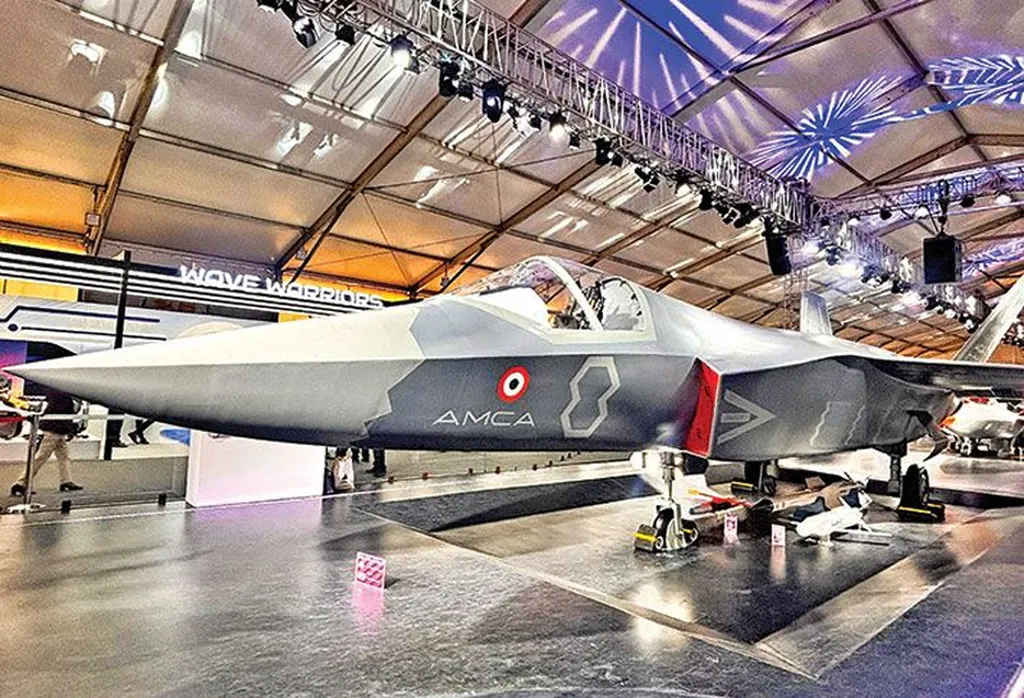
The Defence Research and Development Organisation (DRDO) has provided an update on two of India’s most ambitious aviation projects: the Advanced Medium Combat Aircraft (AMCA) and the Light Combat Aircraft (LCA) Mark Two. Speaking at the Tejas-25 national seminar hosted by the Aeronautical Development Agency (ADA), DRDO Chairman Dr Samir V Kamat shared key milestones and timelines for these cutting-edge fighter programs.
“The Mark Two, the first flight should happen sometime by June of this year. And AMCA, we would hope to roll out by the end of 2028 and the first flight early 2029, so both these programs are now on schedule, and we hope to deliver our commitments to the Air Force, as per the Cabinet Committee on Security (CCS) norms,” Dr Kamat told reporters.
The LCA Mark Two, an upgraded version of the indigenous LCA Tejas, represents a significant technological leap over its predecessor. It integrates advanced features, including stealth capabilities, enhanced range, payload, and multirole functionalities. Designed to replace older fighter jets in the Indian Air Force, the Mark Two aims to bolster India’s self-reliance in defence aviation.
“In LCA Mark Two, there is a step improvement from LCA Mark One. AMCA will have several new technologies because it’s a fifth-generation aircraft. It is a stealth aircraft, so several new technologies will come in with it,” Dr Kamat explained.
The AMCA, India’s next-generation stealth fighter, is being developed as a fifth-generation aircraft with features like stealth technology, supercruise capability, and advanced avionics. It is envisioned to provide the Indian Air Force with a technological edge in air combat and represents a major step toward cutting-edge indigenous fighter development for 2047.
Both programs are progressing on schedule, with prototypes under production, underscoring DRDO’s commitment to meeting Defence Ministry timelines. The two-day seminar, marking 25 years of the Tejas Light Combat Aircraft (LCA), brought together scientists, defence experts, and industry leaders to chart the roadmap for Indian aviation toward 2047.
Air Chief Marshal Amar Preet Singh also highlighted India’s ambitious next-generation fighter programs, Tejas Mark II and AMCA, describing them as milestones set to surpass previous achievements while incorporating contemporary technologies. He emphasized that the teams behind these projects are working diligently to ensure the aircraft are equipped with cutting-edge capabilities and delivered on improved timelines.
ADA officials outlined plans for enhanced variants and next-generation aircraft under Mark II and AMCA, underscoring India’s push for self-reliance in defence technology and a technologically advanced air force. The event featured technical sessions, panel discussions, and presentations on future projects, highlighting India’s strategic journey in indigenous aviation innovation.
As India continues to invest in advanced aviation technology, the LCA Mark Two and AMCA programs are poised to redefine the country’s air combat capabilities and solidify its position as a leader in defence innovation.