
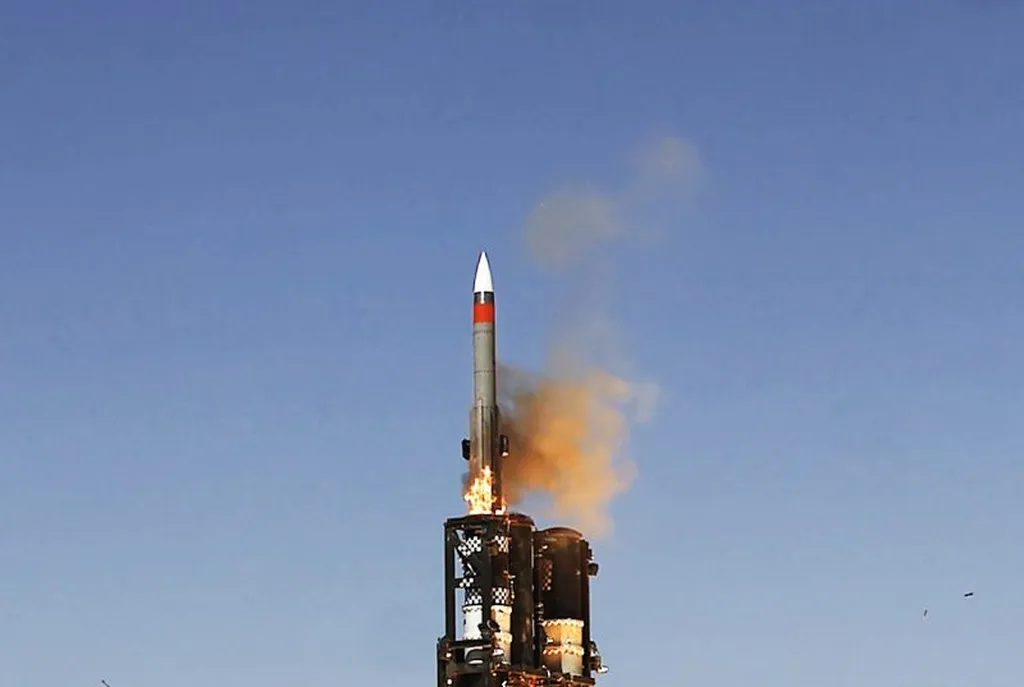
Recent satellite imagery has revealed a significant enhancement in Morocco’s military capabilities: the deployment of the Israeli-made Barak MX air defence system by the Royal Moroccan Armed Forces. The imagery shows components of this advanced surface-to-air missile system stationed at the air defence base near Sidi Yahya el Gharb, approximately 60 kilometres northeast of the capital, Rabat. This strategic facility now serves as the core of Morocco’s multi-layered defensive umbrella.
The deployment is the culmination of a February 2022 contract between Rabat and Israel Aerospace Industries (IAI), valued at approximately $500 million. This acquisition follows the 2021 normalisation of relations between the two nations, which has led to several defence agreements worth hundreds of millions of dollars. As regional tensions with neighbouring Algeria persist, Morocco has been modernising its military hardware, shifting from reliance on traditional European suppliers to a more diversified and technologically advanced inventory.
The Barak MX is a modular, network-centric air defence solution designed to counter a wide array of aerial threats, including fighter aircraft, cruise missiles, drones, and tactical ballistic missiles. Its architecture comprises a mobile combat control centre, advanced radar systems, and versatile launchers. The system utilises the Elta ELM-2084 multifunctional radar, featuring Active Electronically Scanned Array (AESA) technology. This digital radar allows for the simultaneous tracking of multiple targets with high precision, providing the spatial awareness necessary for modern complex battlefields.
One of the primary advantages of the Barak MX is its interceptor versatility. The system can deploy three distinct types of missiles from the same vertical launcher: the Barak-MRAD for short-to-medium ranges up to 35 kilometres, the Barak-LRAD for long-range engagements up to 70 kilometres, and the Barak-ER, which utilises a dual-pulse rocket motor and booster to reach targets at a distance of 150 kilometres. These interceptors were specifically designed as surface-to-air weapons, allowing for optimised kinematics and a larger diameter that enhances performance against high-speed threats.
The effectiveness of this technology was demonstrated in a combat environment as recently as June 2025. During a period of heightened hostilities with Iran, the system was utilised to intercept a variety of inbound threats, including unmanned aerial vehicles and cruise missiles. This real-world validation has established the Barak MX as a proven asset for national defence, particularly in scenarios involving asymmetrical and high-volume saturation attacks.
The selection of Sidi Yahya el Gharb as the primary hub for this system is strategic. Construction of the specialised air defence base began in 2017 and was completed around August 2020. The base is centrally located relative to Morocco’s major metropolitan and industrial areas, providing a defensive buffer for the capital and other sensitive strategic zones. The facility is designed to be multi-functional, housing active air defence units, maintenance centres, administrative offices, and military housing. It acts as a focal point for an integrated air defence network that incorporates systems from various international partners.
Morocco has long pursued a policy of procurement diversification to avoid over-reliance on a single state. Consequently, the Sidi Yahya el Gharb base operates Chinese, French, and American hardware alongside the new Israeli components. In 2017 and 2021, Morocco received 24 Sky Dragon 50 medium-range missiles and DK-9 short-range systems from the China North Industries Group Corporation Limited (NORINCO). These were bolstered by the acquisition of the FD-2000B, a long-range air defence system with a range of approximately 200 kilometres. Additionally, Morocco secured the French VL MICA short-range system through a €200 million agreement supported by an export loan from PNB Paribas. The United States has also remained a key partner, with the State Department clearing the sale of the MIM-104 Patriot system to Rabat in early 2023.
It is not yet certain if these new air defence systems will be integrated with Morocco’s Thales Ground Masters 400 radar, which was recently delivered under a contract signed in 2019.
Industrial Evolution and Domestic Production
Morocco is transitioning from a traditional buyer of defence technology to a producer and maintainer. A pivotal aspect of the cooperation with Israel includes technology transfer and the establishment of local manufacturing sites. BlueBird Aero Systems, a subsidiary of IAI, recently inaugurated a production facility in Morocco to manufacture the SpyX kamikaze drone. This loitering munition has a range of 50 kilometres and is designed for precision strikes against armoured vehicles and stationary targets.
This project involves a comprehensive training program where local Moroccan engineers learn to assemble and