
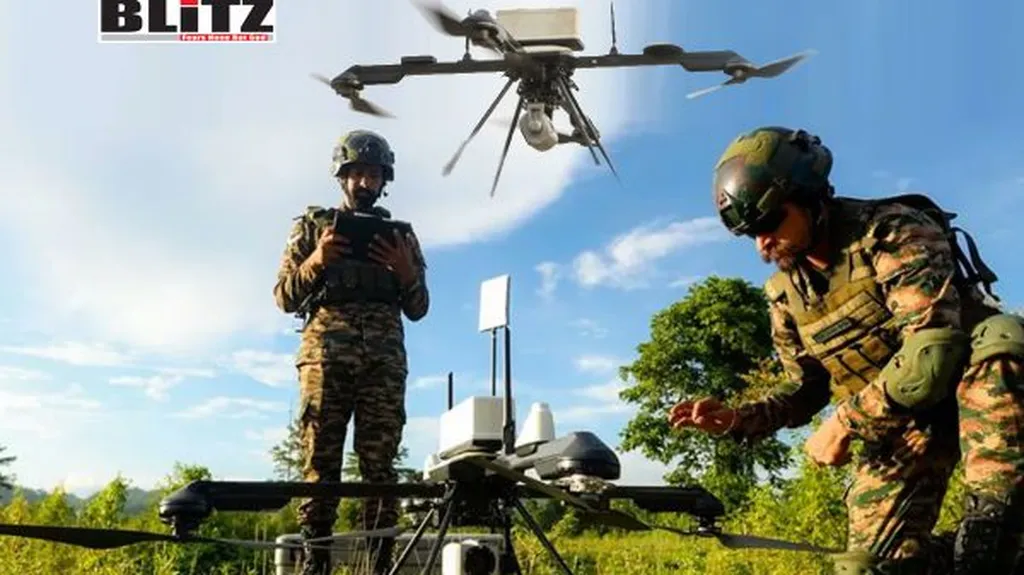
The recent conflicts between India and Pakistan, as well as the ongoing Russia-Ukraine war, have underscored a critical lesson for India: the imperative of indigenisation in drone manufacturing. As geopolitical alliances shift and defence partnerships evolve, India must prioritise domestic production to ensure strategic autonomy and operational readiness.
During the May 2025 conflict, Pakistan launched Operation Bunyan al-Marsus in retaliation to India’s Operation Sindoor. Pakistan claimed its drone strikes targeted only military bases, but reports indicated civilian areas and border cities were also hit. Turkey played a significant role in this operation, deploying approximately 300-400 drones, including Asisguard Songar and NESCOM Burraq models. While Pakistan was reported to possess Chinese CH-3 and CH-4 drones, as well as indigenous models like Shahpur and Sarfirosh kamikaze drones, their use during the conflict remains unverified.
India, however, demonstrated its superior drone capabilities by intercepting 90% of Pakistani drones and successfully executing its own drone strikes. India’s strategy involved deploying loitering munitions and medium altitude, long endurance (MALE) drones, such as Israel’s Harop and Heron Mark II, rather than relying on swarm tactics, which proved ineffective for Pakistan.
India’s drone fleet is diverse, encompassing drones acquired from global partners, indigenously developed models, and those produced through public-private collaborations. The country’s drone capabilities have been bolstered by initiatives like the Drone Shakti Mission and regulatory frameworks established in 2021. By mid-2024, India’s drone fleet included 2,000-2,500 units, with expenditures exceeding USD 400 million. Key acquisitions include Israel’s Heron, Harpy, and Harop drones, and 31 MQ-9B Predator drones from the US, which were recently used in a rescue mission off the coast of Somalia.
Under the Atmanirbhar Bharat initiative, India has made significant strides in indigenisation, developing drones like the Nagastra-1 kamikaze drone and the Rustom-2 MALE drone. The Covid-19 pandemic further highlighted the utility of indigenous drones in delivering vaccines and essential supplies to remote regions, showcasing their versatility and effectiveness.
The Adani Group’s collaboration with Israel’s Elbit Advanced Systems to produce Hermes 900 drones in Hyderabad exemplifies India’s growing role as a global drone manufacturer. Emerging startups like Garuda Aerospace and Paras Defence are also contributing to this effort, with Garuda achieving 75% indigenous components in its drones and Paras focusing on UAV cameras and hydrogen-powered drones in collaboration with Israel’s Heven Drones.
Despite these advancements, India faces challenges in manufacturing cost-effective drones without relying on Chinese components. Chinese drones are among the cheapest globally, but geopolitical rivalries limit collaboration. The conflict with Pakistan has also questioned the effectiveness of Chinese and Turkish drones, highlighting the need for India to develop cost-effective, indigenous alternatives.
India’s indigenous drone portfolio includes the Skystriker kamikaze drone, HAL CATS, and Netra, developed by Ideaforge and the Defence Research and Development Organisation (DRDO) for high-altitude surveillance and swarm techniques. The Indian Navy has also contributed to this technological advancement with the development of Abhimanyu, a swarm-powered AI combat drone, and the acquisition of the Drishti 10 Starliner for maritime surveillance.
China’s investment in UAV systems, characterised by low production costs and advanced technology, poses a significant challenge. Chinese drones like the CH-9 and Wing Loong-X are highly advanced, with capabilities such as long endurance and precision targeting. However, their effectiveness against advanced counter-drone systems remains untested.
The use of drones by non-state actors further complicates the landscape. The low cost and versatility of drones make them attractive to terrorist groups, exacerbating security challenges. Insufficient government frameworks and flexible regulations facilitate their acquisition and use by such entities.
In conclusion, the lessons from recent conflicts and the evolving geopolitical landscape underscore the need for India to prioritise indigenisation in drone manufacturing. By leveraging domestic expertise and fostering public-private collaborations, India can enhance its defence capabilities, ensure strategic autonomy, and address the multifaceted challenges posed by emerging technologies.