
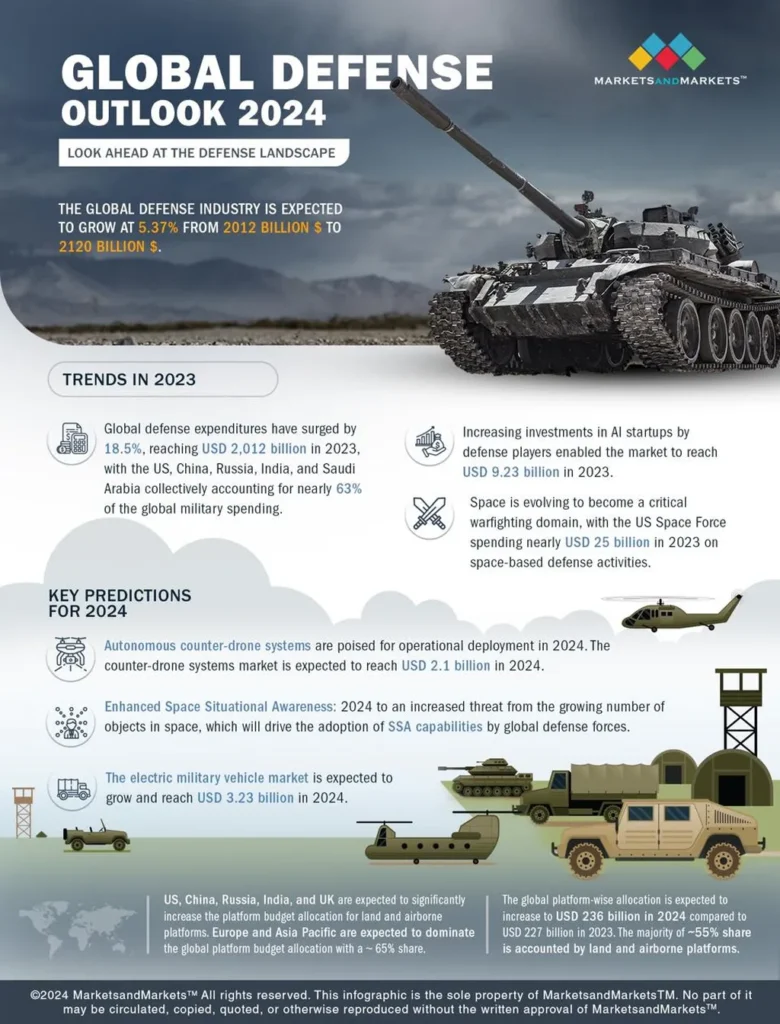
As the world navigates an increasingly complex geopolitical landscape, the defence sector stands at a critical juncture. The past few years have seen unprecedented growth in global defence spending, driven largely by the conflict in Ukraine. This surge has propelled the world’s top 100 defence companies to record revenues of $679 billion in 2024, according to the Stockholm International Peace Research Institute. The question now is whether this momentum can be sustained.
The durability of the defence boom hinges on several factors, not least the resolution of the Russia-Ukraine war. Investors have reacted negatively to any hint of a peace deal, reflecting concerns about the future of Europe’s rearmament drive. However, industry executives remain optimistic, citing NATO members’ pledges to increase defence spending to 5% of GDP over the next decade. The demand for advanced technologies, including drones, military satellites, and space security, is expected to continue driving growth, ensuring that the sector remains robust even in the absence of conflict.
Among the companies to watch, Germany’s Rheinmetall stands out as the fastest-growing major defence contractor. Under the leadership of CEO Armin Papperger, Rheinmetall has expanded aggressively, striking deals in warship building and satellites, and forming numerous joint ventures. The company’s market value surged to about €70 billion by the end of 2025, and Papperger has set an ambitious target of €50 billion in sales by 2030. Whether Rheinmetall can maintain its valuation and achieve these targets will be a key story to follow in the coming year.
Another wildcard in the defence sector is the potential for several European companies to go public. British metal engineer Doncasters Group, Franco-German tank maker KNDS, and Czech defence company Czechoslovak Group (CSG) are among those considering stock market listings. However, what would truly excite the industry is the listing of a defence technology start-up. US-based Anduril Industries, with its high valuations and significant contracts with the US and UK militaries, could set the stage for similar European start-ups like drone maker Helsing, which has already achieved a “unicorn” valuation of over €1 billion.
In the banking sector, the return of Donald Trump to the Oval Office has signalled a shift towards more bank-friendly regulations. Commitments to loosen rules that were implemented post-2008 financial crisis are set to boost the capacity of Wall Street banks to finance large investments in AI and data centres. The key question is whether other financial centres will follow suit or maintain tougher regulations, which could put them at a competitive disadvantage.
UBS, in particular, is hoping for regulatory relief. The Swiss government’s proposal to increase the bank’s capital requirements has been met with resistance, as UBS argues that such measures would harm its global competitiveness. A compromise proposal that reduces the capital burden could provide a much-needed boost to UBS shares, which have lagged behind European peers.
The debate over bank mergers in Europe continues, with UniCredit and Commerzbank at the centre of discussions. Despite political opposition, UniCredit’s CEO Andrea Orcel remains optimistic about the potential for a tie-up, arguing that Europe needs bigger banks to compete on the global stage. While smaller deals have been agreed, larger mergers remain fraught with political challenges. The outcome of these discussions will have significant implications for the future of European banking.
In the technology sector, the focus in 2026 will be on generating revenue from the massive investments in AI. Investors are becoming impatient for returns, and the market will increasingly favour companies that demonstrate real momentum. OpenAI’s launch of an advertising business could be a significant milestone, showcasing the commercial potential of a user base approaching 1 billion. However, AI adoption by businesses is likely to remain cautious as companies test applications and redesign processes to fully utilise the technology.
The potential leadership transition at Apple adds another layer of intrigue to the technology sector. If Tim Cook steps down as CEO, the search for his successor will be closely watched. The new leader will need to navigate the rise of new consumer AI gadgets and maintain Apple’s position as a leader in defining the future of consumer hardware. The outcome of this transition will have far-reaching implications for the tech industry and beyond.
As we look ahead to 2026, the interplay of these trends and wild cards will shape the global business landscape. From defence to banking to technology, the decisions made and challenges faced by key players will determine the trajectory of their respective sectors. The coming year promises to be a pivotal one, filled with opportunities and challenges that will define the future of global business.