
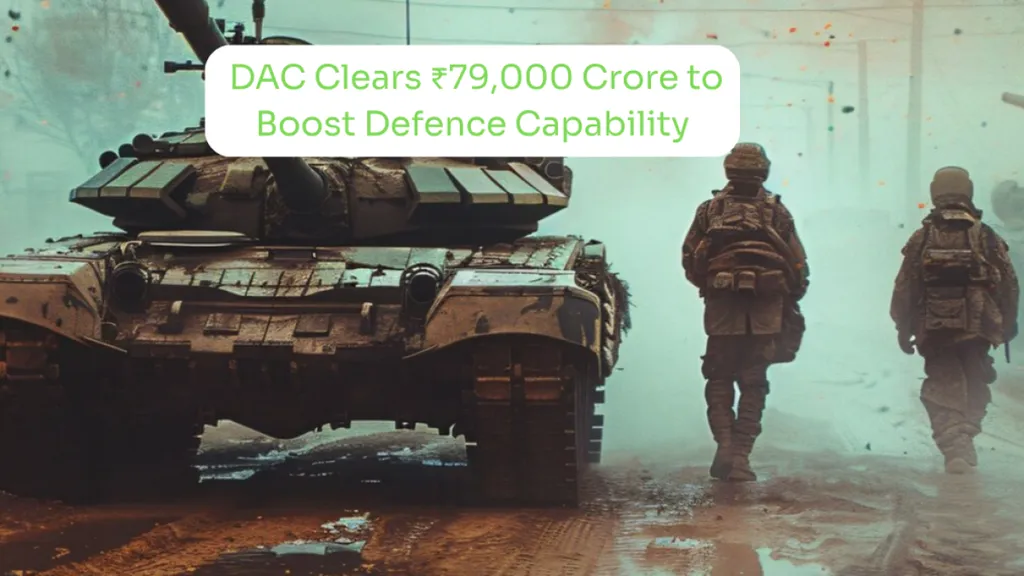
The Defence Acquisition Council’s approval of ₹79,000 crore in defence procurement deals has set the stage for what brokerages are calling a defence capital expenditure (capex) super-cycle. This significant financial commitment has ignited strong buy recommendations across the sector, with major firms like Goldman Sachs, Motilal Oswal, and Antique Broking highlighting the potential for substantial growth.
The defence capital authorisations for the fiscal year 2026 have already reached ₹3.30 lakh crore, surpassing the previous year’s total of ₹2.30 lakh crore. This surge in defence spending is expected to drive long-term growth and innovation within the sector.
Harshit Kapadia, Vice-President at Elara Securities, provided insight into the timeline and execution of these orders. While the ₹79,000 crore approval significantly expands the long-term order pipeline, near-term order inflows will remain limited due to execution timelines. Kapadia noted that the conversion from approval to executable orders typically takes 18–24 months, with most large-ticket systems unlikely to translate into orders before FY28.
“While the ₹79,000 crore approval significantly expands the long-term order pipeline, near-term order inflows will remain limited due to execution timelines,” Kapadia said. “Conversion from approval to executable orders typically takes 18–24 months, with most large-ticket systems unlikely to translate into orders before FY28.”
Looking ahead, the expected order flow includes smaller orders like simulators for light combat aircraft in FY27 and larger systems, including Pinaka rocket systems, from FY28 onwards. Currently, emergency procurement orders worth ₹40,000 crore are already under execution.
Brokerage firms have identified several key beneficiaries from the recent DAC approval. Goldman Sachs has highlighted Solar Industries, Bharat Electronics Limited (BEL), Bharat Dynamics, Astra Microwave, and Data Patterns as primary winners. Motilal Oswal has recommended BEL, Hindustan Aeronautics Limited (HAL), and Bharat Dynamics as key beneficiaries, maintaining a neutral stance on Zen Technologies. Antique Broking has a broader list, including Mazagon Dock, HAL, BEL, Bharat Dynamics, Zen Technologies, Solar Industries, and PTC Industries. Elara Securities has recommended BEL, Solar Industries, and Bharat Dynamics.
Bharat Electronics Limited (BEL) emerges as a consensus pick across brokerages, positioned to capture orders across multiple segments with diversified production capabilities. Kapadia highlighted BEL as a lead integrator and system designer expected to see strong order book accretion once execution begins. BEL’s manufacturing capabilities span radar systems, communication systems, drone systems, and missile systems.
Solar Industries is also poised to benefit significantly from rockets and ammunition programmes. Kapadia noted that recent policy changes under the Defence Procurement Manual, including a 25% procurement reservation for MSMEs and the removal of bid security requirements, will meaningfully benefit defence startups and small-cap players.
The defence ecosystem is now clearly split between PSUs as lead integrators, large private integrators like Larsen & Toubro and Tata Advanced Systems, and smaller component suppliers. Nearly 90% of the ₹79,000 crore approval is expected to be sourced through indigenised routes, driving domestic design and development.
“This represents a significant structural shift, with FY26 approvals of ₹3.30 lakh crore nearly doubling the annual defence capital outlay of ₹1.80 lakh crore,” Kapadia explained. “Rising indigenisation will also drive growth in maintenance, repair, and overhaul services, creating a long-gestation but structurally strong opportunity across the defence manufacturing ecosystem.”
In summary, the defence capex super-cycle represents a transformative period for the sector, with substantial opportunities for both public and private players. As the defence ecosystem evolves, the focus on indigenisation and technological advancement will drive long-term growth and innovation, positioning India as a key player in global defence manufacturing.