
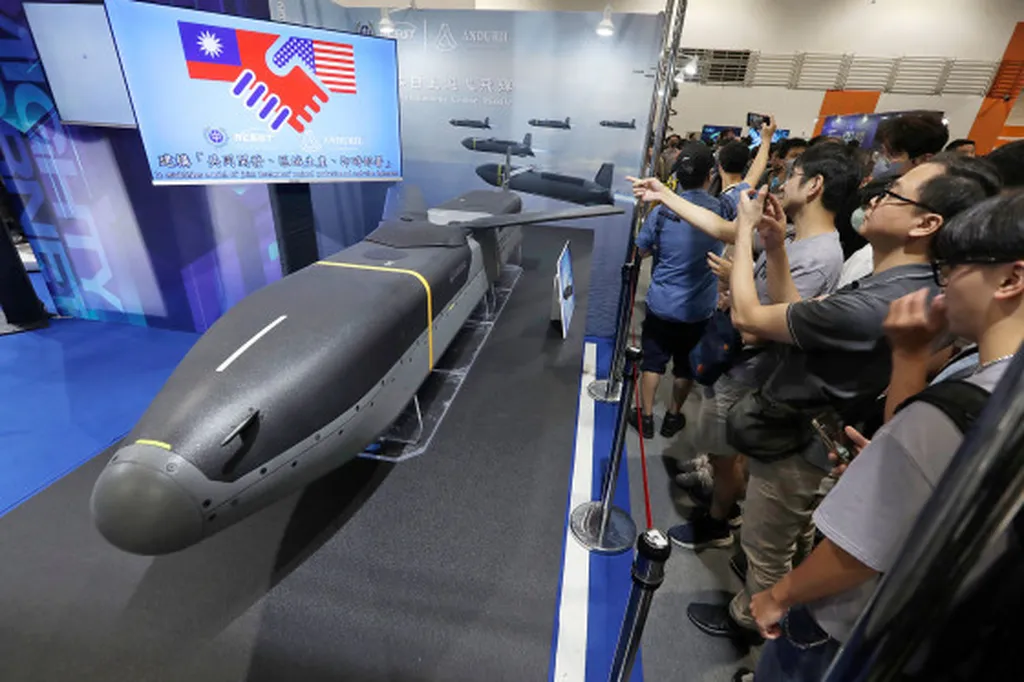
Beijing has imposed sanctions on 20 U.S. defense-related companies and 10 executives, a retaliatory move following Washington’s announcement of a significant arms sale to Taiwan. The sanctions, which include freezing assets in China and banning business dealings with the targeted entities, underscore the escalating tensions between the two superpowers over Taiwan.
The Chinese foreign ministry announced the sanctions on Friday, targeting prominent defense firms such as Northrop Grumman Systems Corporation, L3Harris Maritime Services, and Boeing in St. Louis. Among the sanctioned executives is Palmer Luckey, founder of Anduril Industries. These individuals and companies are now barred from conducting business in China and are prohibited from entering the country.
The U.S. arms sale package, valued at over $10 billion, has drawn a fierce response from Beijing, which views Taiwan as an integral part of its territory. “We stress once again that the Taiwan question is at the very core of China’s core interests and the first red line that must not be crossed in China-U.S. relations,” the Chinese foreign ministry stated. “Any company or individual who engages in arms sales to Taiwan will pay the price for the wrongdoing.”
China has long maintained that U.S. arms sales to Taiwan violate diplomatic agreements and undermine its sovereignty. The recent escalation in military presence around Taiwan, including near-daily joint drills involving warships and fighter jets, reflects Beijing’s growing assertiveness in the region.
Under U.S. federal law, Washington is obligated to assist Taiwan in maintaining its self-defense capabilities, a commitment that has become increasingly contentious with China. The strained relations between Beijing and Washington extend beyond Taiwan to include trade, technology, and human rights issues, further complicating the geopolitical landscape.
Analysts warn that Taiwan remains a major flashpoint in U.S.-China relations, with the potential to escalate into a military conflict. The latest sanctions highlight the delicate balance between deterrence and diplomacy, as both nations navigate their strategic interests in the Asia-Pacific region.
As tensions continue to rise, the international community watches closely, hoping for a de-escalation that avoids a direct confrontation between the world’s two largest economies. The situation underscores the need for diplomatic efforts to mitigate the risks and find a sustainable path forward for U.S.-China relations.