
The evolving landscape of modern warfare is increasingly defined by the integration of advanced technologies and the necessity for rapid, adaptable responses to emerging threats. As militaries worldwide pivot towards a future where no single system operates in isolation, the focus on digital integration, counter-drone measures, and underwater systems has become paramount.
### Digital Integration: The Backbone of Future Warfare
The ambition to link all military systems into a cohesive, interconnected network is at the forefront of defence strategies. This vision aims to collect and disseminate relevant data across a network of nodes, accelerated by artificial intelligence. The UK government’s plan to construct a Digital Targeting Web by 2027 exemplifies this trend. Underpinning this initiative is a Defence-wide Secret Cloud, with a minimum viable product expected by 2026. The Ministry of Defence has already taken steps in this direction by signing a £400 million contract in September to share defence intelligence with the United States using the Google Cloud platform.
The British Army is currently testing various networks to augment its Recce Strike approach under Project ASGARD. One notable example is Anduril’s decentralised Lattice mesh network, which integrates multiple platforms and sensor nodes, enabling crewed-uncrewed teaming. This technology was demonstrated in a simulation using a virtual reality headset, showcasing its potential to revolutionise military operations.
At the strategic level, Northrop Grumman is delivering its Integrated Battle Command System (IBCS) for the US and Polish armed forces. This system coordinates sensors, deciders, and effectors for joint all-domain command and control, operating on an “any-sensor, best weapon” principle. The IBCS focuses on integrated air missile defence at the battalion level or higher, highlighting the shift towards comprehensive, interconnected defence networks.
### Counter-Drone Measures: Addressing an Immediate Threat
The rise in drone incursions has necessitated a new demand signal across all layers of air defence. Russian UAS have tested NATO’s resolve, with incidents ranging from crashing into homes in Poland to shutting down an airport in Denmark. This has exposed a significant capability gap between cheap attack drones and legacy, multimillion-dollar air defence systems.
Jan-Hendrik Boelens, CEO of Alpine Eagle, noted that “Legacy air defence systems were designed for fast, scarce, and high-value targets. Drones are the opposite: slow, cheap, numerous, and disposable.” Alpine Eagle offers the Sentinel C-UAS system, designed to detect, classify, and intercept UAS in the air. The counter-drone problem has spurred substantial growth in the missile defence sector, with investments expected to increase from $55.7 billion to $98.5 billion over the next decade.
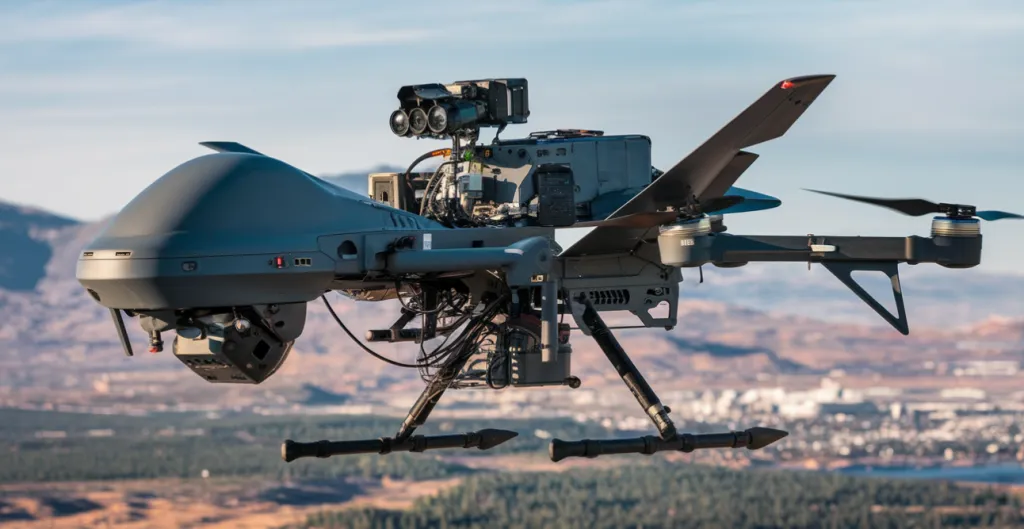
The focus is shifting towards autonomous, software-defined systems that can detect, track, and engage drones earlier and at a lower cost. This trend is driving the integration of novel technologies, including airborne sensing, artificial intelligence-driven classification, and mobile C-UAS platforms. These systems are gaining traction because they remove terrain blind spots and compress reaction times.
Industrial cooperation is playing a crucial role in addressing this capability gap. Companies are combining their individual products into open architectures. For instance, Honeywell tested two configurations for the US government, integrating radars, electronic warfare effectors, and electro-optical and infrared sensors on a mobile platform. This approach highlights the importance of speed in adoption, modernising procurement, and integrating counter-drone measures as a core layer of defence and infrastructure protection.
### Underwater Systems: Securing Strategic Vulnerabilities
Control over critical subsea infrastructure and sea denial against adversarial naval assets is another major strategic vulnerability. The UK Strategic Defence Review introduced the Atlantic Bastion strategy, envisioning a layered network of uncrewed and autonomous systems integrated with advanced sensors and traditional crewed anti-submarine warfare (ASW) assets.
This strategy has opened the door to an emerging niche in the underwater systems sector, centred around disaggregated sensors and uncrewed underwater vehicles (UUV). Thales is developing a smaller sonar suite for UUVs called Nano76, designed to be a requirement prior to the release of Project CABOT. Global partnerships are also forming to address these capability gaps, with Anduril working with Ultra Maritime to combine the Dive XLUUV with the Sea Spear array to detect submarines.
### Conclusion
The defence sector is undergoing a transformative shift, driven by the need for digital integration, advanced counter-drone measures, and robust underwater systems. As militaries worldwide adapt to these evolving threats, the focus on rapid, scalable, and interconnected solutions will define the future of warfare. The collaboration between governments, militaries, and industry will be crucial in addressing these strategic priorities and ensuring a resilient defence framework for the years ahead.