
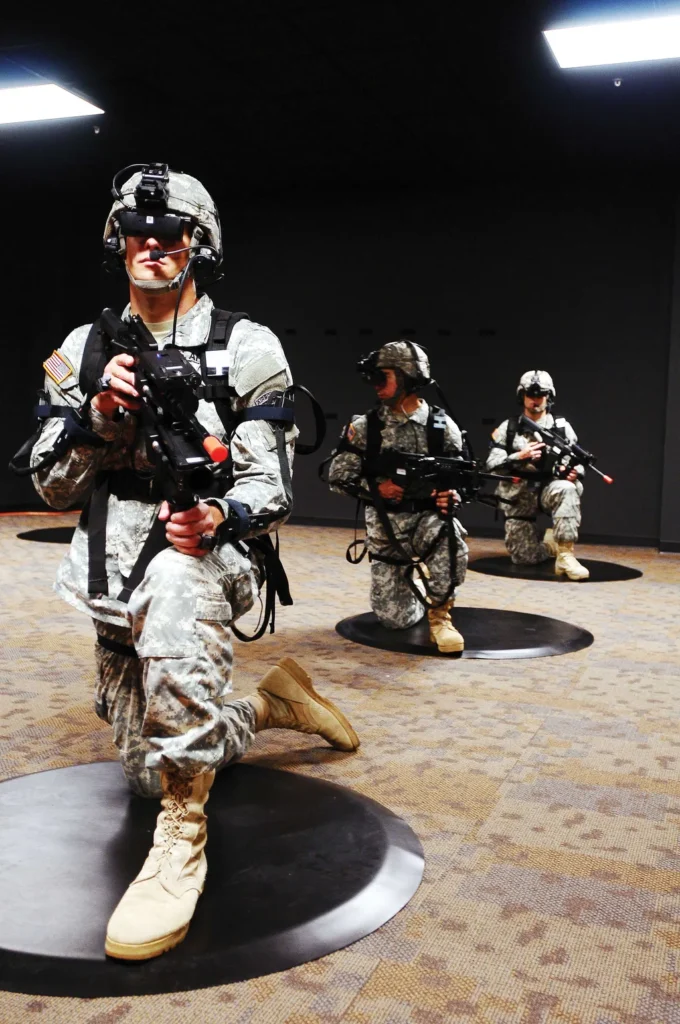
In the rapidly evolving landscape of defence technology, the role of simulation and training systems has become increasingly pivotal. At the forefront of this transformation is the Defence Science and Technology Agency (DSTA) in Singapore, where the Simulation and Training Systems Hub is spearheading innovative approaches to military training. Leading this charge is a visionary who leverages cutting-edge technologies to unlock new possibilities for soldiers in the Singapore Armed Forces (SAF).
Guiding the development and delivery of simulation capabilities, this leader is breaking down physical training constraints and revolutionising how soldiers prepare for real-world missions. “Simulation and instrumentation technologies enable us to create realistic and immersive battlespaces for our soldiers in a safe environment,” they explain. “We can train for mission sets that are otherwise difficult to replicate in real life.”
The impact of these technologies is profound. Last year, the DSTA delivered state-of-the-art training facilities in the expanded Shoalwater Bay Training Area, a joint collaboration with Australia. This initiative included the Urban Operations Live-Firing Facility, which features 33 urbanised buildings supporting battalion-level training. “This enables realistic urban live-firing exercises at a scale which cannot be performed in Singapore,” the leader notes.
This year, the team introduced SAFTI City, a groundbreaking instrumented urban training facility equipped with smart systems and battlefield effects simulators. “This enabled us to create a realistic environment that is complex and able to challenge our soldiers, to support effective and safe training,” they say. “It is deeply meaningful to see how technology enhances the realism and adaptability of training scenarios, empowering our soldiers to train with confidence and become ready for future operations.”
The success of these projects was underscored by the DSTA being conferred both the Defence Technology Prize 2025 Team (Engineering) and the IES Prestigious Engineering Achievement Award for the design and development of SAFTI City. “It reflects our engineers’ dedication to innovation and excellence,” the leader adds.
One of the most impactful projects this year was the Singapore Defence Technology Summit 2025. Organised by the DSTA, this summit brought together technology luminaries and global thought leaders to discuss the impact of geopolitical shifts on defence technology. “It was exciting to connect with people and shape conversations during the summit,” the leader reflects. “We had a good turnout with more than a thousand delegates from 40 countries, with many partnerships forged and rich insights gained.”
Looking ahead, the focus is on harnessing emerging technologies like artificial intelligence (AI) to enhance training scenarios. “I’m also looking into the use of data and psychophysiological measures to infer a person’s cognitive load and stress levels,” the leader explains. “These insights can help us design training that builds skill while also improving how we assess readiness.”
For public sector innovators aiming to build a career focused on serving all citizens, the leader offers sage advice: “Focus on empathy and perseverance. Empathy, because technology innovation doesn’t exist in a vacuum, and it’s meant to serve a purpose. Perseverance, because innovation in the public sector can be complex, especially if it involves many different stakeholders. But don’t give up! If we anchor ourselves back to what our mission is and persevere, I believe that we will be able to push through roadblocks and make a difference.”
Inspiration comes from within the organisation itself. The leader is particularly inspired by Ngiam Le Na, a former Deputy Chief Executive in DSTA. “I saw firsthand how Le Na went above and beyond to proactively understand the diverse needs of different agencies involved, so that we could better develop fit-for-purpose technology solutions,” they recall. “By ensuring these solutions met the needs of all stakeholders, she not only helped manage a crisis but also strengthened trust, collaboration, and confidence across the public sector.”
Beyond technology, the leader finds excitement in exploring the world through travel. “I find it enriching to be able to experience different ways of life – from trying out different cuisines to observing how people live,” they share.
As the defence sector continues to evolve, the integration of advanced simulation and training technologies will play a crucial role in preparing soldiers for future challenges. The work of the DSTA and its leaders exemplifies how innovation, empathy, and perseverance can drive meaningful change, ultimately strengthening the capabilities of the Singapore Armed Forces and the broader public sector.