
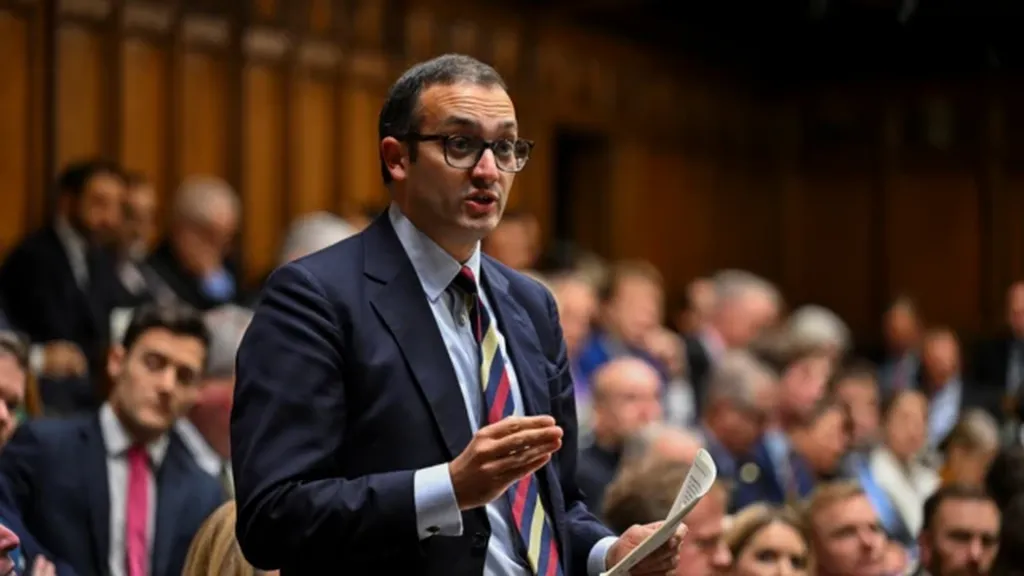
In a significant breach of parliamentary standards, a UK Member of Parliament has been found to have violated rules governing All-Party Parliamentary Groups (APPGs) due to undisclosed financial links to a firm owned by the Israeli government. Neil Shastri-Hurst, the Conservative MP for Solihull West and Shirley, faced scrutiny in his role as chairman of the All-Party Parliamentary Group on Defence Technology.
Shastri-Hurst referred himself to the Committee on Standards after discovering that a funding partner of the group’s secretariat, RUK Advanced Systems Ltd, was a subsidiary of Rafael, an Israeli defence firm. The revelation prompted an immediate investigation, leading to the MP’s resignation as the group’s chair in June.
The Committee on Standards’ report highlighted that Shastri-Hurst “failed to ensure that adequate due diligence checks were made on RUK Advanced Systems Ltd.” This oversight allowed the Israeli government to indirectly fund the secretariat, a violation of APPG rules which prohibit foreign government funding of secretariats.
According to the report, RUK signed up as a tier one partner in January, paying £1,499 for access to the group’s meetings, discussions, and events. The payment was returned after the Israeli government’s connection was verified. RUK confirmed that the Israeli government had no direct involvement in the decision to partner with the secretariat.
The APPG for Defence Technology was discontinued in August, two months after Shastri-Hurst’s resignation. The committee recommended that Shastri-Hurst issue a written apology to the House of Commons for the breach. In his statement to the committee, Shastri-Hurst expressed his regret, stating, “I am mortified that my action or inaction has resulted in this process, and would never intentionally act in any way to undermine the work or reputation of the House.”
The committee acknowledged that the breach stemmed from a misunderstanding of the rules rather than a disregard for them. It also recommended that the House seek professional advice on due diligence to prevent similar incidents in the future.
Shastri-Hurst’s case underscores the importance of rigorous oversight and due diligence in parliamentary activities, particularly those involving financial contributions from external entities. The incident serves as a cautionary tale for MPs and APPGs, highlighting the necessity of adhering to ethical standards and transparency in all dealings.
As the UK continues to navigate complex geopolitical relationships, the need for stringent compliance with parliamentary rules becomes ever more critical. This breach not only affects the reputation of the individual MP but also raises questions about the broader governance of APPGs and their interactions with foreign entities. The recommendations from the Committee on Standards offer a path forward, emphasizing the importance of professional expertise and diligent oversight in maintaining the integrity of parliamentary processes.