
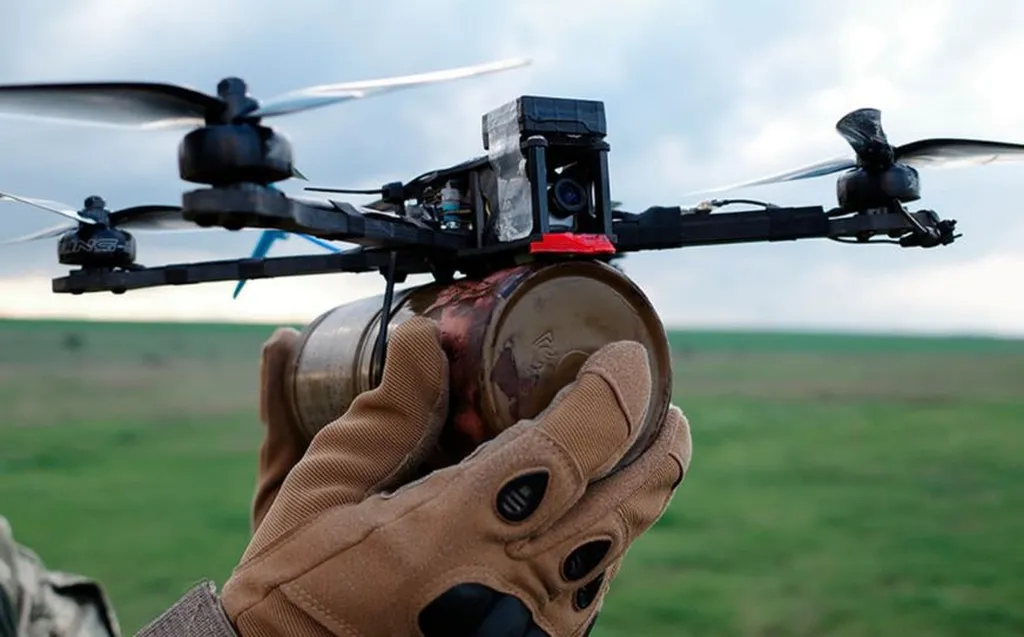
The battlefield is undergoing a seismic shift, and the writing on the wall is clear: traditional, high-end military technology is being challenged by what are being dubbed “people’s weapons.” These low-cost systems, particularly FPV (first-person view) kamikaze drones, are demonstrating disproportionate destructive power, signaling a potential end to conventional forms of warfare as we know them.
At the heart of this transformation are FPV kamikaze drones, also known as “suicide drones.” These unmanned aerial vehicles have rapidly emerged as game-changers, altering the dynamics of modern combat. Their impact is so profound that defence analysts and military strategists are taking notice, recognizing that these drones could redefine the future of warfare.
FPV kamikaze drones operate on a simple yet powerful principle. The operator pilots the drone using FPV goggles, which provide a real-time, immersive view through the drone’s camera. This setup allows the pilot to guide the drone with sniper-like precision onto moving targets. The drone, equipped with an explosive warhead, can then be directed to strike with deadly accuracy.
“This is a fusion of the accuracy of a guided missile with the flexibility of a reconnaissance drone,” observed one security analyst. “It can slip into the weak points of tanks or bunkers in ways that heavy weapons struggle to achieve.”
The cost-effectiveness of these drones is a critical factor in their disruptive potential. Many FPV kamikaze drones are assembled from commercially available components, making each unit relatively inexpensive—costing tens of thousands to a few hundred thousand baht. Despite their low cost, they are capable of destroying armoured vehicles or artillery systems worth tens or even hundreds of millions of dollars. This creates a “cheap kills expensive” dynamic, where militaries that rely on large, costly platforms face unsustainable loss rates.
The implications of this shift are far-reaching. Traditional military strategies and doctrines, which have long been built around the acquisition and deployment of high-end, expensive technology, are being challenged. The rise of FPV kamikaze drones suggests that future conflicts may increasingly favour those who can leverage low-cost, high-impact systems.
Moreover, the proliferation of these drones raises questions about the future of defence spending and military procurement. As nations grapple with the need to maintain technological superiority, the effectiveness of FPV kamikaze drones could prompt a re-evaluation of defence budgets and priorities. It may also drive innovation in countermeasures and defensive technologies designed to neutralize the threat posed by these drones.
The emergence of FPV kamikaze drones is not just a technological development; it is a strategic inflection point. As these drones continue to evolve and proliferate, they will likely reshape the battlefield, forcing militaries to adapt or risk obsolescence. The era of traditional warfare may indeed be nearing its end, and the future of combat could well be defined by the fusion of low-cost innovation and disproportionate destructive power.