
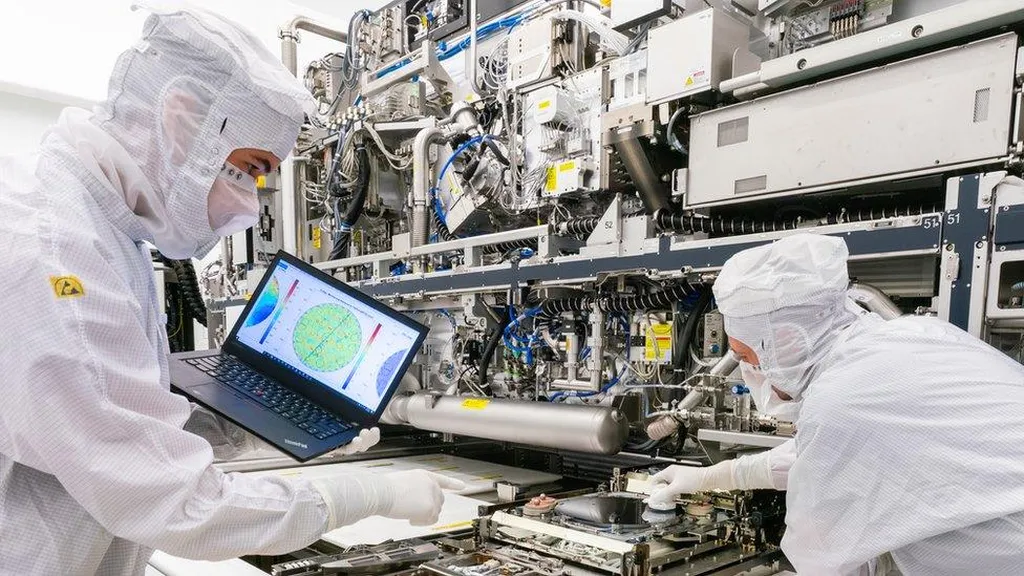
Last year, ASML, a leading Dutch semiconductor equipment manufacturer, sold essential chip machine parts to a military research institute of CETC, one of China’s key defence companies. Additionally, a Chinese quantum institute was also a customer. This information has been revealed through research conducted by Nieuwsuur, based on confidential documents.
The Dutch government had previously expressed concerns about the potential use of Dutch advanced technology in the development of Chinese military technology and its deployment in human rights violations by the Chinese state. Despite these concerns, the export of chip machines and parts is subject to strict export rules, requiring authorization for any product leaving the country. However, it has been discovered that some of the products involved in the Nieuwsuur research are not subject to these rules.
The military research institute that purchased a product from ASML is a division of China Electronics Technology Group Corporation (CETC), a Chinese state-owned company specializing in high-quality military technology, including rocket systems and drones. The institute, known as the “24th Research Institute of CETC,” is based in Chongqing and is home to the only national laboratory for military computer chips in China. It has also contributed to the Chinese space program Shenzhou and the Tiangong space station. The 24th Research Institute did not respond to questions from Nieuwsuur.
ASML declined to discuss its customers but stated that it strictly complies with all applicable laws and regulations. The company mentioned that the parts in question are older, more generic, and not subject to export controls or sanctions. ASML also asserted that the machines sold to Chinese chip manufacturers are “old technology” incapable of producing state-of-the-art chips. The company further stated that assessing whether a chip manufacturer in China should be subject to export controls is the responsibility of governments, not suppliers.
In 2024, ASML had another notable customer in China: the Shenzhen International Quantum Academy, a quantum technology research institute. The Dutch Military Intelligence and Security Service (MIVD) has explicitly warned against the development of quantum technology by China. The institute received a “Deep UV lithography machine” (DUV) from ASML on 5 February 2024. The MIVD has warned that quantum sensing technology, which the institute researches, can be used for military purposes, such as quantum radars to detect submarines.
Rem Korteweg, a geopolitics expert for the Clingendael Institute, expressed surprise at ASML’s reaction, emphasizing the sensitivity of the technology involved. He questioned the reasons behind executing the order, given the concerns about China’s interest in quantum technology and its potential implications for national security.
Nieuwsuur’s research also revealed that in 2024, ASML sold products to GTA Semiconductor, a chip manufacturer owned by CEC, a large technology company with military ties. Other customers included Si En (Qingdao) and Semiconductor Manufacturing Beijing Corporation (SMBC), both of which are on US sanctions lists due to their ties to the Chinese military.
The Ministry of Foreign Affairs stated that the export of high-tech goods to the Chinese defence industry is undesirable and that not all parts of lithography machines are subject to authorization under export controls policy. The ministry emphasized that the Dutch export policy focuses on controlling products that are subject to authorization, allowing other products to be exported to China without controls.
Experts consulted by Nieuwsuur independently confirmed that the parts sold to ASML’s Chinese customers are crucial to the performance of chip machines. Judith Huismans, a China expert for RAND Europa and former head researcher for Datenna, suggested imposing an overall export restriction on parts for chip machines to give the government more control and tools.
The research highlights the complex interplay between advanced technology exports and national security concerns, emphasizing the need for stricter controls and greater transparency in the export of sensitive technologies to countries with potential military applications.