Leaked Russian documents obtained by the Kyiv Independent reveal a covert Chinese arms pipeline from Moscow to Beijing, which has been operational since early 2022. This pipeline is focused on building a People’s Liberation Army (PLA) airborne force tailored for a potential assault on Taiwan. The documents expose how China, using front contracts and hidden payments, has been acquiring air-droppable armored vehicles, aircraft, ammunition, and paratrooper training from sanctioned Russian defense firms.
The Kyiv Independent’s report details how, despite international sanctions, Chinese officers and representatives of Beijing’s major defense manufacturers have been shuttling back and forth to Russia for over two years. During these visits, they have inspected a wide variety of weapons and negotiated contracts to purchase hundreds of millions of dollars worth of hardware from Moscow. The PLA has obscured these contracts and payments to evade international sanctions targeting Russian arms manufacturers.
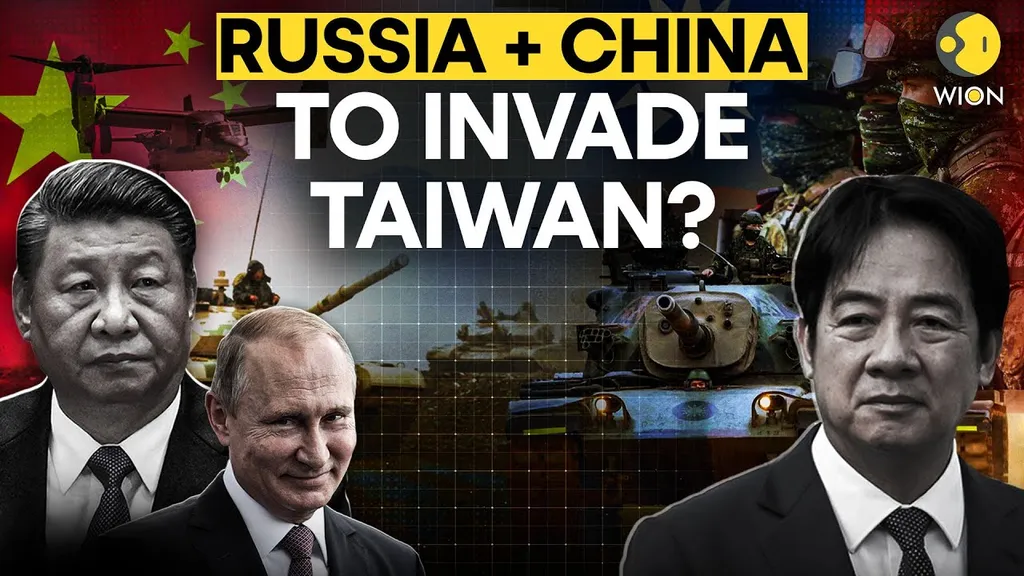
The acquisitions are aimed at equipping Chinese paratrooper forces with the necessary air-mobile and heavy transport assets to conduct a large-scale airborne assault on Taiwan. Among the items being acquired are air-mobile, airdrop-capable armored vehicles. The delivery schedules and contract deadlines align with Chinese President Xi Jinping’s stated 2027 readiness goal and the PLA’s centennial, reinforcing fears of a Taiwan invasion window.
“The delivery schedule built into the armored vehicle draft contract offers a rare look at how Moscow and Beijing are thinking about time, as the production and testing timelines align with dates already featured in debates over a possible Chinese invasion of Taiwan,” explains the article. The known deadline for implementing some of the other contracts is 2027, which correlates with the year Xi Jinping has identified as the time China’s military should be ready to carry out a possible Taiwan invasion.
The year 2027 is significant for another reason: it marks the 100th anniversary of the PLA’s founding. For Xi Jinping, it will also be the 21st Party Congress, when he is likely to secure an unprecedented fourth term as leader of the party, military, and government. This intersection of anniversaries may present a compelling opportunity for Xi to assert China’s military prowess.
The Kyiv Independent reports that it has identified several dozen Chinese military personnel and employees of Chinese arms producers who have continued to cooperate with the Russian defense industry, all of whom are now in violation of international sanctions. The paper further reported that PLA representatives contacted the Russian government slightly more than a month after the full-scale invasion of Ukraine in 2022. Knowledge of this initial contact, among many details of the report, came from a leak of Russian classified documents obtained by the Black Moon hacktivist group this year.
In this first set of messages, Beijing reportedly requested to buy a set of weapons and armored vehicles for airborne troops. The request, numbered ZH2022-Y53, was received on 7 April 2022, according to the leaked documents. Three weeks later, Russia’s Federal Service for Military-Technical Cooperation instructed Rosoboronexport, the state-owned company that brokers all arms exports from Russia, to prepare an elaborate demonstration of Russian air-droppable armored combat vehicles for a PLA delegation. The delegation arrived in Moscow a year later, in April 2023.
Official agreements between Beijing and Moscow are now in place to provide internationally sanctioned Russian arms manufacturers with significant revenue from the export of their weaponry to the PLA. In return, Beijing would receive an extensive complement of weaponry and equipment for its airborne forces, the PLA Air Force Airborne Corps. The units that make up this formation have been steadily building up their numbers and equipment in preparation for a future attack on Taiwan.
The leaked documents include “internal letters, meeting minutes, a draft intergovernmental contract, copies of the Chinese officers’ passports, and other documents,” reads the paper’s report. The Kyiv Independent writes that they verified the facts contained in the documents by using Russia’s air cargo and passenger flight data, customs declarations, and court records, as well as facial recognition software. They also identified the negotiators and other individuals that established these agreements—all of this took place amid Russia’s war in Ukraine.
The leaked documents and the records that validate them reveal a largely hidden arms pipeline that has been running between Moscow to Beijing since the beginning of Russia’s full-scale war against Ukraine. They show China engaging in full-scale cooperation with Moscow. In total, the Kyiv Independent identified 40 Chinese military personnel and representatives of arms manufacturers who have visited Russia during its war with Ukraine for the purpose of negotiating purchases of Russian weaponry.
“The PLA has been discreetly seeking Russian aircraft, armored vehicles, ammunition, and training for its paratroopers, funneling new money to sanctioned Russian defense companies while signaling a deepening strategic partnership” between China and Russia, writes the paper. “It shows the