
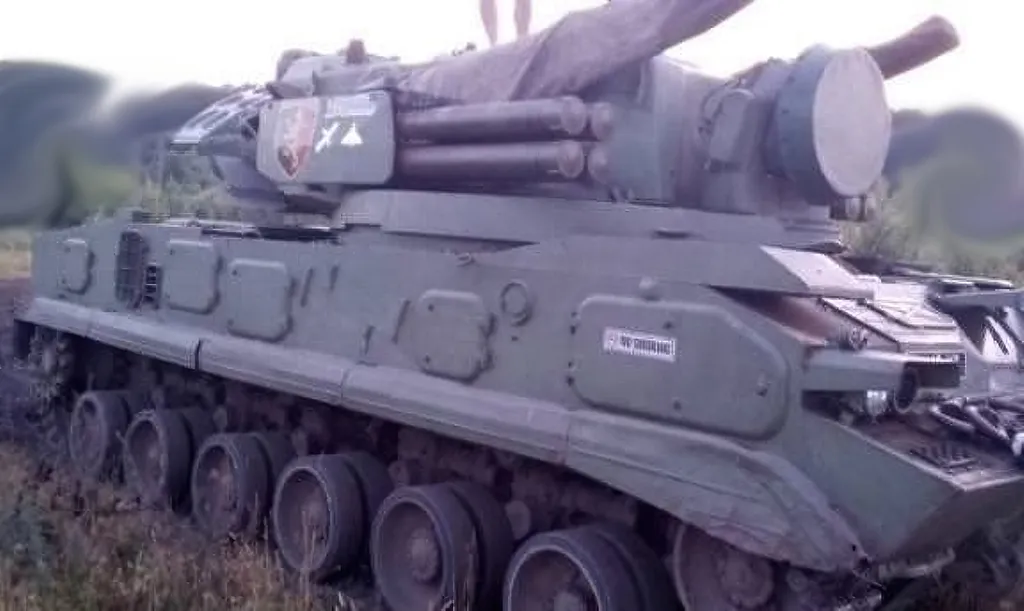
In the evolving landscape of modern warfare, the resurgence of anti-aircraft guns as a critical defence tool has defied predictions made in the mid-1990s. These systems, once thought to be on the brink of obsolescence, have proven indispensable in the ongoing conflict in Ukraine, particularly in countering the proliferation of drones. Among these systems, the 2K22 Tunguska stands out, despite its relative scarcity in combat footage.
The Tunguska, a self-propelled, short-to-medium-range air defence system, has been in service since 1982. Operated by countries including Belarus, Russia, India, Morocco, Myanmar, and Ukraine, it is built on a tracked chassis with a robust suspension and powered by a V12 diesel engine. Capable of reaching speeds of up to 65 km/h, the Tunguska is equipped with twin 30 mm 2A38M automatic cannons and eight 9M311 missile launchers. These missiles have an effective range of 8–10 km and can engage targets at altitudes up to 3.5 km, making the system particularly effective against drones, helicopters, and slower fixed-wing aircraft.
In Ukraine, the Tunguska systems are primarily employed to shoot down Russian drones. Although these systems are rarely seen in combat footage, both sides continue to use them. Ukraine possesses fewer than a hundred units, which explains their limited visibility in open sources. Some Ukrainian Tunguskas have been decorated with silhouettes of downed Shahed drones painted on their turrets, serving as marks of successful hits.
The current main Russian short-range combined air defence system, the Pantsir-S1, is the direct successor to the Tunguska. Both systems were developed by the KBP Instrument Design Bureau in Tula. The Pantsir-S1, introduced in 2012, expanded the concept with two 30 mm cannons and twelve 57E6 missiles capable of ranges up to 20 km. Unlike its predecessor, the Pantsir-S1 is mounted primarily on wheeled KamAZ 8×8 trucks, making it faster on roads and easier to deploy for strategic facility defence.
Despite the introduction of the Pantsir-S1, Russia continues to rely on Tunguska systems. Pantsir production has not kept pace with demand, ensuring that Tunguskas remain in service for the foreseeable future. According to the open-source intelligence project Oryx, Russia has already lost at least 12 Tunguska systems and 35 Pantsir-S1s during the war in Ukraine—figures based only on visually confirmed losses through public channels.
Ukraine is stretching the service life of the Tunguska, a testament to its enduring relevance. This story, however, is not just about one system. The proliferation of long-range combat drones means that anti-aircraft guns are becoming more and more relevant. As Povilas M. noted, “The current main Russian short-range combined air defence system, the Pantsir-S1, is the direct successor to the Tunguska.”
The resurgence of anti-aircraft guns highlights the adaptability and enduring utility of these systems in modern warfare. As the conflict in Ukraine continues to evolve, the role of these systems in defending against drones and other aerial threats will likely become even more critical. The Tunguska, with its proven effectiveness and adaptability, remains a vital component of Ukraine’s air defence strategy, underscoring the importance of continued investment in and development of these systems.