
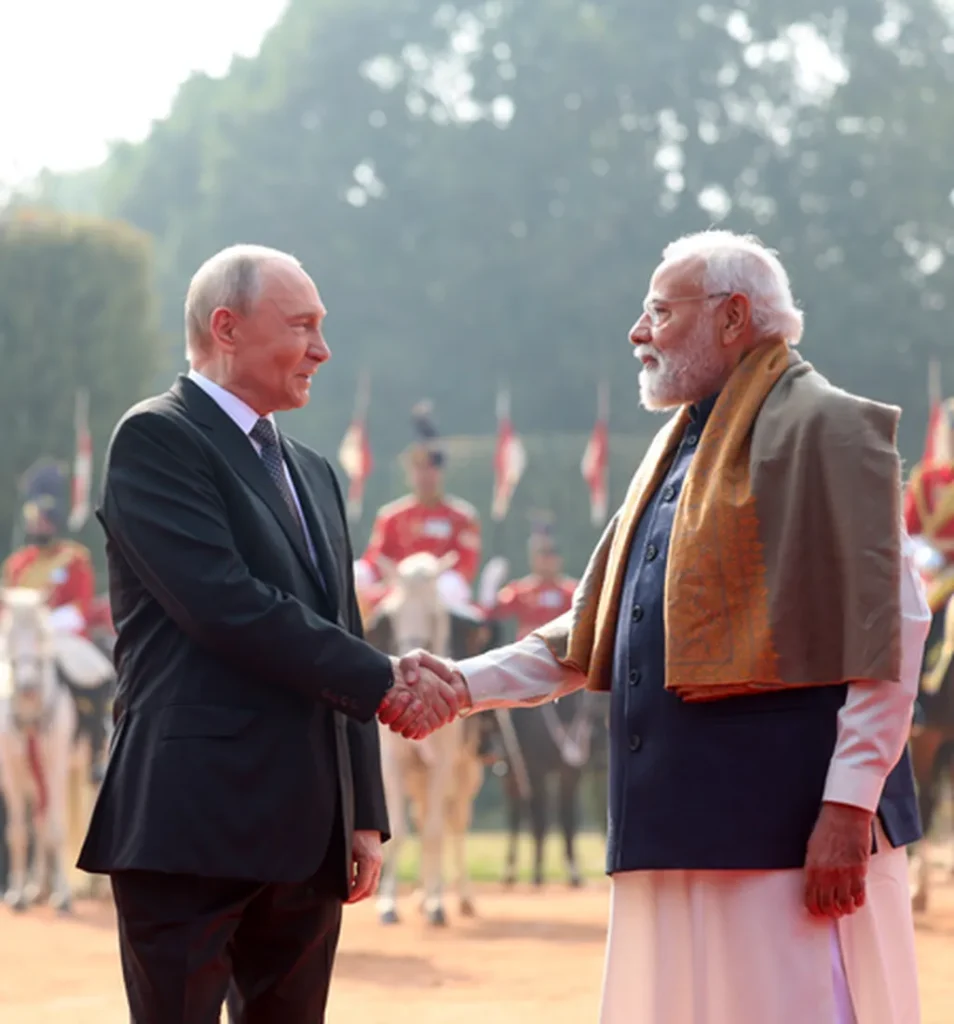
New Delhi: In a significant move to bolster bilateral defence cooperation, Russia has agreed to encourage joint manufacturing in India of military hardware and spare parts essential for the maintenance of Russian-origin arms and defence equipment. This agreement came to the forefront during the summit talks between Prime Minister Narendra Modi and Russian President Vladimir Putin on Friday.
The prolonged delays in the supply of critical spares and equipment from Russia have long been a grievance for the Indian armed forces, significantly impacting the maintenance of military systems procured from Russia. Addressing this issue, a joint statement released post-summit highlighted, “Both sides agreed to encourage joint manufacturing in India of spare parts, components, aggregates, and other products for the maintenance of Russian-origin arms and defence equipment under the Make-in-India programme through the transfer of technology.”
The joint statement further emphasized the establishment of joint ventures to meet the needs of the Indian armed forces and for potential exports to mutually friendly third countries. This initiative is part of a broader strategy to reorient the India-Russia defence partnership towards joint co-development and co-production of advanced defence technology and systems.
In a preceding meeting on Thursday, Defence Minister Rajnath Singh and his Russian counterpart Andrey Belousov resolved to expand bilateral defence cooperation. The Indian side expressed keen interest in procuring additional batches of the S-400 missile systems from Moscow to enhance its combat capabilities. In October 2018, India had signed a $5 billion deal with Russia to purchase five units of the S-400 air defence missile systems, despite warnings from the US about potential sanctions under the Countering America’s Adversaries Through Sanctions Act (CAATSA). Three squadrons of these systems have already been delivered, and they played a crucial role during Operation Sindoor. India is also considering the procurement of the advanced S-500 missile systems from Russia.
During the Modi-Putin talks, both sides agreed to continue jointly developing systems of bilateral trade settlements using national currencies. They also agreed to continue consultations on enabling the interoperability of national payment systems, financial messaging systems, and central bank digital currency platforms.
Prime Minister Modi and President Putin appreciated the ongoing intensification of joint work on a free trade agreement on goods between India and the Eurasian Economic Union, covering sectors of mutual interest. They directed both sides to intensify efforts in negotiations on a mutually beneficial agreement on the promotion and protection of investment.
Additionally, India and Russia welcomed steps to ensure the long-term supply of fertilisers to India and discussed the potential establishment of joint ventures in this area. This comprehensive agreement underscores the deepening of strategic and economic ties between the two nations, paving the way for enhanced defence cooperation and technological collaboration.