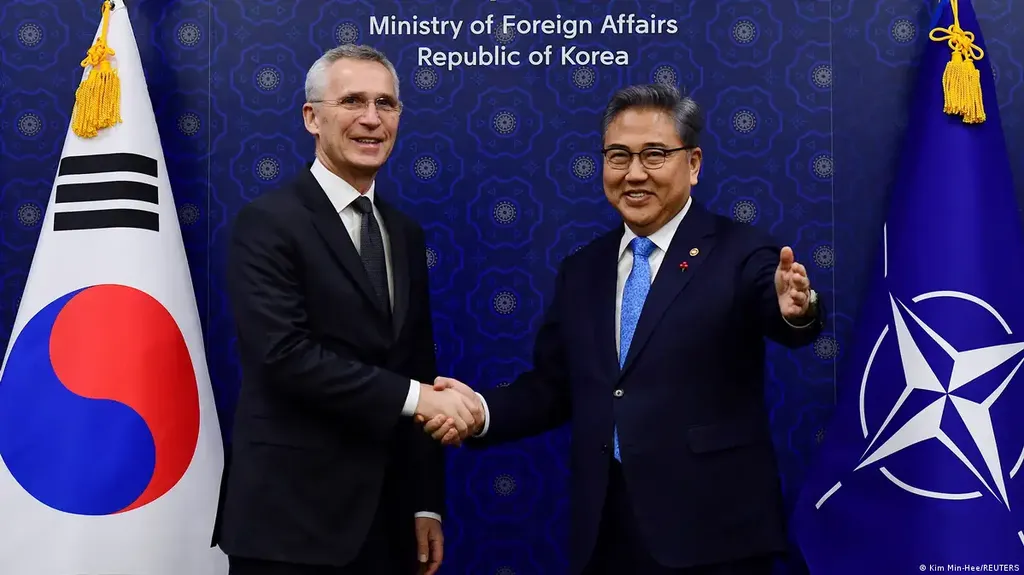
A delegation from the NATO Parliamentary Assembly (NATO PA) has concluded a week-long visit to the Republic of Korea (ROK), underscoring the shared commitment to deepening cooperation between NATO Allies and this pivotal Indo-Pacific partner. The visit, led by Finnish MP Jarno Limnell, Chair of the Sub-Committee on Technology Trends and Security (STCTTS), focused on exploring shared security challenges, the rapid evolution of defence technology, and prospects for enhanced trans-regional collaboration.
Against the backdrop of growing instability on the Korean Peninsula and in the broader Indo-Pacific region, the NATO PA delegation emphasised the interconnected nature of regional and Euro-Atlantic security. Rising military assertiveness from North Korea, China’s strategic ambitions, and increased military collaboration between Russia and the Democratic People’s Republic of Korea (DPRK) highlighted the urgency of fostering strong, reliable, and resilient defence partnerships.
Members of the delegation visited the Demilitarised Zone (DMZ), where they were briefed on the 1953 Korean Armistice Agreement and the measures in place to maintain stability, manage escalation, and prevent misunderstandings. The delicate vicinity between the ROK and the DPRK underscored the critical need for robust defence mechanisms and international cooperation.
The NATO PA delegation welcomed Seoul’s ongoing political and practical support for Ukraine. Parliamentarians discussed how Korea’s deepening contributions and cooperation with like-minded partners help uphold the rules-based international order and challenge threats posed by revisionist powers.
The enduring importance of the U.S. military presence in the ROK was highlighted during a meeting with Major General Anthony M. Henderson, Director of Plans and Policy, United Nations Command, Combined Forces Command, and U.S. Forces Korea. The U.S. military footprint is intrinsic to ensuring stability and deterrence across the increasingly interconnected Indo-Pacific and Euro-Atlantic theatres.
The delegation heard first-hand from legislators of the National Assembly about the country’s bold defence ambitions. President Lee Jae Myung recently announced that the ROK aims to become the world’s fourth-largest defence power by 2030, driven by a surge in defence-aerospace research and development (R&D) and exports. These aspirations were reflected in discussions at Hanwha Aerospace, one of Korea’s flagship defence and aerospace companies. They highlighted the need for ensuring interoperability with NATO platforms and the importance of lessons learned in Ukraine regarding artillery survivability, logistics, and precision.
At Hyundai Rotem, the defence arm of Hyundai Group, discussions centred around uncrewed vehicles and Artificial Intelligence (AI), both of which have been frequent topics in reports of the Science and Technology Committee. Korea’s remarkable pace of technological development was a central pillar of the visit. Discussions focused on how Korea is integrating AI, autonomy, space-based systems, and unmanned platforms into its defence architecture.
The delegation welcomed the ROK’s ambition to strengthen defence partnerships with NATO countries, underscoring how the democratic values shared by the Republic of Korea and NATO Allies can provide a strong basis for defence industrial cooperation. During bilateral parliamentary exchanges, NATO PA members and their Korean counterparts explored deepening cooperation on emerging security domains, including cyber operations, AI-enabled resilience, and joint approaches to technology governance.
Chair Jarno Limnell commented, “The Republic of Korea, a like-minded partner, stands at a pivotal moment in its defence and industrial development, positioning itself to become one of the world’s leading exporters of advanced military systems. Through parliamentary engagement, we can explore the potential to foster deeper cooperation on emerging security domains. Increased collaboration, from AI and unmanned systems to space and cyber, could benefit both Allies and the Republic of Korea.”
Looking ahead, the NATO PA delegation expressed strong support for enhanced industrial collaboration, technology sharing, and parliamentary dialogue, as the ROK’s ambition to shape global norms and force modernisation resonates deeply with NATO’s strategic objectives. The visiting delegation comprised 15 members of the NATO PA Sub-Committee on Technology Trends and Security from 11 Allied countries and was chaired by Jarno Limnell (Finland).
The NATO Parliamentary Assembly, institutionally separate from NATO, serves as an essential link between NATO and the parliaments of the NATO nations. It provides greater transparency of NATO policies and fosters better understanding of the Alliance’s objectives and missions among legislators and citizens of the Alliance.