
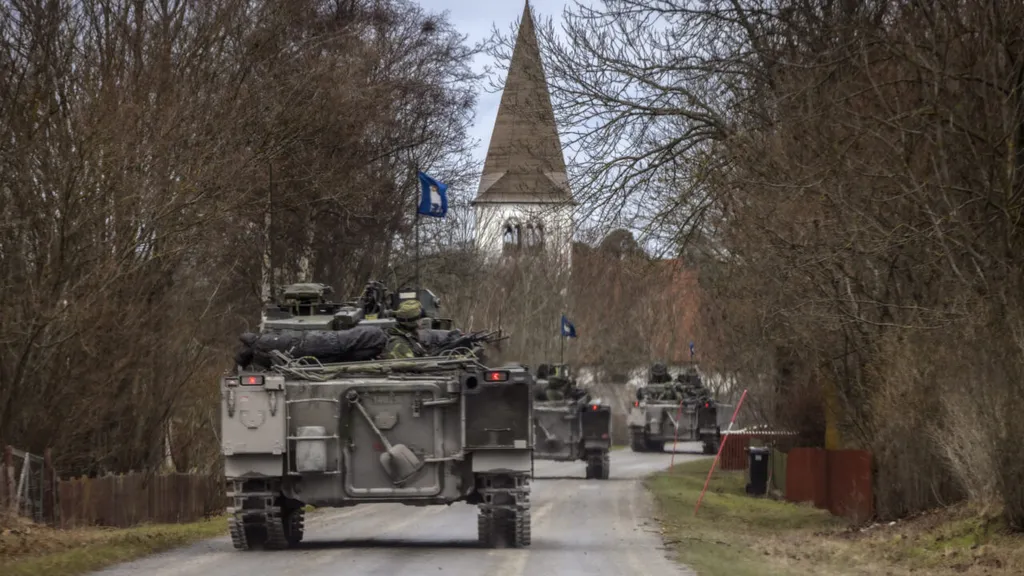
Sweden’s Scandinavia X interceptor has recently been undergoing trials, showcasing the operational performance of its military technology. This development comes at a time when Western defence companies are increasingly looking to Ukraine as a key market for growth and collaboration. Demonstrating a willingness to partner with Ukrainian industry has become a critical factor for these companies.
The landscape of cooperation between Western defence firms and Ukraine has evolved significantly since 2022. Elliott Murphy, head of International Business Development Strategy at Aerospace Defence Security (ADS), a UK defence industry association, highlighted this shift in an interview with Janes on 14 October. “Ultimately, the question will be asked – are you [is your technology] used in Ukraine? If not, why not?” he said. Murphy noted that exceptions to this trend are rare, citing the example of nuclear submarine technology, which, for obvious reasons, would not be deployed in Ukraine.
Collaborative opportunities between Western defence companies and Ukraine encompass joint ventures (JVs) with local manufacturers, technology exchanges, and production opportunities in either Ukraine or the partner country. However, there has been criticism directed at companies that claim to have a presence in Ukraine without substantial operational footprint. Arsen Zhumadilov, director of the Ukrainian Ministry of Defence’s (MoD) Defence Procurement Agency (DPA), addressed this issue in a conversation with Janes on 11 September in London. “If some companies are opening a representative office in Ukraine, it doesn’t mean that they are now ‘present in Ukraine,’” he stated. “You have to make the next step, which is to build your maintenance and repair capabilities in Ukraine for your platforms, for your modules, and your systems. The following step after that would be some sort of partnership with local companies.”
Zhumadilov emphasised the importance of forming new partnerships with Ukrainian small and medium enterprises (SMEs), suggesting that it is “high time” for prime defence contractors to explore these opportunities. This call to action underscores the growing recognition of Ukraine’s defence industrial sector as a dynamic and capable partner in the global defence landscape.
Swedish defence companies are among those stepping up to the challenge, forging partnerships that go beyond mere representation. These collaborations are expected to strengthen Ukraine’s defence capabilities while providing Swedish firms with a strategic foothold in the region. As the conflict in Ukraine continues, the importance of such partnerships is likely to grow, shaping the future of defence cooperation and innovation in the sector.